
4 Best Backend Alternatives for Solopreneurs to Launch Your SaaS in 48 Hours
When you are a solopreneur, solo founder, or indie hacker, your constraints are drastically different from venture-backed engineering teams. You don't have a dedicated DevOps engineer. You don't have a budget to burn on endless AWS instances. You can't spend three weeks setting up an authentication provider and another two configuring your PostgreSQL replication rules.
You need to ship. Fast.
To achieve incredible speed to market, you must adopt the optimal backend alternatives for solopreneurs. Whether you are building an AI wrapper, a robust SaaS directory, or a comprehensive SaaS dashboard, a backend as a service (BaaS) handles the most complex, mundane infrastructure chores so you can focus on building a stellar product UI.
In this ultimate guide, we will break down the top backend platforms tailored for solo builders in 2026. We will dive deep into Supabase, Firebase, Appwrite, and Convex to help you easily pick your ideal infrastructure layer, pair it with the fastest copy-paste component library on the market, and launch your next startup efficiently.
Key Takeaways
- Supabase is the top overall choice for a highly integrated PostgreSQL BaaS.
- Firebase remains incredibly strong for realtime data and mobile-first apps.
- Appwrite is perfect if you want a complete BaaS that you can fully self-host without lock-in.
Table of Contents
- What Solopreneurs Actually Need From a Backend
- The Best Backend Alternatives for Solopreneurs
- Backend as a Service Comparison Table
- How to Choose the Right Backend for Your SaaS
- The Missing Piece: Your Frontend UX
- Frequently Asked Questions (FAQ)
What Solopreneurs Actually Need From a Backend
Before diving into specific tooling, we have to identify what "good" looks like for solo developers building on the web. Most technical teardowns prioritize vast team operations, micro-services, and enterprise scaling—but indie hackers have incredibly specific requirements.
When establishing your app's foundation, here is what genuinely matters:
1. Speed to First Working Prototype
Can you go from an empty directory to a fully functional database with role-based authentication in under an hour? In the early phases of bootstrapping, momentum is everything. A backend as a service that stalls you in setup configuration will kill your launch timeline.
2. Deep Free Tiers Without Sudden Spikes
You need ample room to build, experiment, validate, and pivot without spending a dime. Platforms that only grant you a 14-day trial usually don't work for solopreneurs building side projects nights and weekends. Real free tiers are non-negotiable.
3. Limited Vendor Lock-In
What happens if you hit 100,000 users and your platform hikes their pricing to enterprise levels? Solopreneurs have to balance the sheer speed of proprietary tooling with an eventual export path. Traditional SQL vs specialized NoSQL document models is a critical factor for migration friction.
4. "All in One" Abstractions
Authentication, cloud file storage, database handling, row-level security (RLS), Edge functions—if you don't have to piece these together from five different platforms with five varying billing dashboards, you win.
The Best Backend Alternatives for Solopreneurs
Let's look at how the modern backend platforms align with these solopreneur necessities.
1. Supabase (The Open Source Postgres Powerhouse)
If you are a solo founder launching a SaaS right now, Supabase is the default recommendation and arguably the most beloved tool in the indie hacking community.
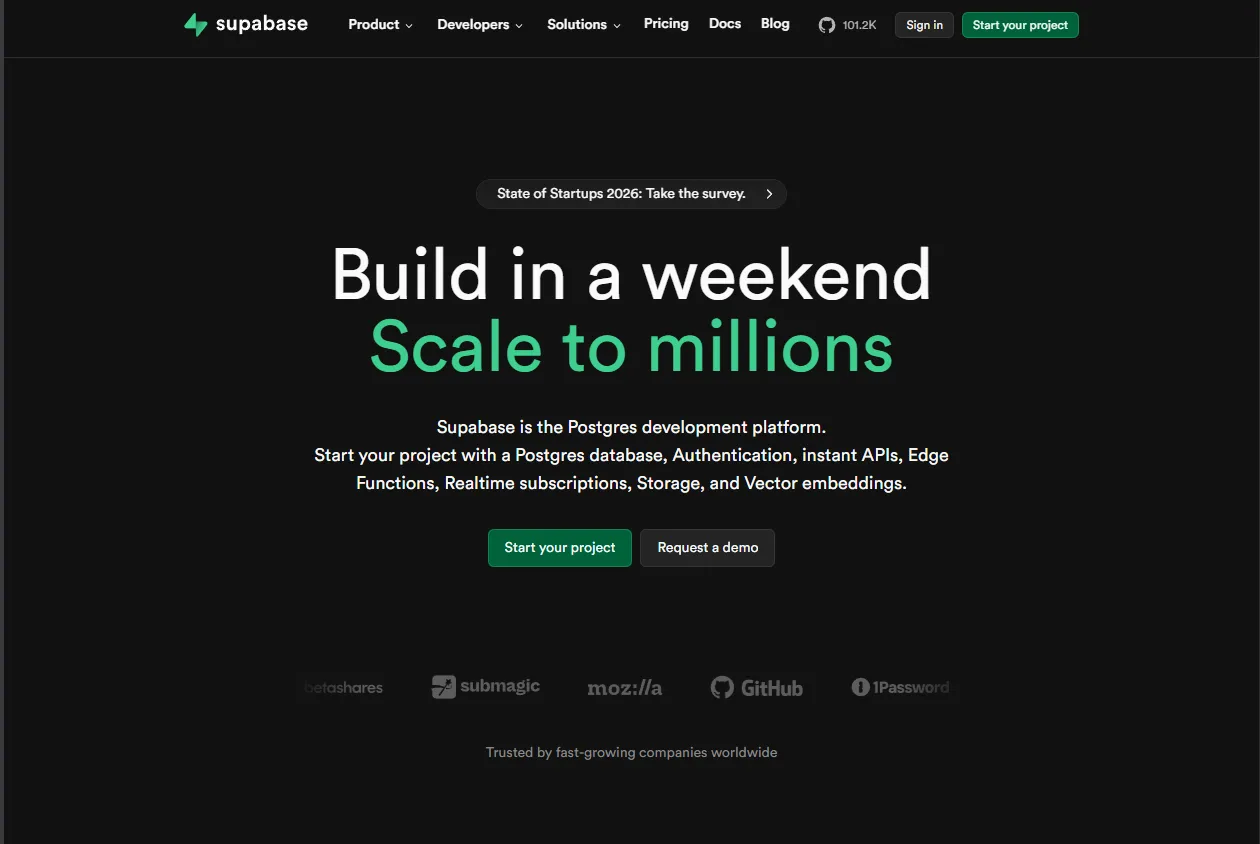
Supabase operates as a full-suite Backend as a Service built directly on top of PostgreSQL. This gives you standard SQL compliance while packing all the ease-of-use tooling that makes building absurdly fast.
Strengths:
- Zero Lock-In Architecture: Because it is just Postgres under the hood, you can eventually dump your relational data and migrate to AWS RDS, Digital Ocean, or self-host if needed.
- The "Everything Bundle": Auth with row-level security, edge functions, realtime subscriptions, file storage, and auto-generated APIs (GraphQL and REST).
- Excellent Developer Experience (DX): Supabase features an impeccably clean dashboard and high-quality local development tooling.
Weaknesses:
- The free plan currently automatically pauses projects after 1 week of inactivity (which can be annoying if you have multiple weekend side projects).
- Relying purely on Postgres for massive scale realtime subscriptions isn't always as smooth compared to dedicated real-time first engines.
The Verdict: Supabase strikes the perfect balance for solopreneurs wanting a traditional structured database equipped with modern, rapid-deployment abstractions.
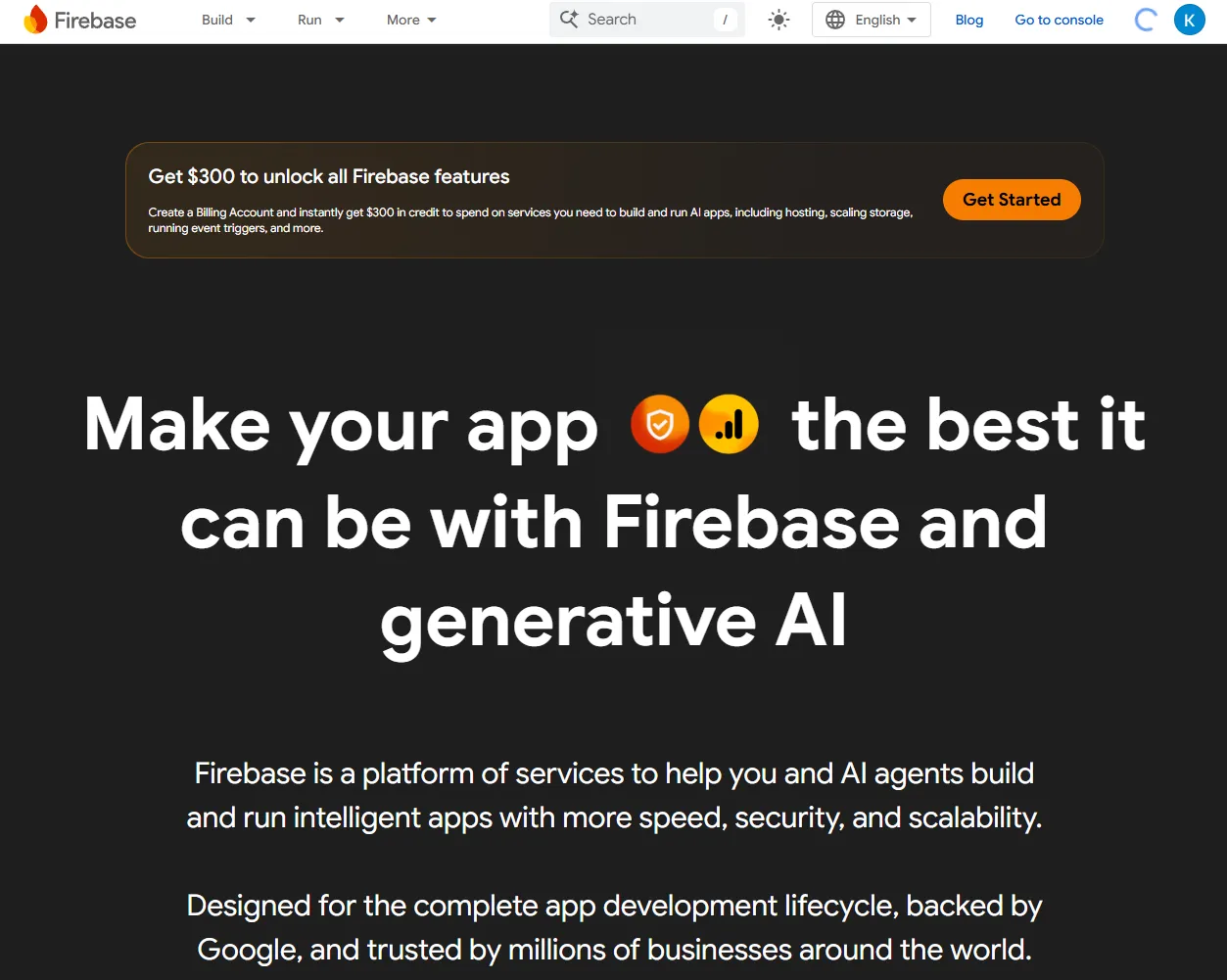
2. Firebase (The Old Reliable NoSQL)
Google's Firebase fundamentally pioneered the "BaaS" concept. It heavily leans on NoSQL architecture via its Firestore document database, creating extremely flexible schema setups perfect for startups frequently shifting their data models.
Strengths:
- Incredible Authentication: Firebase Auth works seamlessly for social logins, phone verification, and anonymous logins across any stack.
- Superior Real-Time Capabilities: If you are building a chat application, real-time collaboration tool (like Figma), or live-updating feed, Firebase makes realtime sync effortless.
- Enormous Ecosystem: Nearly every problem you will run into with Firebase already has a stack overflow answer or third-party library fix from over a decade of community presence.
Weaknesses:
- Vendor Lock-In is Extreme: Moving away from a proprietary NoSQL structure into a structured schema later is notoriously painful.
- Query Complexities: Traditional SQL
JOINstatements and aggregations don't exist natively. To achieve similar results, you often have to radically duplicate data across your document collections.
The Verdict: Choose Firebase if you are building heavily collaborative read/write dynamic apps or mobile-first platforms and have no intention of ever migrating.
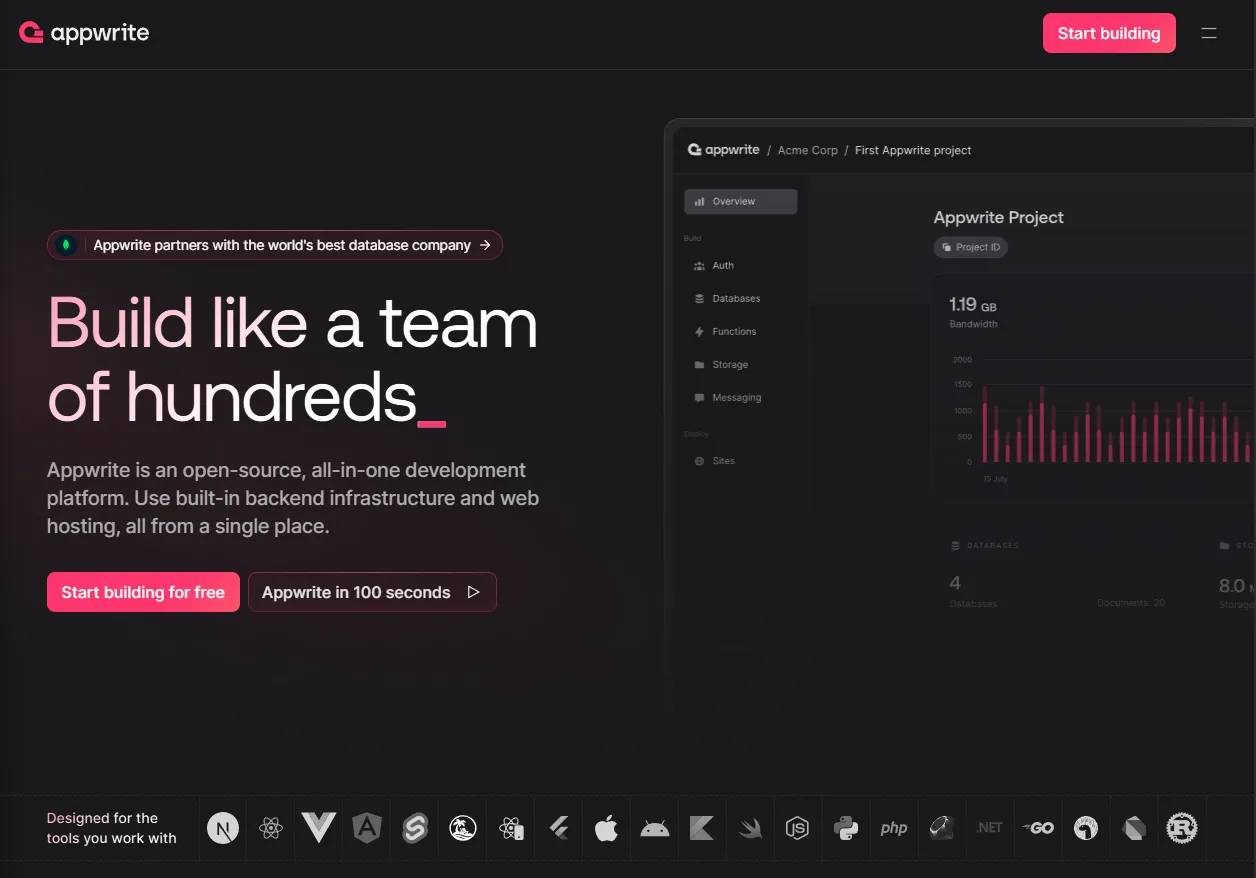
3. Appwrite (The Self-Hostable All-in-One)
Appwrite is an aggressive contender in the open-source BaaS space. While Supabase ties itself exclusively to Postgres, Appwrite abstracts the database layer entirely, offering a seamless, robust API wrapping MariaDB alongside built-in auth, storage, and functions.
Strengths:
- Incredible Self-Hosting: Appwrite is designed from the ground up to be elegantly self-hosted if you choose. They bundle everything neatly into Docker containers. You avoid cloud pricing traps entirely if you deploy on your own VPS.
- Microservices Architecture: Appwrite handles file storage, image cropping, serverless functions (in multiple languages), and real-time database subscriptions under one extremely cohesive SDK.
- Language Agnostic functions: You can write your edge/cloud functions in Node, Python, Ruby, PHP, and more.
Weaknesses:
- Not Direct SQL: Unlike Supabase where you connect directly to Postgres, Appwrite queries run through their specific API abstractions, meaning you don't use raw SQL inside their database GUI.
- Slightly Steeper Operations: Self-hosting inherently requires you to manage your own server updates, though their paid Cloud offering bypasses this concern.
The Verdict: Choose Appwrite if you absolutely want the simplest path to self-hosting a complete Backend-as-a-Service on your own infrastructure with zero vendor lock-in.
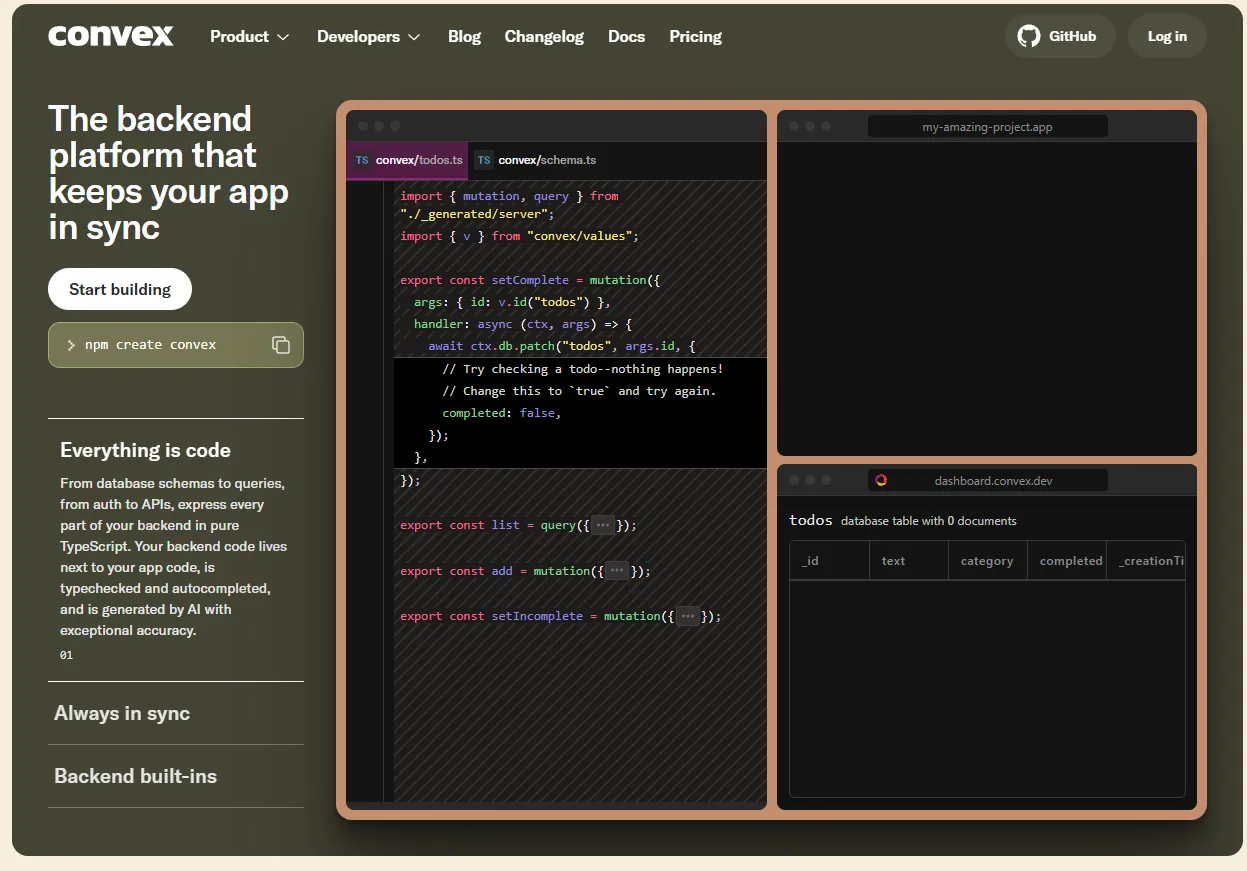
4. Convex (The Opinionated TypeScript Engine)
Convex operates fundamentally differently from typical data paradigms. It functions as a fully reactive, TypeScript-centric backend environment where schema enforcement, database modifications, caching, and edge functions are housed beneath a unique, deeply opinionated structure.
Strengths:
- Typescript Euphoria: End-to-end type safety directly from your database logic all the way up through your frontend components essentially guarantees bug-free data querying.
- Out of the box Realtime: Live querying feels virtually magical. Your UI automatically updates when backend data mutations occur, out-of-the-box.
Weaknesses:
- Harsh Paradigm Learning Curve: You have to completely adapt to their specific function deployment model.
- The Ultimate Lock-In: Because it relies heavily on its own proprietary query models, exporting data away from Convex to a standard SQL platform is excruciating.
The Verdict: Highly suited for complex single-page applications heavily leaning into React and TypeScript where maximum type safety across the complete network request layer is required.
Backend as a Service Comparison Table
Here is a straightforward visual comparison mapping the crucial considerations for the main backend platforms:
| Feature | Supabase | Firebase | Appwrite | Convex |
|---|---|---|---|---|
| Model | Relational SQL (Postgres) | NoSQL (Document) | Open-Source BaaS | Opinionated TypeScript |
| Auth Included | ✅ Yes | ✅ Yes (Best-in-class) | ✅ Yes | ✅ Yes |
| Storage Included | ✅ Yes | ✅ Yes | ✅ Yes | ✅ Yes |
| Vendor Lock-In | Low | High | Low (easily self-hosted) | High |
| Free Tier Value | Excellent | Excellent | Stellar (self-hosted) | Good |
| Best For | Solid SQL Foundation | Collaborative Real-time | Full Self-Hosting Control | End-to-End Type Safety |
How to Choose the Right Backend for Your SaaS
If you need a definitive blueprint for making a choice right now:
- Pick Supabase if you want the absolute highest overall flexibility. It secures the sweet spot of powerful PostgreSQL capabilities, low lock-in, and full BaaS provisions preventing endless configuration headaches.
- Pick Firebase exclusively if the majority of your application's core functionality hinges entirely on instant collaborative sync features across multiple clients simultaneously.
- Pick Appwrite if you want the full BaaS experience but desperately prioritize the ability to run your infrastructure natively on your own servers without friction.
Don't let analysis paralysis freeze your SaaS idea. The primary failure of indie hacking is spending two weeks debating a database framework while achieving zero coding cycles. Pick the platform optimizing for maximum velocity.
The Missing Piece: Your Frontend UX
Selecting the finest backend alternatives for solopreneurs solves exactly half of your SaaS problem. Yes, your database is secure, your data scales affordably, and your authentication routines fire flawlessly.
But none of that matters if your web app looks, feels, and operates like an amateur dashboard from 2008.
Your users do not care if you use Appwrite or Firebase. They only care about what they see and interact with.
To immediately capitalize on the massive time savings granted to you by BaaS systems, you must match that engineering speed on your frontend utilizing modern React composition tooling. This is where ogBlocks completely bridges the gap.
ogBlocks gives solopreneurs access to 70+ beautifully crafted, highly animated, premium UI components using React, Motion, and Tailwind CSS. Avoid spending 12 hours tweaking the bezier curves of an animated dropdown. Instead:
- Copy the code snippet entirely.
- Drop it into your Next.js frontend wrapper.
- Wire it strictly into your Supabase or Firebase endpoint.
- Ship to production.
When you pair lightning-fast managed backend environments with elite, pre-built aesthetic frontend components, you are no longer constrained by the typical solopreneur time limit. You can quite literally ship premium SaaS platforms in days rather than months.
Frequently Asked Questions (FAQ)
What is the best free backend for indie hackers?
The optimal free backend drastically relies on the application being built. Supabase holds the crown for developers needing high-performance SQL relations on a free tier, while Appwrite provides a completely self-hostable open-source engine giving you complete control over your limits.
Is Supabase better than Firebase for a solopreneur?
Supabase is generally viewed as better for founders requiring structured relational data, strict schema layouts, and minimal vendor lock-in due to the Postgres engine. Firebase retains supremacy solely for NoSQL environments focusing extensively on document scaling and mobile-first integration.
Do I need a backend as a service?
Yes. If speed to market is your priority, you emphatically need a BaaS framework. Manually spinning up node instances, configuring Docker containers, and managing database shards drains hundreds of critical working hours away from front-end user experience tuning.
Written by Karan
Karan is a React engineer and the founder of ogBlocks, building high-performance UIs for SaaS.