The Ultimate Shipfast Alternative Nobody Is Talking About
If you're reading this, you are likely a SaaS founder, an indie hacker, or a web agency owner looking for a reliable Shipfast alternative. You have an incredible product idea and you want to ship your Next.js application faster, but maybe you feel restricted by opinionated code, generic designs, or the hefty price tags of standard boilerplates.
Key Takeaways
- Design Lock-In is Real: Standard boilerplates save backend time but force your app to look like thousands of others.
- Top 5 Alternatives: We review supastarter, Open SaaS, Makerkit, AnotherWrapper, and LaunchFast as the best Shipfast alternatives.
- The Modern Stack: Pairing a free backend template with a premium UI component library like ogblocks gives you maximum flexibility, unique design, and zero stack lock-in.
Table of Contents
- Why You Might Be Looking for a Shipfast Alternative
- Top 5 Shipfast Alternatives for Your Next SaaS
- Frequently Asked Questions (FAQ)
- The Final Verdict: Stop Fighting Boilerplates, Start Shipping
This article is specifically crafted for SaaS founders and developers who demand maximum speed without sacrificing code quality, architectural scalability, or design freedom. Let's dive in.
Why You Might Be Looking for a Shipfast Alternative
Shipfast made a massive splash when it launched, effectively popularizing the concept of a "SaaS-in-a-box" for indie developers. It provided authentication, Stripe payments, email integration (via Resend or Mailgun), and database connections right out of the gate. But as your project scales and your user base grows, the initial convenience of a pre-configured template can sometimes become a significant bottleneck.
Here are 5 common reasons developers look for a different saas boilerplate:
- Design Lock-In: When thousands of developers use the exact same boilerplate, thousands of websites end up looking exactly the same. Standing out in a crowded, competitive market requires a unique, polished UI. This often means you spend dozens of hours undoing boilerplate CSS just to implement your own brand identity.
- Architecture Rigidity: Opinionated boilerplates force you into a highly specific way of handling data fetching, API routes, state management, and component architecture. If your application requires a more complex architecture later, untangling the boilerplate code can take longer than writing it from scratch.
- The "Kitchen Sink" Problem: Many commercial boilerplates attempt to justify their price tag by including 15+ integrations (Stripe, Lemonsqueezy, Mailgun, Resend, Supabase, Firebase, MongoDB, etc.). If you only need 3 of them, you are carrying around a lot of dead code, excessive dependencies, and unnecessary complexity that makes debugging harder and bundle sizes larger.
- Update Nightmares: When the creator of the boilerplate releases an update (e.g., upgrading from Next.js 14 to Next.js 15), merging those upstream changes into your heavily modified codebase is often a terrifying, conflict-ridden experience.
- Limited Enterprise Features: Simple boilerplates are great for B2C micro-SaaS apps. However, if you are building a B2B platform, you need complex features like team workspaces (multi-tenancy), role-based access control (RBAC), and seat-based billing. Basic boilerplates lack these architectures.
Instead of fighting against a rigid framework, many founders prefer a more modular, composable approach. You can read more about this philosophy in our comprehensive guide on the best tech stack for vibe coding.
Top 5 Shipfast Alternatives for Your Next SaaS
If you have weighed the pros and cons and decided you still want a traditional NextJS boilerplate, the market has matured significantly. Here are the 5 best options available right now that offer different features, pricing models, and architectural philosophies.
1. supastarter
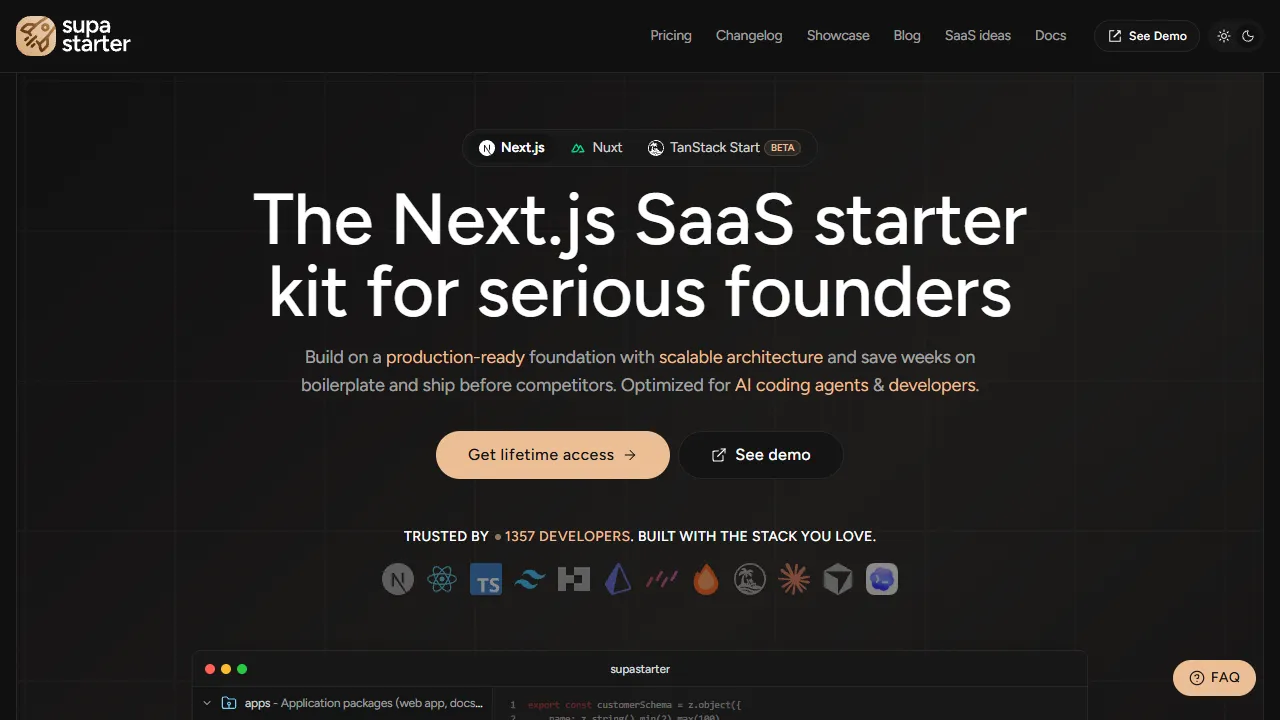
When it comes to scaling a serious, robust business, supastarter is often considered the premium Shipfast alternative. While Shipfast is excellent for simple micro-SaaS projects to validate an idea, supastarter is built from the ground up for production-grade applications that might need multi-tenancy (team workspaces) on day one.
Why it’s a great alternative:
- Multi-tenancy out of the box: This is absolutely essential for B2B SaaS. It handles organizations, team invites, and complex permission scopes flawlessly.
- Provider Agnostic: You aren't forced into one specific tech stack. It supports multiple payment providers (Stripe, Lemon Squeezy) and various databases, utilizing Prisma as a robust ORM.
- Nuxt & Next.js Support: If you are a developer who prefers Vue over React, they have a dedicated, fully-featured Nuxt version.
- i18n Ready: Internationalization is built right into the framework, saving you days of configuration if you plan to target global markets.
The Trade-off: Because it includes advanced enterprise features, the initial codebase is significantly larger and slightly more complex to navigate than a bare-bones boilerplate.
2. Open SaaS
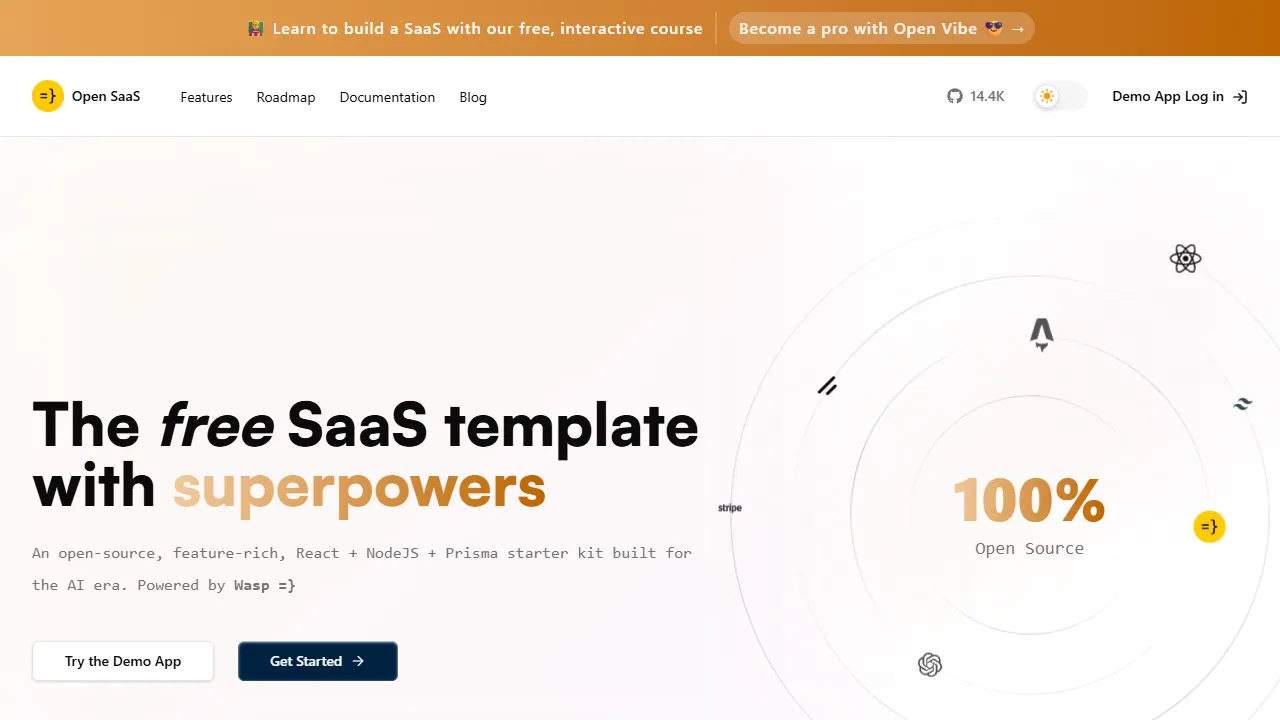
If budget is your primary concern or if you firmly believe in the open-source philosophy, Open SaaS is definitively the best free, open-source saas boilerplate available today. It is uniquely powered by the Wasp framework, which essentially acts as a compiler for React, Node.js, and Prisma.
Why it’s a great alternative:
- 100% Free and Open Source: There is absolutely no upfront cost, meaning zero financial risk for indie hackers bootstrapping their first project.
- Full-Stack Typesafety: Wasp elegantly handles the boilerplate for authentication, chron jobs, and server routes via a single configuration file, generating the glue code for you behind the scenes.
- Active Community: Being an open-source project, it boasts a massive, highly active Discord community for troubleshooting, sharing extensions, and requesting features.
The Trade-off: You have to learn the Wasp configuration language (.wasp files), which adds a slight learning curve compared to standard Next.js, and you are tied to their specific React/Node paradigm.
3. Makerkit
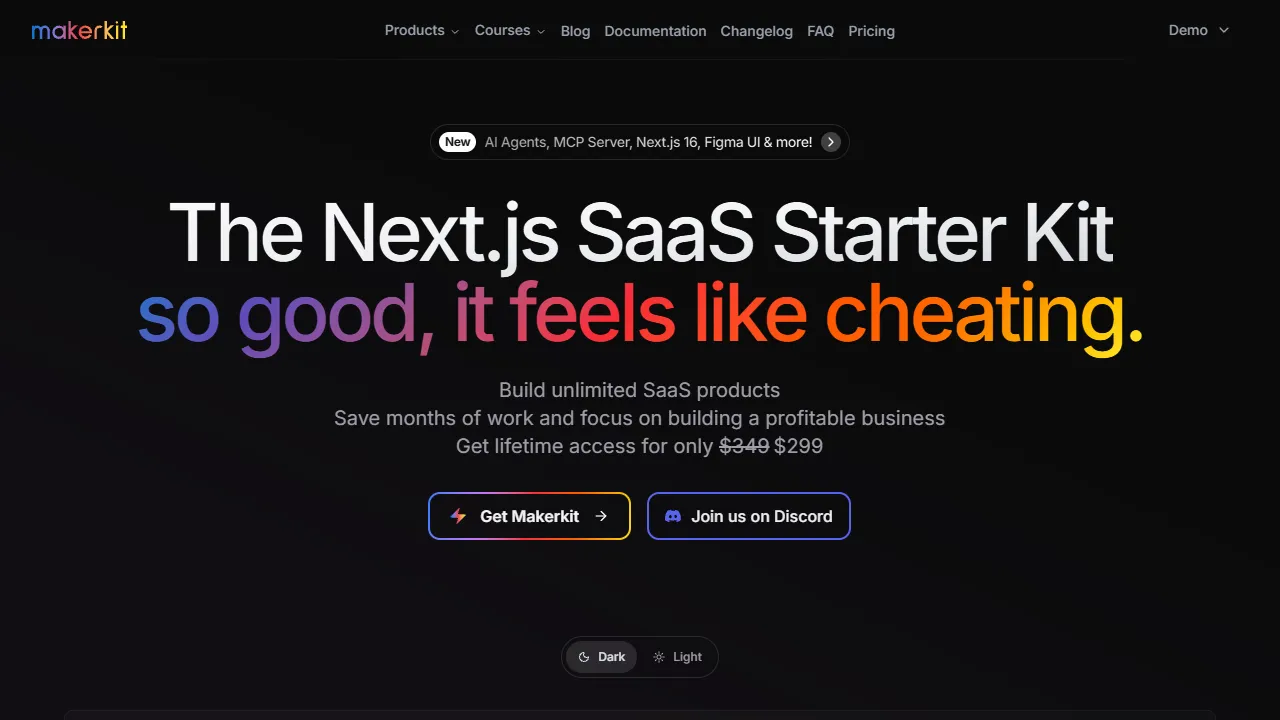
For founders targeting lucrative B2B enterprise markets, Makerkit is an absolute powerhouse. B2B applications require robust role-based access control (RBAC), secure team invitations, and complex, tiered billing structures. Makerkit handles all of this exceptionally well, out of the box.
Why it’s a great alternative:
- B2B Focused: Built specifically with enterprise teams and organizations in mind, reducing the friction of building collaborative tools.
- Supabase & Firebase Variants: Choose the backend-as-a-service (BaaS) you are most comfortable with. Their Supabase version leverages row-level security (RLS) beautifully.
- Clean Architecture: The codebase is highly modular, extensively tested, and utilizes modern React patterns, making it easier to scale over the long term.
The Trade-off: The default design system is highly functional but somewhat basic and corporate, meaning you will likely need to spend substantial time polishing the UI to make it feel premium.
4. AnotherWrapper
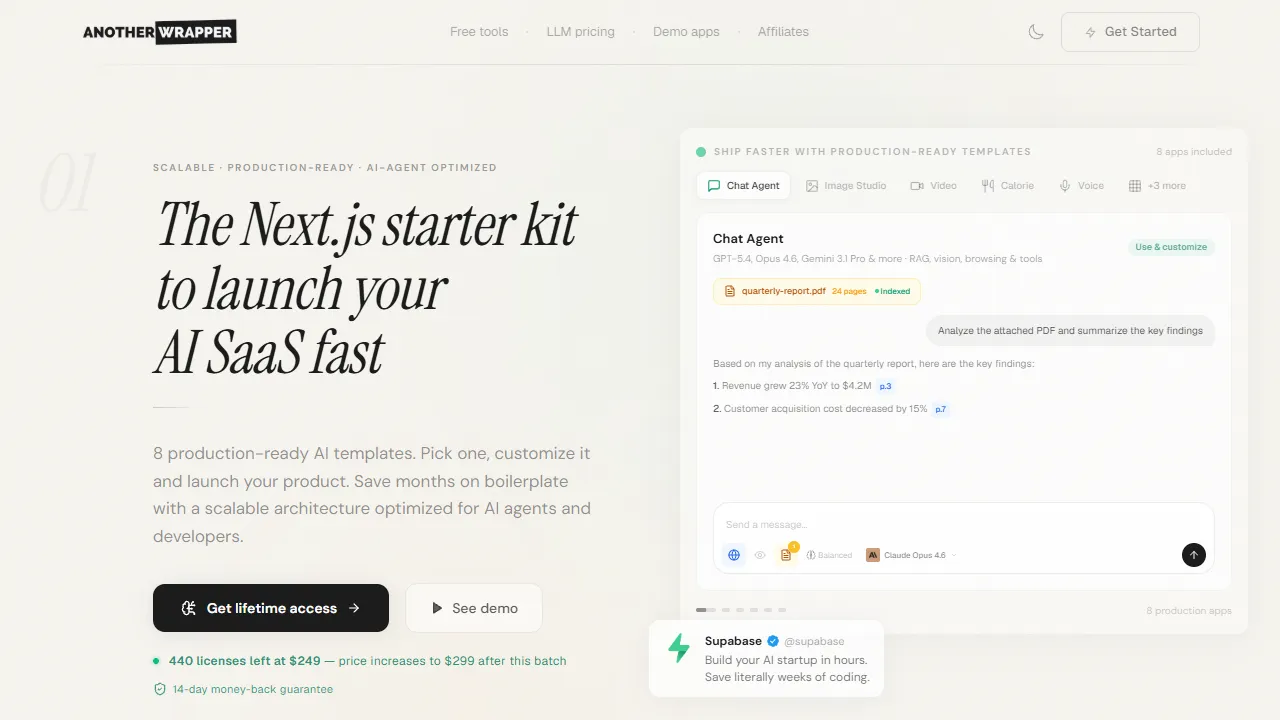
If you are riding the AI wave and building an AI-native product, AnotherWrapper is the most specialized saas boilerplate on this list. It skips the generic SaaS features and dives deep into AI integrations, coming pre-configured with LLMs, RAG pipelines, and AI-specific UI components.
Why it’s a great alternative:
- AI-First Integration: Pre-configured out of the box with OpenAI, Anthropic, and open-source models via platforms like Groq.
- Built-in RAG: Includes vector database integrations (like Pinecone or Qdrant) necessary for chatting with documents.
- Demo Apps Included: It comes with 10+ fully functional AI demo apps (like PDF chat, AI image generators, and voice transcription apps) that you can rip apart and modify for your own use case.
The Trade-off: If your application is a traditional CRUD app and not heavily AI-focused, this boilerplate is massive overkill and contains too many unnecessary API dependencies.
5. LaunchFast
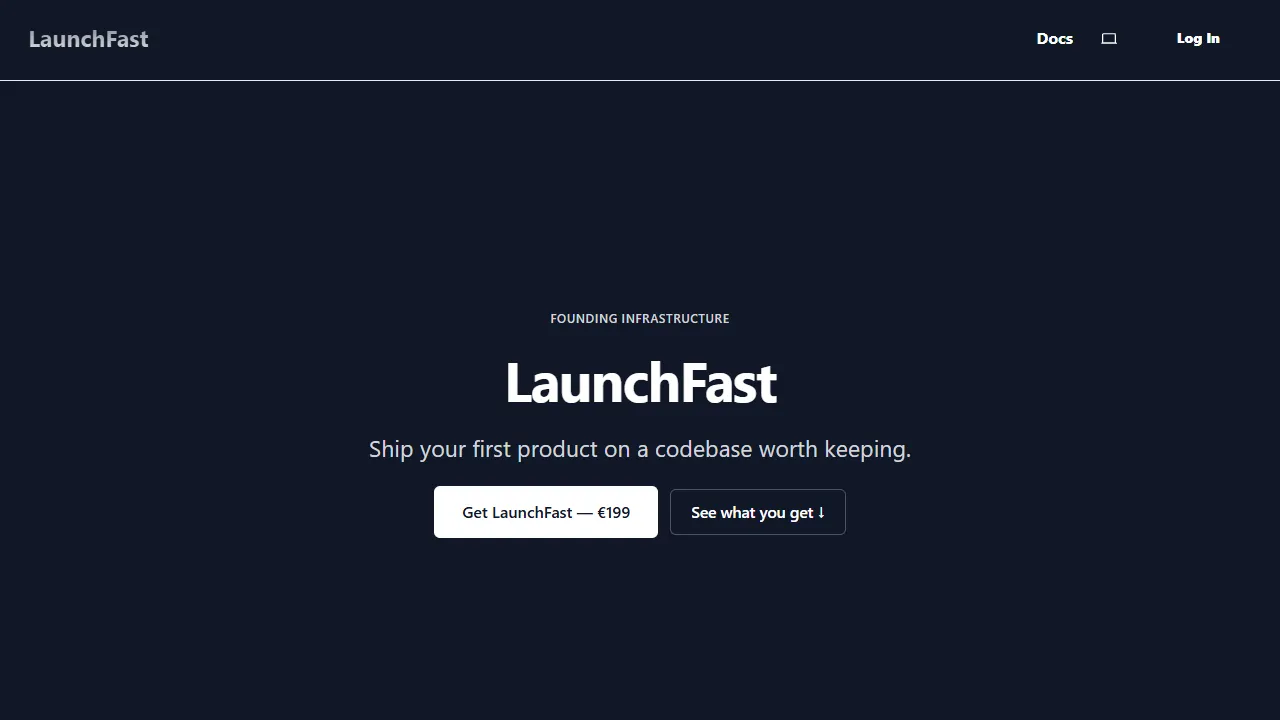
LaunchFast is an excellent alternative if you love the overarching idea of Shipfast but prefer a completely different frontend framework. While they do offer a Next.js version, their Astro and SvelteKit boilerplates are incredibly popular in their respective communities.
Why it’s a great alternative:
- Framework Variety: It offers first-class support for Next.js, Astro, and SvelteKit.
- Performance Focused: The Astro boilerplate in particular is exceptionally fast and ships zero JavaScript by default, making it perfect for SEO-heavy directory sites or content platforms.
- Excellent Documentation: They provide clear, concise, step-by-step tutorials for getting your app from
localhostto a live production URL.
The Trade-off: The Next.js version is functionally very similar to other mainstream boilerplates, so the primary advantage here lies with developers looking to escape the React ecosystem for Astro or Svelte.
(For a deeper dive into evaluating these technical options, check out our comprehensive post on Next.js boilerplates for SaaS.)
Frequently Asked Questions (FAQ)
What exactly is a SaaS boilerplate?
A SaaS boilerplate is a pre-written codebase that includes all the common, repetitive features needed to launch a software-as-a-service application. This typically includes user authentication, database ORM configurations, and payment processing integrations via platforms like Stripe or Lemon Squeezy, saving you from writing this plumbing code from scratch.
Is Shipfast still worth it in 2026?
Shipfast remains a viable, popular option for absolute beginners looking to launch a simple micro-SaaS very quickly without sweating the details. However, experienced developers and ambitious founders often prefer a more modular approach or feature-rich alternatives like supastarter for better long-term scalability and significantly less design lock-in.
Can I use the ogblocks component library with any boilerplate?
Absolutely! That is the core beauty of a copy-and-paste component library. You can use ogblocks alongside Open SaaS, Makerkit, or even a completely scratch-built Next.js application. Because you own the actual source code, it integrates seamlessly anywhere React and Tailwind CSS are supported.
Why should I pay for UI components when free ones exist?
While there are fantastic free UI libraries available (like Shadcn UI), premium libraries like ogblocks offer complex, high-converting, fully composed page layouts with built-in Framer Motion animations that take dozens of hours to build from scratch. You aren't just buying code snippets; you are buying the hundreds of hours of design thinking, animation engineering, and conversion rate optimization that went into them.
Do I need advanced React knowledge to use ogblocks?
Not at all. If you know how to copy text, paste it into a .tsx file, and change the words inside a <p> tag, you can use ogblocks. The components are designed to be highly readable and easy to customize, even for developers who consider themselves backend-heavy.
The Final Verdict: Stop Fighting Boilerplates, Start Shipping
Finding the right Shipfast alternative depends entirely on your specific business goals, technical background, and target audience. If you need complex B2B multi-tenancy to serve enterprise clients, Makerkit is fantastic. If you demand open-source freedom and zero licensing costs, Open SaaS is unequivocally the way to go.
But the ultimate, undeniable truth of building a successful SaaS in 2026 is that design is the ultimate differentiator. Users have high expectations; they expect premium, fluid, and trustworthy interfaces. A mediocre design instantly signals a mediocre product.
If you want to build a product that stands out in a crowded market, stop wrestling with generic boilerplate CSS. Use a solid, free backend foundation to handle the boring stuff, and power your frontend with the premium designs of ogblocks.
Are you ready to stop tweaking CSS and start shipping a beautiful, high-converting SaaS application in record time?
Get lifetime access to ogblocks today and transform your UI instantly.
Written by Karan
Karan is a React engineer and the founder of ogBlocks, building high-performance UIs for SaaS.