The Ugly Truth About Outsourcing SaaS Development
When bringing a visionary digital product to life, the very first major architectural hurdle every solo founder faces is securing the right engineering talent. You have exactly two traditional choices: spend months hiring an expensive internal team, or look into outsourcing SaaS development to external agencies and freelance contractors. While the idea of handing your grand vision over to an agency and magically receiving a fully functional product 8 weeks later sounds incredibly appealing, the reality of the software industry is rarely that straightforward.
Outsourcing SaaS development is often marketed as the ultimate cheat code for indie hackers and startup founders who lack deep technical backgrounds or massive seed funding. However, beneath the attractive facade of $40 per hour developer rates lies a labyrinth of hidden technical debt, agonizing asynchronous communication delays, and misaligned incentives that can silently bankrupt your company before you ever reach product-market fit.
This comprehensive guide is designed specifically for SaaS founders and ambitious indie hackers. We will dissect the absolute truth about outsourcing software development, highlight the massive risks involved in the traditional agency model, and reveal a highly effective modern alternative—leveraging premium UI component libraries—to intelligently "outsource" the most tedious parts of your application without ever sacrificing control.
Key Takeaways
- The Real Price Tag: Outsourcing SaaS development to offshore agencies may seem cheap initially, but the hidden costs of extensive QA testing, endless rewrites, and dedicated project management often double the final functional invoice.
- The Core Risk: External developers are motivated strictly by billable hours and closed Jira tickets, not the long-term scalable success or architectural integrity of your SaaS product.
- The Frontend Friction: Over 70% of early-stage SaaS development delays occur strictly in the complex frontend layer (UI/UX, animations, state management).
- The Smart Alternative: Instead of paying an agency $20,000 to reinvent buttons and cards, top founders ship 10x faster by purchasing premium, production-ready component libraries like ogBlocks to legally "cheat" the frontend build process.
Table of Contents
- The Seductive Appeal of Outsourcing SaaS Development
- The Hidden Financial Costs Nobody Talks About
- The Critical Flaws of the Agency Model
- Evaluating Freelancers vs Established Dev Shops
- Why the Frontend is the Hardest Part to Outsource
- The Third Option: Smart "Outsourcing" Using ogBlocks
- Why Serious Indie Hackers Choose Component Libraries
- Frequently Asked Questions (FAQ)
The Seductive Appeal of Outsourcing SaaS Development
When you first conceptualize your disruptive new SaaS idea, your initial momentum is electrifying. You want to execute immediately. You start furiously sketching complex dashboards and mobile responsive layouts on a whiteboard. But then reality violently strikes: you actually have to build the thing.
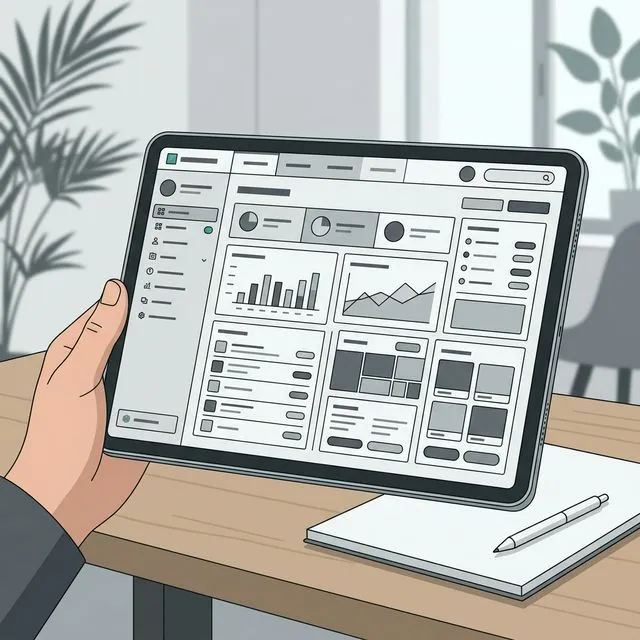
If you try to hire a senior local full-stack developer in North America or Western Europe, you are immediately looking at a base salary easily exceeding $130,000, plus equity, competitive health benefits, and a brutal 45-day recruiting cycle just to get a single signature on an employment contract. As a bootstrapped indie hacker or an early-stage founder with limited runway, that mathematical equation simply does not compute.
This is precisely why outsourcing SaaS development becomes the obvious default answer. You jump onto Upwork, Clutch, or Toptal, and you are instantly bombarded with thousands of offshore agencies and global freelancers proudly promising to build your entire Minimum Viable Product (MVP) in under 6 weeks for a flat fee of $15,000. It deeply feels like a miraculous operational loophole.
Outsourcing offers immediate scalability, removes the crippling friction of human resources management, and provides instant theoretical access to highly specialized skill sets like strict TypeScript architecture and complex database scaling.
The Hidden Financial Costs Nobody Talks About
While the initial hourly rate of an outsourced software engineer might be a massive 60% lower than a local employee, the true total cost of ownership (TCO) for a fully functional, usable product is often shockingly similar.
The traditional cost equation aggressively ignores the brutal reality of the software development lifecycle. When you outsource SaaS development across 10 different time zones, you fundamentally become a full-time, unpaid Project Manager.
The Tax of Asynchronous Communication
When a developer in Eastern Europe or Southeast Asia encounters a vague requirement in your functional brief regarding how a dashboard data table should conditionally render, they cannot just walk over to your desk to ask a quick 30-second clarifying question. They post a message in Slack at 3:00 AM your local time. You confidently answer them at 9:00 AM your time. Because their workday is already over, they implement your feedback the strongly following day.
This agonizing 24-hour feedback loop turns what should genuinely be a simple 2-hour UI tweak into a frustrating 4-day structural bottleneck. If you extrapolate this massive inefficiency across a 12-week core development cycle, your projected "cheap" MVP suddenly requires double the billable hours simply due to unavoidable logistical friction.
Project Management and Quality Assurance
Furthermore, outsourced code rarely comes back absolutely perfect on the very first iteration. You will meticulously spend countless exhausted nights manually QA testing broken staging links, violently clicking every single button, and writing massive Google Docs detailing the myriad of ways the responsive mobile design completely breaks on an iPhone 14 Pro Max. You are effectively paying for their bugs with your own invaluable time.
The Critical Flaws of the Agency Model
Beyond simple financial metrics and time delays, there are deep structural problems with relying on an external agency to build the core intellectual property of your primary business.
- The "Classic Bait and Switch": To aggressively win your lucrative business, a slick agency sales representative will introduce you to their absolute top-tier, brilliantly talented senior software architect. This genius gives you immense confidence. Unfortunately, the moment you sign the master service agreement and wire the initial $10,000 deposit, that brilliant senior architect magically disappears. The agency quietly hands your incredibly complex SaaS project over to two inexperienced junior developers who are actively learning React.js on your dime.
- Misaligned Incentives: An organic internal employee desperately wants the SaaS product to radically succeed so their company equity becomes valuable. An outsourced agency wants to violently force your project scope to fit the lowest possible effort, aggressively close out all outstanding Jira tickets, process your final invoice, and rapidly move on to the next high-paying client. They deeply lack the vital long-term context to make optimal architectural decisions.
- The Spaghetti Code Trap: Because the agency knows they will likely not be the ones actively maintaining this software three years from now, they will comfortably take massive architectural shortcuts to meet strict deadlines. They will heavily hard-code critical variables, completely ignore proper TypeScript typing standards, and create tangled "spaghetti code" that becomes absolutely impossible for a new future developer to untangle or scale without initiating a total rewrite.
If you strongly want to learn more about exactly why product development gets so complicated, we highly recommend reading our guide on challenges in product development.
Evaluating Freelancers vs Established Dev Shops
If you are 100% firmly committed to outsourcing SaaS development to save your own early runway, you must strategically decide between hiring isolated individual freelancers or locking into an established development shop.
Freelancers offer the absolute lowest immediate cost. You speak directly with the exact person actively writing your code, eliminating the frustrating project manager middleman. However, freelancers are single points of catastrophic failure. If your solo freelancer gets sick, takes a three-week vacation, or simply ghosts you for a higher-paying enterprise contract, your entire company roadmap forcefully grinds to a devastating halt. Furthermore, no single freelancer is a total expert in UI/UX design, database architecture, backend security, and complex frontend animation simultaneously. You will invariably suffer in at least one or two of those critical categories.
Established Dev Shops (Agencies) provide massive operational stability. They have dedicated UX designers, strict QA testers, and senior project managers. If one specific developer abruptly quits their firm, their project manager simply assigns a completely new developer to your active account within 24 hours. However, you pay a massive 30% to 50% premium literally just for this perceived stability and administrative overhead, heavily diluting the primary financial advantage of outsourcing in the first place.
Why the Frontend is the Hardest Part to Outsource
When building modern web applications, integrating a Stripe payment gateway or securely setting up basic user authentication with Supabase is actually largely categorized as a distinctly solved problem. The backend architecture is remarkably predictable.
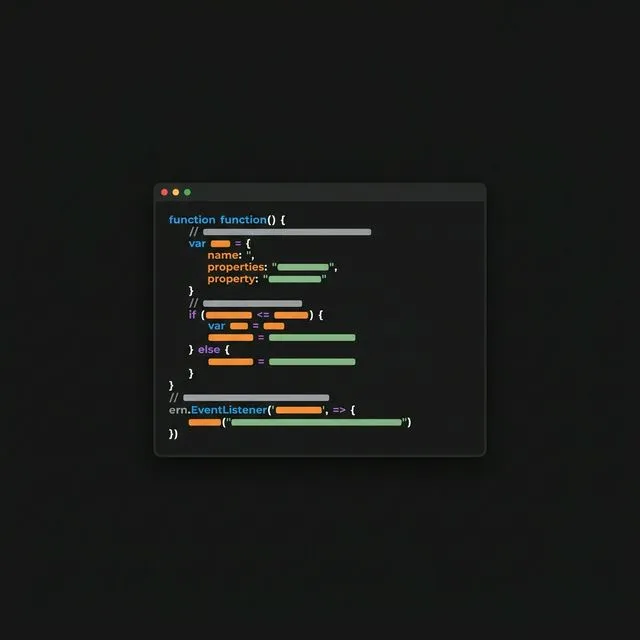
The terrifying friction occurs entirely on the frontend.
The intricate UI layer is the only tangible part of the product your customers actually see, interact with, and intimately judge your brand upon. It requires complex Framer Motion animations to feel premium, pixel-perfect Tailwind CSS implementations for complex responsive layouts, and flawless client-side state management.
When you extensively outsource the frontend of your application, you endlessly fight a losing battle over subtle aesthetics. The outsourced developer might technically build a structurally functional data grid, but it aggressively looks like a terrifyingly sterile internal corporate dashboard from 2014. Getting them to refine the exact micro-interactions, adjust the padding precisely, and utilize modern glassmorphism effects requires writing desperately detailed tickets that invariably take longer than just writing the actual code yourself.
The Third Option: Smart "Outsourcing" Using ogBlocks
Here is the ultimate secret weapon that highly successful indie hackers actually use. They strictly realize that the classic debate between hiring massive internal teams and outsourcing SaaS development is a totally false dichotomy.
You absolutely do not have to build every single piece of your user interface completely from scratch. You can profoundly "outsource" 80% of your frontend development by utilizing premium, pre-built component libraries immediately.
Instead of grudgingly paying an offshore agency an agonizing $12,000 strictly to repeatedly build standard navigation bars, animated pricing tables, responsive complex feature grids, and elegant hero sections, you can simply buy ogBlocks.
ogBlocks is the ultimate premium React and Next.js UI component library meticulously designed for modern SaaS startups. It gives solo founders and indie hackers instantaneous access to spectacularly beautiful, highly complex animated UI elements that look like they were custom-designed by a world-class, heavily funded agency in San Francisco.
How Component Libraries Change the Game:
- Unbelievable Speed to Market: Instead of waiting 14 agonizing days for an outsourced designer to deliver Figma mockups and a developer to translate them to messy CSS, you can simply confidently copy and paste a breathtakingly beautiful hero section into your Next.js application in precisely 30 seconds.
- Guaranteed Senior-Level Quality: You completely eliminate the terrifying risk of receiving "spaghetti code." With ogBlocks, all highly advanced Framer Motion physics, accessibility tags, and TypeScript interfaces are flawlessly pre-engineered by elite senior visual developers.
- Keep Your Core IP Internal: By relying heavily on ogBlocks for the incredibly tedious UI layer, you or your small verified internal team can furiously focus 100% of your daily energy aggressively building the actual proprietary backend business logic that makes your unique SaaS valuable, keeping your most critical intellectual property strictly out of the hands of random temporary offshore contractors.
If you are deeply curious about exactly which technologies to pair with premium UI libraries, check out our highly popular guide on the best tech stack for vibe coding.
Why Serious Indie Hackers Choose Component Libraries
The raw financial math is undeniably clear. Paying a standard outsourced developer an estimated $40 per hour to manually build and aggressively meticulously debug a highly complex animated dropdown menu will easily cost you over $400 in billable time alone. Paying for lifetime unlimited access to a top-tier premium library like ogBlocks gives you instant access to dozens of perfectly refined menus, cards, and sections for less than the cost of a single day of outsourced development work.
As a founder, your most critically incredibly valuable asset is entirely your personal time and daily momentum. Every single agonizing week you spend managing unpredictable offshore developers is a week your direct competitors are actively aggressively capturing your target market. By intelligently leveraging ogBlocks, you effectively "outsource" the most frustrating, time-consuming part of saas development directly to a flawless digital tool.
Stop intensely gambling your limited precious runway on highly unpredictable, completely uninvested external agencies. Intelligently take control of your product’s critical destiny, radically radically accelerate your core launch timeline, and immediately dramatically elevate your user experience.
Get ogBlocks today and build a stunningly gorgeous SaaS product that actively converts customers without ever having to manage a massively frustrating outsourced dev team again.
Frequently Asked Questions (FAQ)
What is the biggest danger of outsourcing SaaS development?
The absolute biggest structural danger is fundamentally receiving cheap, completely unmaintainable "spaghetti code." Because external outsourced agencies strictly operate on razor-thin fixed margins, they routinely take massive technical shortcuts to forcefully ship your product on time. This severe technical debt aggressively makes adding new future features or securely scaling your platform incredibly difficult without a highly expensive total codebase rewrite down the line.
How much does it actually truly cost to outsource MVP SaaS development?
While some offshore shops dangerously advertise complete MVP products for as low as $10,000, a functional, reliable, secure SaaS platform built by a reputable agency typically costs fundamentally between $35,000 and $70,000. This heavy total cost includes essential UI/UX graphic design, extensive rigorous backend architecture setup, third-party robust API integrations, and the mandatory intensive QA testing required for an actual public launch.
Should an indie hacker or solo founder aggressively try to learn to code or strictly just outsource?
Modern, successful indie hackers firmly rely aggressively on incredibly powerful modern tooling to bridge their skill gaps efficiently. If you possess basic solid programming fundamentals, utilizing a highly advanced frontend UI component library drastically accelerates your workflow to the extent that aggressive outsourcing is wildly unnecessary for your core MVP. You firmly retain total ownership of your codebase and learn incredibly rapidly.
How exactly do premium component libraries genuinely replace outsourced developers?
Premium component libraries completely forcefully remove the brutal need manually write complex, tedious frontend UI code. Because all highly responsive dynamic layouts, advanced Framer Motion animated states, and intricate complex styled components are flawlessly pre-built by senior engineers, you effectively entirely "outsource" the frustrating visual design portion of development right to the provided library, actively saving hundreds of frustrating development hours.
Written by Karan
Karan is a React engineer and the founder of ogBlocks, building high-performance UIs for SaaS.