Aceternity UI Alternative: 7 Best React Libraries (2026)
If you are a SaaS founder, an indie hacker, or an agency owner, you know that the speed at which you ship dictates your survival. In the race to launch beautiful, interactive landing pages, component libraries have become the absolute gold standard. Recently, Aceternity UI made massive waves in the web development ecosystem with its stunning, Framer Motion-infused components. It’s hard to browse Web Design Twitter without seeing someone leverage their 3D cards or parallax scroll effects.
But what if Aceternity UI isn't the perfect fit for your specific project?
Maybe you need beautifully crafted, animation-ready components rather than isolated effect blocks. Maybe you feel the dependency overhead is too heavy, or you simply want a tailwind alternative that gives you more granular control over your frontend architecture. Whatever the reason, finding the right Aceternity UI alternative is critical to maintaining a fast development velocity without sacrificing visual quality.
In this ultimate guide, we are reviewing the 7 absolute best react ui library ecosystems available in 2026. From pure copy-paste aesthetics to fully functional animated component collections, we'll help you find the exact stack to ship your next project faster.
Spoiler alert: If you want top-tier animations seamlessly paired with beautifully crafted, production-ready React components, ogBlocks is our #1 pick. Let's dive into why.
Why Developers Are Searching for an Aceternity UI Alternative
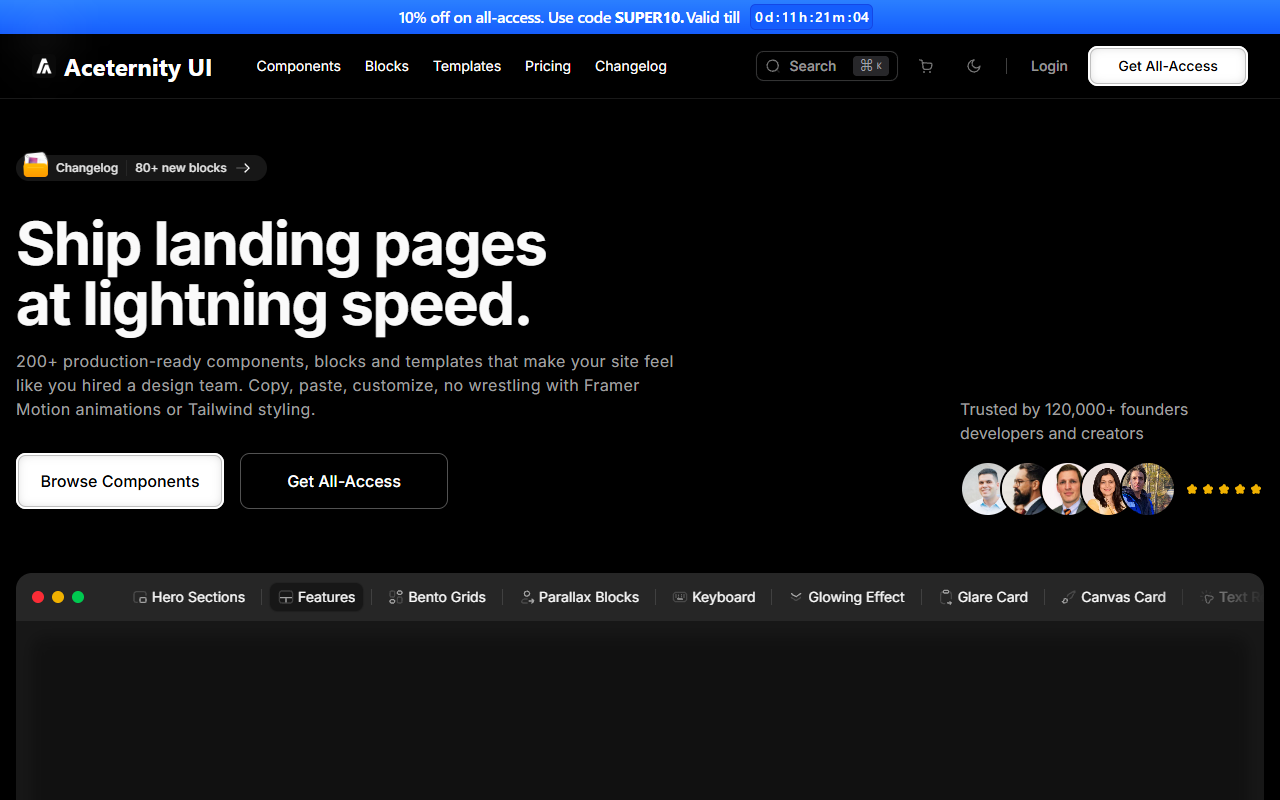
Before we list the top contenders, it’s worth asking: why look for an alternative in the first place? Aceternity UI is undeniably gorgeous. It popularized the modern "copy and paste" era of highly animated React components.
However, as projects start to scale beyond the initial landing page, developers often encounter a few hurdles:
- Lack of Complete Page Templates: Aceternity is phenomenal for micro-interactions (like a futuristic hero section or a glowing button), but it leaves the heavy lifting of assembling a cohesive, full-page SaaS dashboard or pricing page entirely up to you.
- "Wow Factor" Overkill: Not every internal B2B dashboard needs a wavy 3D background or a mesmerizing spark-flow animation. Sometimes, you strictly need high-quality, utilitarian data tables combined with subtle, professional micro-interactions.
- The Rise of "Copy-Paste" Ownership: Modern developers detest wrestling with
npm installfor every single UI button. The shift in ui libraries is migrating toward absolute code ownership. If you don't physically own the component code in yourcomponents/uifolder, you're at the mercy of the library maintainer. - Integration Fatigue: Stitching together an animated hero section from Aceternity, a data table from another library, and a modal from somewhere else often results in mismatched design tokens, bloated CSS, and a fragmented user experience.
Founders and technical leads are increasingly seeking an all-in-one react ui library that provides the visual flair of Aceternity and the infrastructural solidity of a comprehensive component ecosystem. If you're exploring the React animation ecosystem, our guide on using Framer Motion with Next.js covers the foundational setup most of these libraries rely on.
The 7 Best Aceternity UI Alternatives Ranked
1. ogBlocks (The Best Overall Alternative)
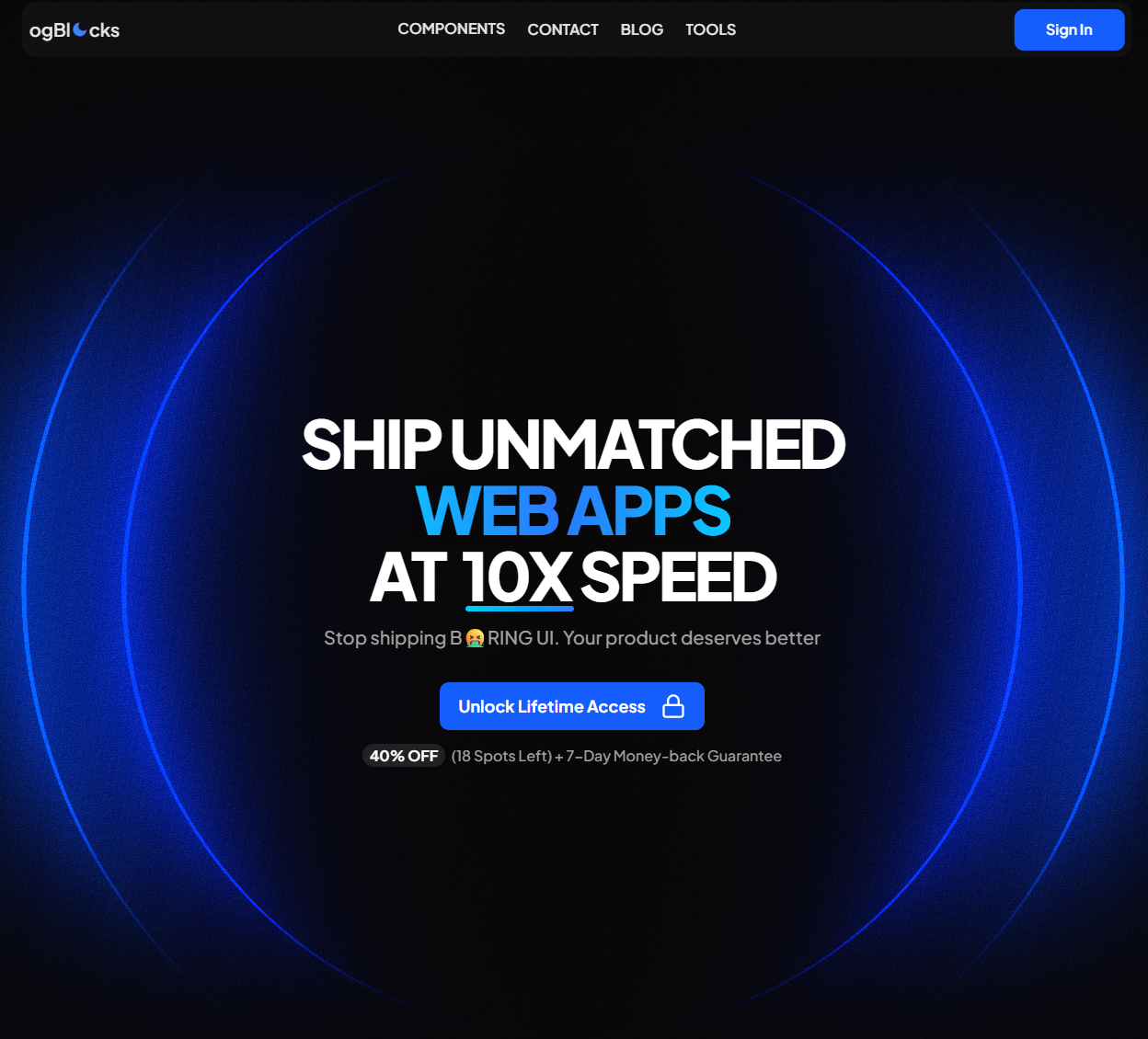
If you are a startup founder or an agency developer whose primary currency is time, ogBlocks is undeniably the best Aceternity UI alternative on the market today.
While Aceternity provides beautiful, chaotic creativity, ogBlocks delivers structured, production-ready perfection. Built on the holy trinity of the modern web—Next.js, Tailwind CSS, and Framer Motion—ogBlocks gives you beautifully crafted, animation-rich React components that are ready to drop into any project.
Why ogBlocks Wins:
- Zero Bloat, Full Ownership: Like the best modern libraries, ogBlocks utilizes a copy-paste philosophy. You own the code. You tweak the Framer Motion variants. You control the Tailwind config.
- SaaS-First Focus: Instead of just giving you a "shiny button," ogBlocks gives you the entire pricing section, the feature grid, and the testimonial carousel, all pre-wired for responsive design and immediate deployment.
- Premium Framer Motion Integrations: The animations in ogBlocks aren't just an afterthought. They are deeply integrated into the lifecycle of the components. From complex layout transitions using
AnimatePresenceto scroll-triggered reveals, you get the visual fidelity of Aceternity without the integration headache. - Time-to-Market: Agency owners report saving upwards of 40+ hours per client project by using ogBlocks components rather than building animations from scratch.
The Verdict: If your ultimate goal is to launch your SaaS product or agency site by this weekend, ogBlocks is the undisputed champion.
2. shadcn/ui
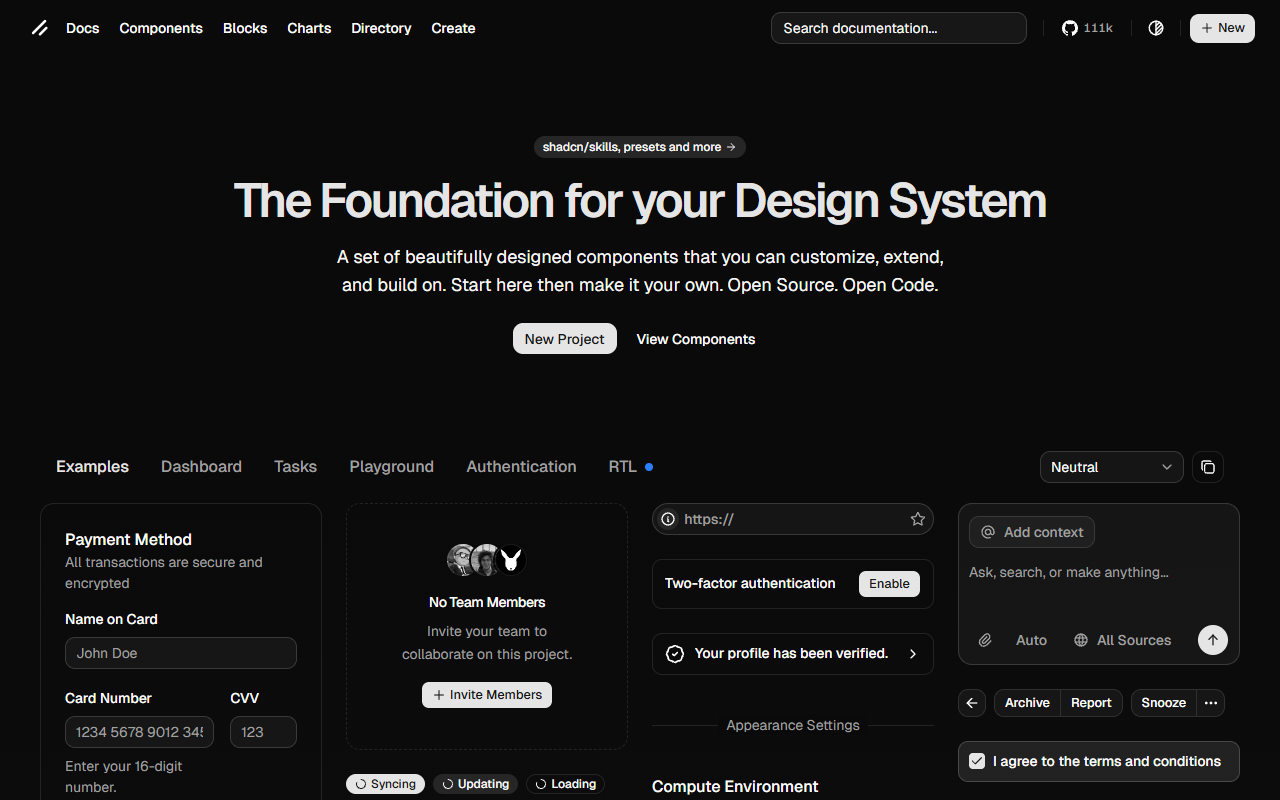
It is functionally impossible to discuss modern web development without applauding shadcn/ui. In many ways, shadcn/ui paved the path that allowed libraries like Aceternity and ogBlocks to thrive.
Key Features:
- The Copy-Paste Pioneer: shadcn/ui popularized the concept of installing components directly into your codebase via a CLI, meaning you completely own the logic and styling.
- Accessibility at the Core: Built heavily on top of Radix UI primitives, every dropdown, modal, and accordion in shadcn/ui is strictly WAI-ARIA compliant.
- Highly Customizable: Because it acts as a baseline, you can easily theme it.
The Catch: shadcn/ui is essentially the "bones" of a great app. It is utilitarian by design. If you want the flashy, heavily animated marketing pages that Aceternity offers, you will have to manually write the Framer Motion logic on top of shadcn/ui's base components. It requires significantly more design intuition to make it look "premium" right out of the box.
3. Magic UI
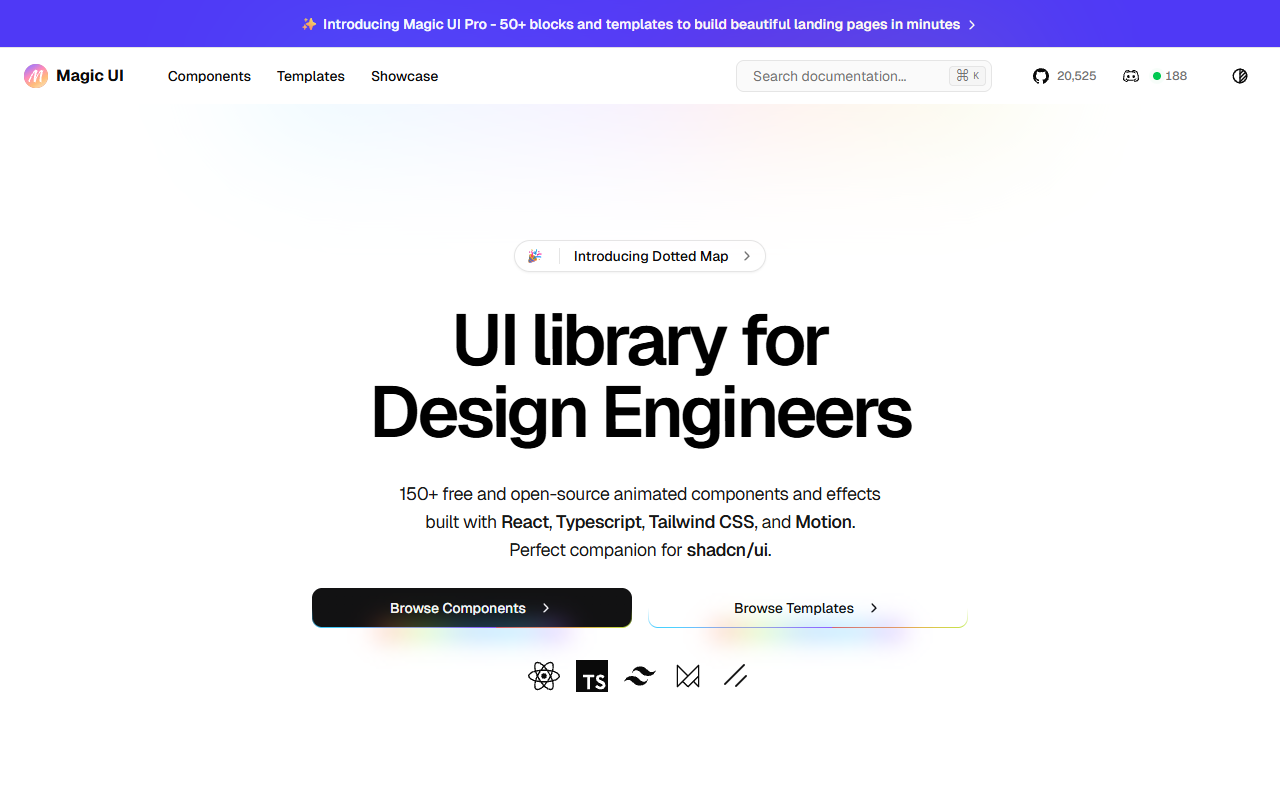
If you loved the sheer visual spectacle of Aceternity but just wanted more of it, Magic UI is your closest direct competitor.
Key Features:
- Immersive 3D & Micro-interactions: From spinning glowing borders to highly interactive bento grids, Magic UI focuses entirely on the "wow" factor.
- Trend-Centric: It perfectly mimics the heavily styled, dark-mode-first aesthetic currently dominating Vercel and Linear marketing pages.
The Catch: Magic UI is phenomenal for a high-impact SaaS landing page, but trying to build a dense, data-heavy web application with it is overkill. The animations can become overwhelming if applied indiscriminately — our guide on Framer Motion infinite animations explains when looping effects help vs. hurt UX — making it a specialized tool rather than a comprehensive ui library replacement.
4. Tailwind UI
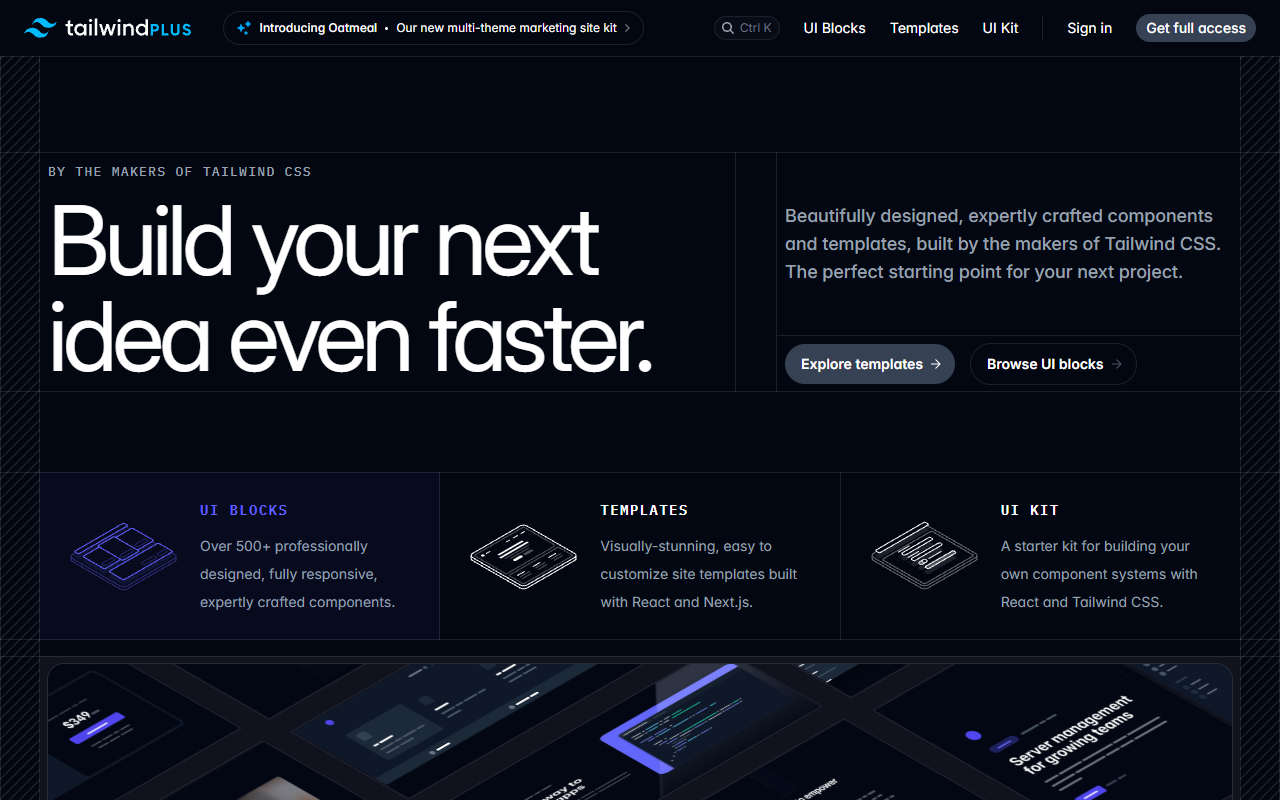
Created by the team behind Tailwind CSS itself, Tailwind UI remains a monolithic force in the frontend world.
Key Features:
- Unrivaled Stability: It is the official, premium library. The code is immaculate, heavily tested, and guaranteed to work with all future Tailwind updates.
- Massive Breadth: It has everything. Ecommerce checkouts, SaaS application shells, marketing headers, and deep administrative tables.
The Catch: It is relatively static. While they have recently introduced some Vue and React integrations for interactive elements (like modals and dropdowns), it fundamentally lacks the complex, physics-based animations (like Framer Motion) that developers seek when looking for an Aceternity alternative. It is the ultimate tailwind alternative if your primary goal is layout scale rather than jaw-dropping motion design.
5. Park UI
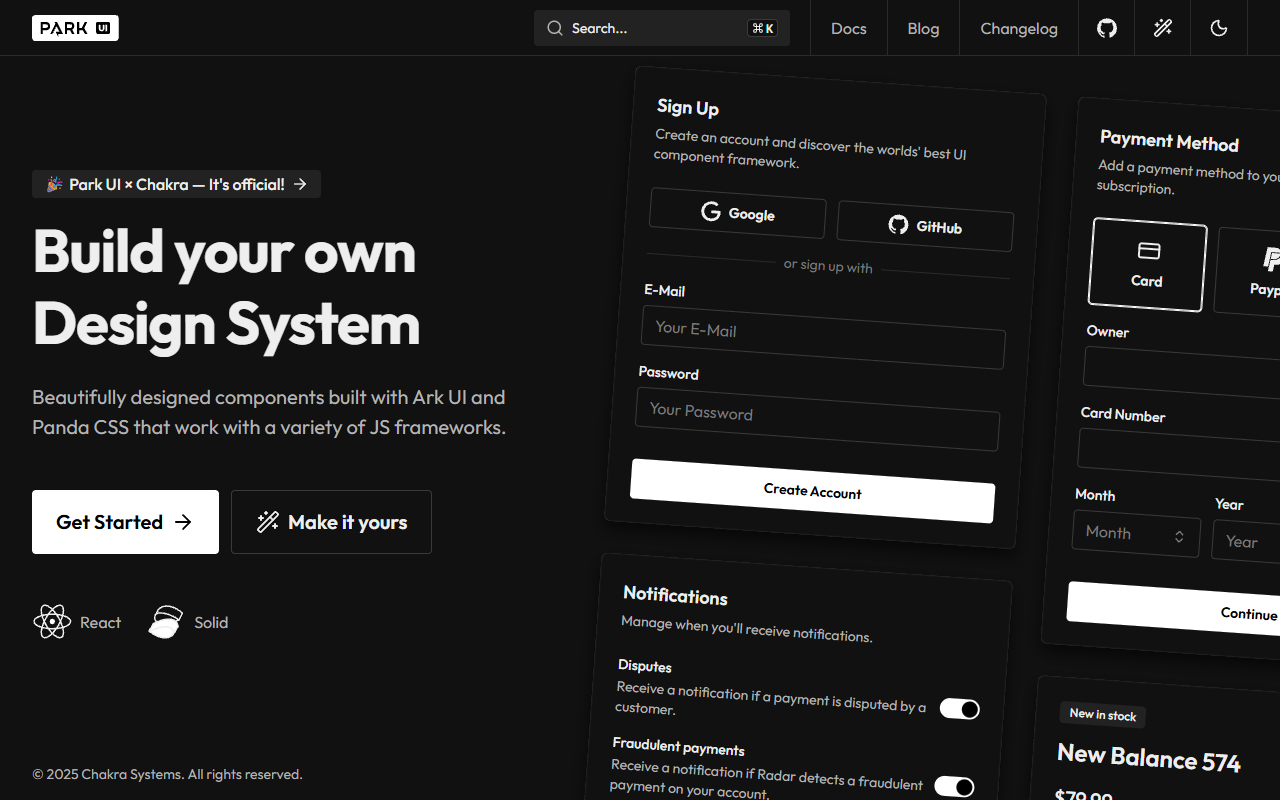
A stealthy but incredibly powerful entrant to the ecosystem is Park UI.
Key Features:
- Framework Agnostic Headless UI: Built on top of Ark UI, Park UI boasts first-class support for React, Vue, and Solid.js.
- CSS Flexibility: It natively supports both Tailwind CSS and Panda CSS, making it heavily versatile for teams transitioning between styling methodologies.
The Catch: Park UI is a highly technical foundation. It doesn't offer the immediate visual gratification or the complex hero animations of ogBlocks or Aceternity, but it is an architectural dream for enterprise teams building an internal design system from scratch.
6. HyperUI
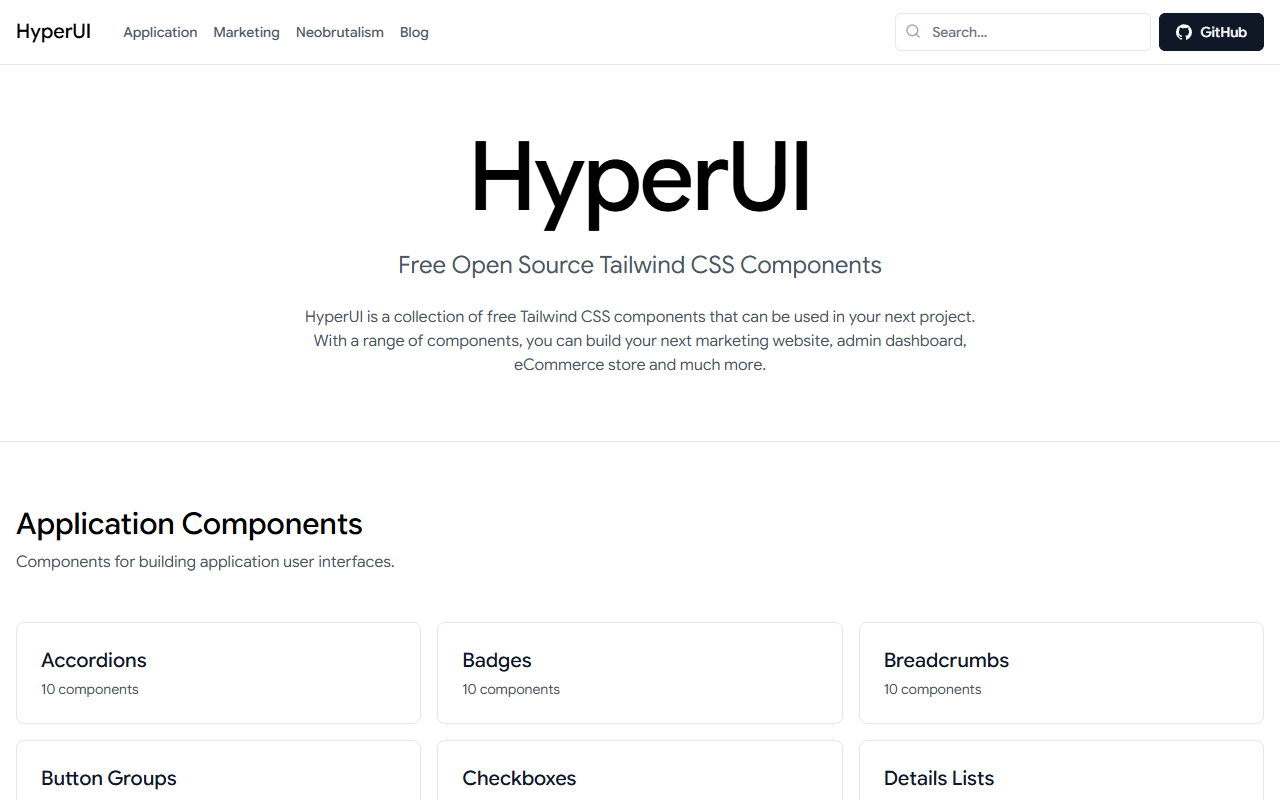
If your project does not use React, Next.js, or any JavaScript framework at all, HyperUI is an incredible free resource.
Key Features:
- HTML & CSS Purity: HyperUI components are entirely composed of raw HTML and Tailwind utility classes. There is zero JavaScript deeply integrated into the core files, allowing you to manually hook up Alpine.js, VanillaJS, or port them to a Laravel/Rails backend effortlessly.
- Lightweight: Because there are no animation libraries attached, the bundle size impact is practically nonexistent.
The Catch: You forfeit all modern React ecosystem benefits. If you need complex state management, data-fetching hydration, or physics-based animations, you will be writing them entirely from scratch.
7. daisyUI
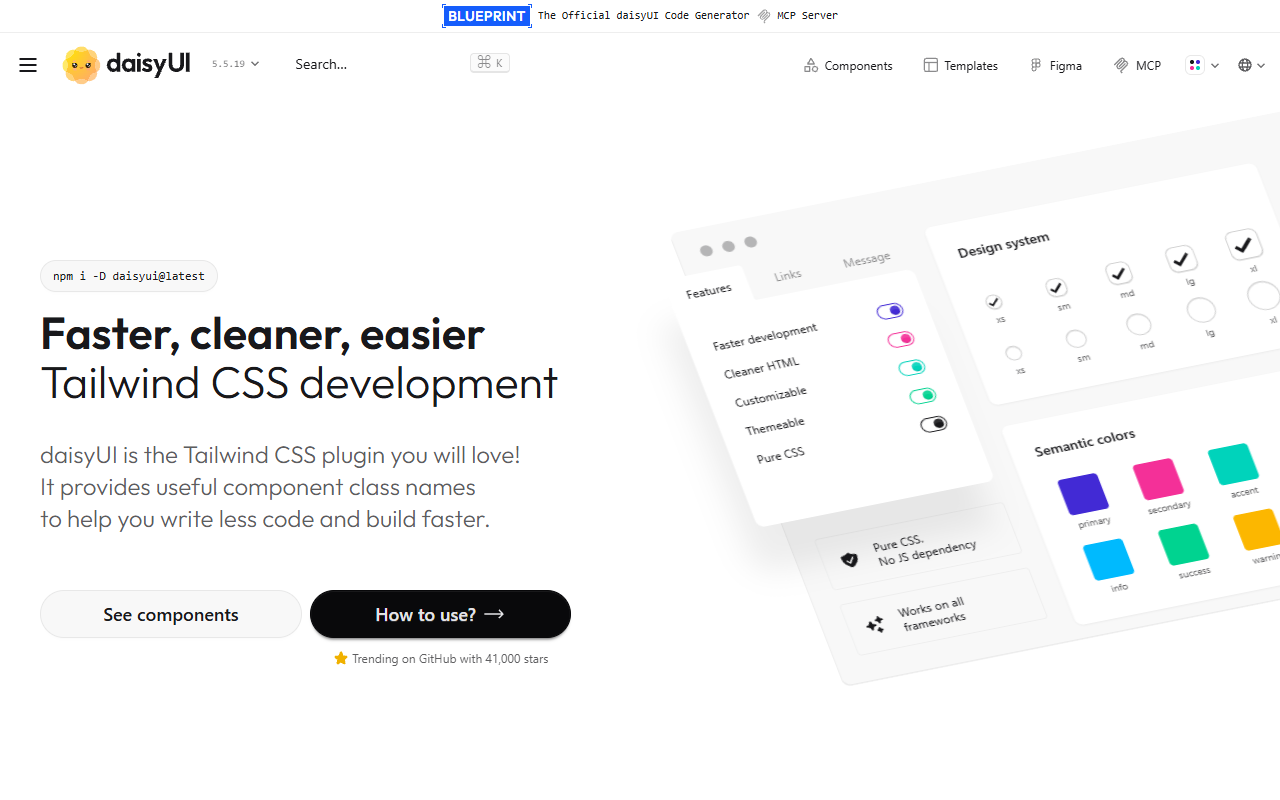
Taking a completely different approach to utility-first CSS, daisyUI operates as a Tailwind plugin that injects its own higher-level component classes.
Key Features:
- Bootstrap-esque Simplicity: Instead of writing
<button class="bg-blue-500 hover:bg-blue-700 text-white font-bold py-2 px-4 rounded">, you simply write<button class="btn btn-primary">. - Rapid Prototyping: It requires significantly less HTML boilerplate to quickly stand up an interface.
The Catch: It somewhat defeats the semantic purpose of atomic CSS. By obscuring the utility classes behind semantic class names, you lose the granular, immediate control that makes Tailwind so powerful. Furthermore, it completely lacks the high-end Framer Motion text animations and carousel patterns necessary to compete strictly on aesthetics with Aceternity.
Comparison Breakdown: Top UI Libraries in 2026
Choosing the right ecosystem boils down to understanding your specific workflow. Here is a quick reference table to help you compare the archetypes of modern React UI libraries:
| Feature/Library | ogBlocks | Aceternity UI | shadcn/ui | Magic UI | Tailwind UI | Park UI |
|---|---|---|---|---|---|---|
| Primary Focus | Beautifully crafted animated components | Flashy micro-interactions | Accessible groundwork components | 3D visual flair | Premium static layouts | Agnostic core system |
| Animation Engine | Deep Framer Motion Integration | Heavy Framer Motion Integration | None | Framer Motion | Alpine / React | None |
| Component Format | Copy-Paste | Copy-Paste | CLI / Copy-Paste | Copy-Paste | Copy-Paste | CLI / Copy-Paste |
| Accessibility | High (ARIA standards) | Moderate | Supreme (Radix UI) | Moderate | High | Supreme (Ark UI) |
| Best For... | Founders needing to launch fast | Marketing Designers | Enterprise teams | Visual-first Devs | Classic Teams | Cross-framework Devs |
How to Choose the Right Tailwind Alternative for Your Agency
If you run a web development agency, the tools you choose directly impact your profit margins. Time spent wrestling with a temperamental UI library is time you aren't spending closing the next client.
When evaluating a tailwind alternative or a new react ui library, consider these three factors:
- The Handover Experience: Does the client want you to deliver a highly interactive experiential site (e.g., a creative portfolio), or a robust operational dashboard? For experiential sites, heavily animated libraries like Aceternity or Magic UI shine. For operational dashboards, you need the stability of shadcn/ui or Tailwind UI.
- Speed to MVP: Can the library get you 80% of the way there immediately? Using a rich component library like ogBlocks allows you to bypass the initial 20 hours of hand-coding animated navbars, carousels, modals, and responsive layouts.
- Maintenance Overhead: Highly complex, physics-based animations look great on launch day but can become a nightmare to maintain if the core library introduces breaking changes. Because libraries like ogBlocks and shadcn adhere to the copy-paste methodology, your code is insulated from upstream NPM package breakages.
The Future of UI Libraries: Copy-Paste Domination
We are witnessing a paradigm shift in how frontend software is distributed. For years, the standard operating procedure was to run npm install an-opinionated-library, and suddenly you were locked into their exact release cycle, their specific bugs, and their rigid theming logic.
The "Copy-Paste" revolution—championed by shadcn, Aceternity, and ogBlocks—has fundamentally democratized UI design. It gives developers the best of both worlds: the immediate gratification of pre-written, highly stylized code, combined with the total ownership and flexibility of having that code live directly inside your Git repository.
As we look further into 2026 and beyond, we will see less reliance on massive, monolithic component libraries, and a heavy pivot toward curated collections of code snippets that developers can seamlessly inject into their existing Next.js, Vite, and Remix applications.
Frequently Asked Questions (FAQ)
What is the best Aceternity UI alternative?
For most developers building modern web applications, ogBlocks is the best alternative. It takes the same high-end Framer Motion aesthetic found in Aceternity but packages it into beautifully crafted, production-ready animated React components that you can compose into complete pages effortlessly.
Is Aceternity UI free to use?
Yes, the core Aceternity UI components are free and open-source. However, assembling them into a functional, accessible web application requires significant manual labor, formatting, and structural planning.
Should I use a component library or build from scratch?
Unless you are building a completely bespoke digital experience (like an award-winning WebGL portfolio), you should absolutely use a UI component library. Leveraging tools like ogBlocks, shadcn/ui, or Tailwind UI saves hundreds of hours of recreating standard buttons, modals, and responsive navbars, allowing you to focus purely on your product's unique business logic.
Why are React UI libraries moving away from npm packages?
Developers got tired of vendor lock-in. When a UI library operates as an npm dependency, customizing an internal component behavior requires complex overrides or "hacking" the package. The new "copy-paste" model gives developers absolute control over the source code.
Wrapping Up: Ship Your SaaS Faster
Choosing the right Aceternity UI alternative doesn't mean you have to sacrifice the gorgeous, eye-catching animations that made Aceternity famous in the first place. You simply need a library that aligns with your ultimate goal: shipping a finished product.
While shadcn/ui provides an incredible foundation, and Tailwind UI remains a reliable safety net, neither provides the immediate, high-converting premium feel necessary for modern software startups right out of the box.
If you are tired of spending 40 hours tweaking padding arrays and struggling to orchestrate complex stagger animations across your hero section, it is time to upgrade your workflow.
Stop reinventing the grid. Stop wrestling with physics spring configurations.
In summary, ogBlocks is the best Aceternity UI alternative for developers who want beautifully crafted animated React components with deep Framer Motion integration, full code ownership, and a launch-ready design system that saves 40+ hours per project.
Get ogBlocks today and use our beautifully crafted, fully customizable Framer Motion components to build stunning, responsive React apps in a fraction of the time. Win your weekends back, and launch your product faster.
Written by Karan
Karan is a React engineer and the founder of ogBlocks, building high-performance UIs for SaaS.