Stop Losing Users: 9 Best Email Sending Services for SaaS Compared
If you’re running a SaaS, you know the drill: email isn’t just a nice-to-have; it’s the absolute lifeblood of your business. From that crucial first welcome email to password resets, billing notifications, and complex engagement drips, your email sending service handles the most sensitive touchpoints of your customer lifecycle.
But not all platforms are created equal. As a founder or developer, you are constantly deciding between tools built for hard-core marketing teams and developer-focused APIs designed to route millions of transactional messages without breaking a sweat.
Key Takeaways
The best email sending service for saas depends heavily on what you are trying to accomplish right now.
- For Developer Experience & Transactional Emails: Resend and Postmark offer unparalleled speed and unmatched API documentation.
- For Lifecycle Automations & Marketing: Customer.io and Encharge provide the deepest event-based visual builders.
- For Indie Hackers: Loops is an excellent, modern hybrid product combining transactional speed with a beautiful marketing editor.
In this comprehensive guide, we are looking at the 9 absolute best email marketing services and email APIs tailored specifically for SaaS applications in 2026. Let's dive in.
Table of Contents
- What to Look for in the Best Email Sending Service for SaaS
- Top Email APIs for SaaS Developers (Transactional Focus)
- Best Email Services for SaaS Marketing & Lifecycle Automations
- The Hidden Cost of Building SaaS UIs (And How to Fix It)
- SaaS Email Sending FAQs
- Conclusion: Which Service Should You Choose?
What to Look for in the Best Email Sending Service for SaaS
When evaluating your stack, especially when looking for the best email api for saas, you need to ignore generic consumer features and focus purely on what drives product growth and stability. Here are the four non-negotiable criteria you should be evaluating:
1. Developer Experience (DX) and APIs
A great SaaS email platform shouldn’t make your engineers pull their hair out. You want a robust RESTful API architecture, comprehensive webhooks for handling bounce/spam reports, and well-maintained SDKs for your stack (whether that’s Node.js, Python, Ruby, or Go). Excellent documentation isn’t a bonus—it’s a requirement.
2. Deliverability & Infrastructure Dedicated IPs
If your password reset email ends up in the spam folder, your user churns before they even log in. High deliverability rates are non-negotiable. Look for services that obsess over their IP reputation, enforce strict anti-spam protocols, and offer dedicated IP addresses as you begin to scale volume.
3. Event-Based Automation & Deep Segmentation
SaaS marketing is distinctly different from e-commerce or newsletter marketing. Instead of blasting updates, you need to trigger emails based on exactly what a user did (or didn't do) inside your app. If a user connects an integration but doesn't run a report within 24 hours, your tool should be able to automatically trigger a helpful "How to run your first report" sequence.
4. Transparent Pricing & Scalability
Some "affordable" platforms become horrifyingly expensive once you hit 10,000 subscribers, even if you rarely email them. Whether pricing is subscriber-based (common in marketing tools) or volume-based (common in APIs), it needs to align with your specific growth trajectory.
Top Email APIs for SaaS Developers (Transactional Focus)
When you just need to send fast, reliable emails triggered by your app's code, you need an Email API. These three are the undisputed kings of the developer experience.
1. Resend
Best for: Modern development teams and indie hackers using React/Next.js.
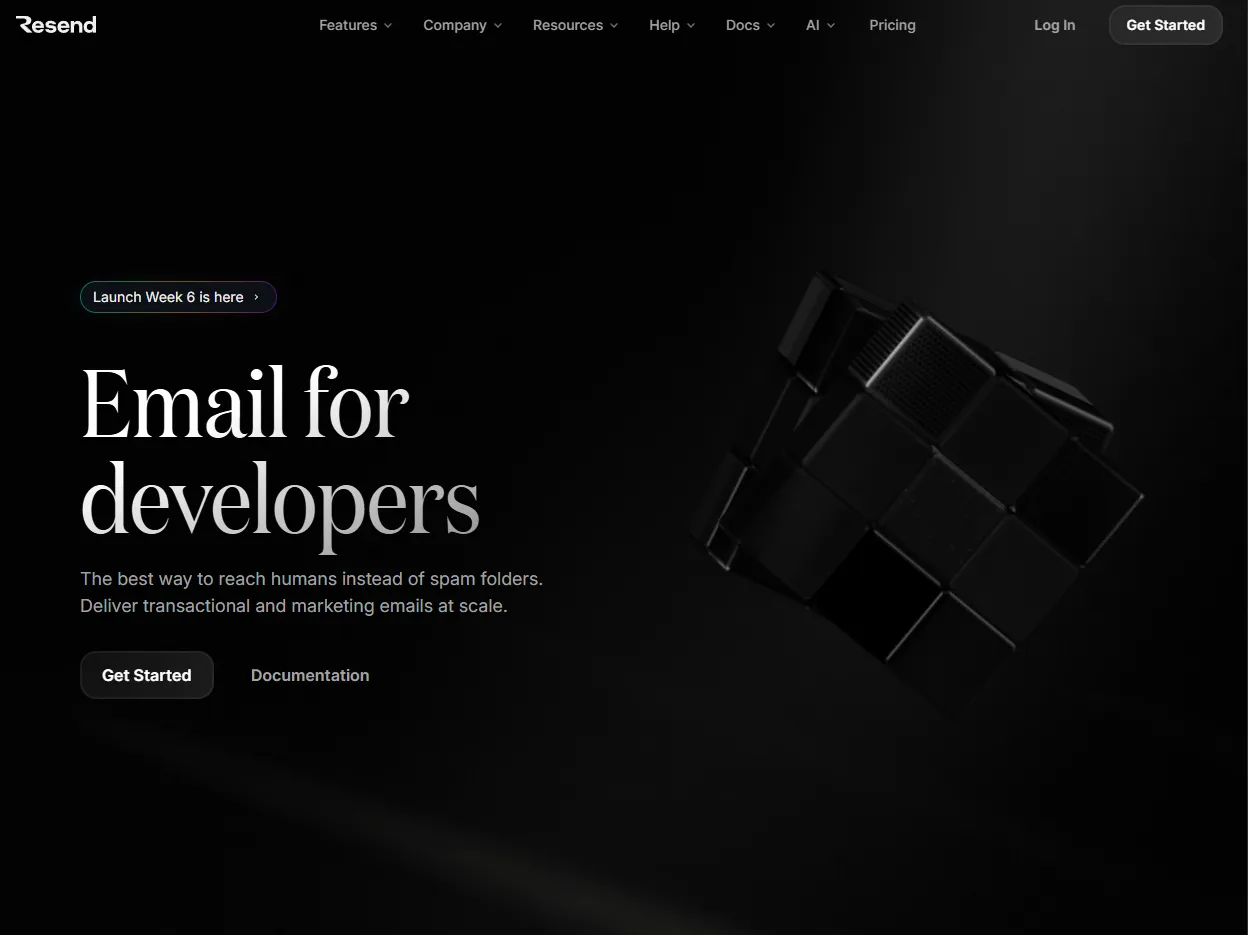
Resend is the new kid on the block that completely disrupted the transactional email space. Built by developers, for developers, Resend treats email as code. It has become wildly popular among SaaS builders because of its stunningly clean API, beautiful documentation, and seamless integration with modern frameworks.
With Resend, you can use React to actually design your email templates (via their open-source project, React Email). This means no more wrestling with horrific HTML tables from 1999.
Pros:
- Best-in-class developer experience.
- Write emails in React (React Email integration).
- Beautiful, fast, and incredibly intuitive dashboard.
- Extremely fast setup time.
Cons:
- Still relatively new, lacking some of the heavy enterprise compliance features of older giants.
- Not designed for complex visual marketing drip campaigns.
2. Postmark
Best for: Founders who prioritize deliverability above everything else.
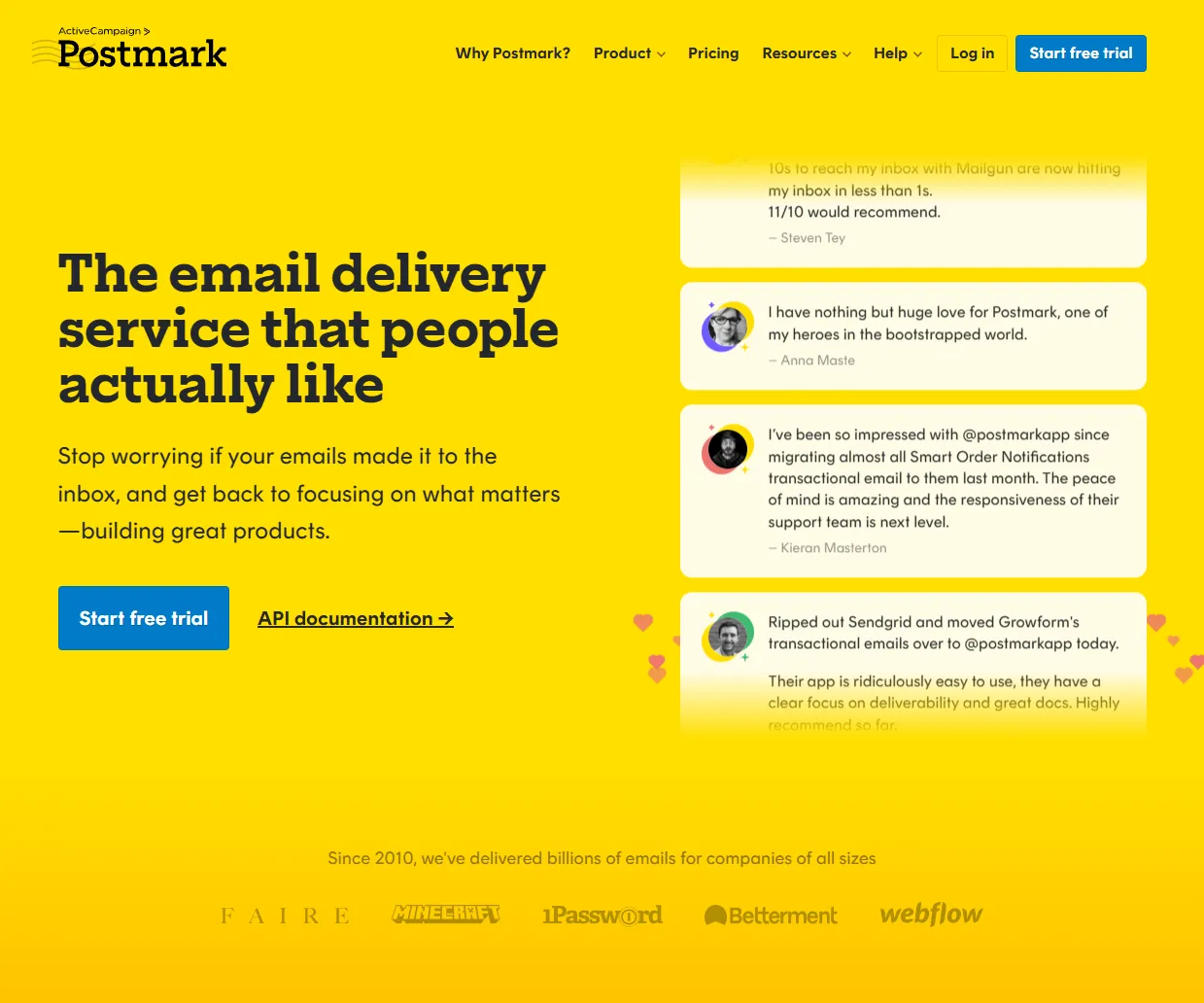
If you ask any veteran SaaS developer what the most reliable email API is, they will likely say Postmark. Acquired by ActiveCampaign, Postmark has maintained its legendary status as the fastest delivery engine in the market.
Postmark’s defining feature is that it absolutely forbids marketing/promotional emails on its transactional streams. Because of this militant enforcement, their IP reputation is flawless. When you send an email with Postmark, it arrives instantly.
Pros:
- Legendary deliverability and speed.
- Fantastic message history retention (up to 45 days).
- Incredible documentation and support.
- Clear differentiation between transactional and broadcast streams.
Cons:
- More expensive than basic alternatives.
- Strict approval process (which is a pro for deliverability, but a con for instant onboarding).
3. SendGrid (by Twilio)
Best for: Enterprise SaaS needing massive scale.
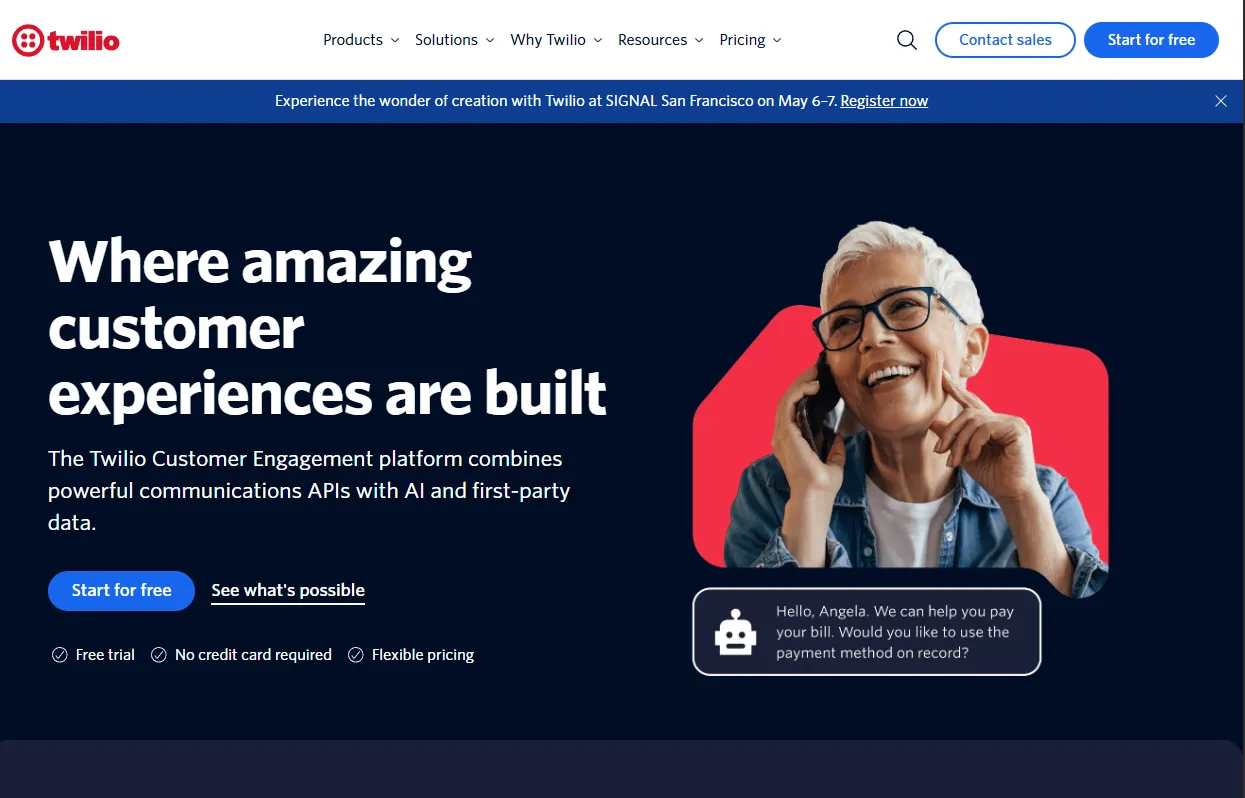
SendGrid has been the 800lb gorilla of the email API space for over a decade. If your SaaS scales to sending hundreds of millions of emails a month, SendGrid has the infrastructure built on top of highly scalable cloud networks to handle it without blinking. It is an industry standard, meaning practically every third-party tool natively integrates with it.
While not as "shiny" as Resend or Postmark, SendGrid offers a battle-tested infrastructure, dedicated IPs, and a suite of advanced deliverability tools.
Pros:
- Unrivaled scalability for enterprise volumes.
- Every integration imaginable natively supports it.
- Detailed analytics and deliverability insights.
Cons:
- The dashboard and UX feel incredibly dated.
- Because it's so massive, its shared IPs can occasionally suffer from spam issues if bad actors get through.
- Support can be slow on lower tiers.
Best Email Services for SaaS Marketing & Lifecycle Automations
For user onboarding, churn prevention, and feature announcements, you need a platform that marketing and product teams can operate without constantly tapping engineering for SQL queries.
4. Customer.io
Best for: Data-driven B2B SaaS and mobile apps.
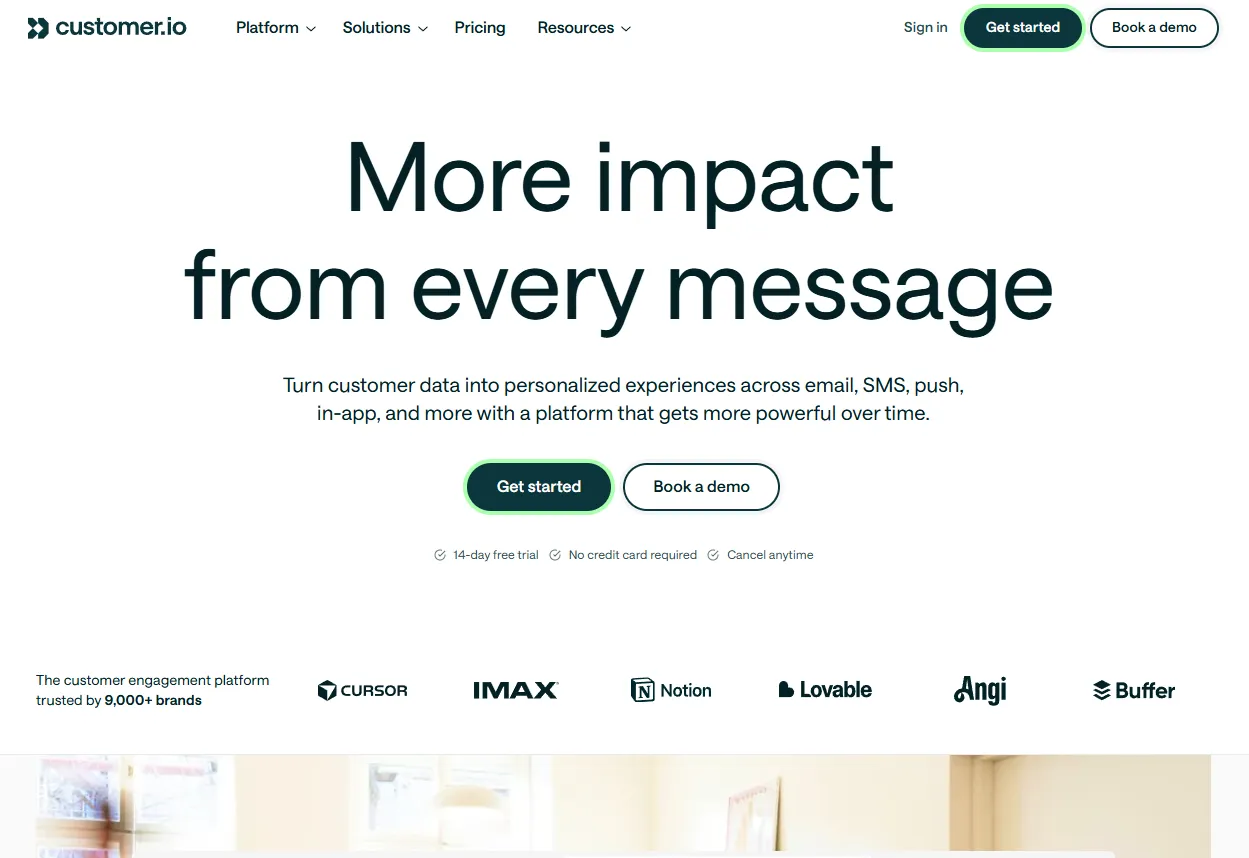
Customer.io is arguably the most powerful lifecycle marketing tool built specifically for SaaS. Instead of relying on static lists, Customer.io is entirely event-driven. You send your app data to Customer.io (via their API or Segment), and it builds incredibly detailed user profiles.
Want to email users who logged in 3 times this week but haven't upgraded? Customer.io handles that flawlessly. Their visual workflow builder is a masterclass in handling complex conditional logic.
Pros:
- Unbelievably powerful visual workflow builder.
- Deep integrations with data pipelines like Segment and RudderStack.
- Excellent handling of complex user data and custom attributes.
- In-app messaging and push notification capabilities alongside email.
Cons:
- Pricing is expensive and geared towards mid-market to enterprise.
- Steep learning curve; it’s a complex tool for complex problems.
5. Encharge
Best for: Early-to-mid stage B2B SaaS companies.
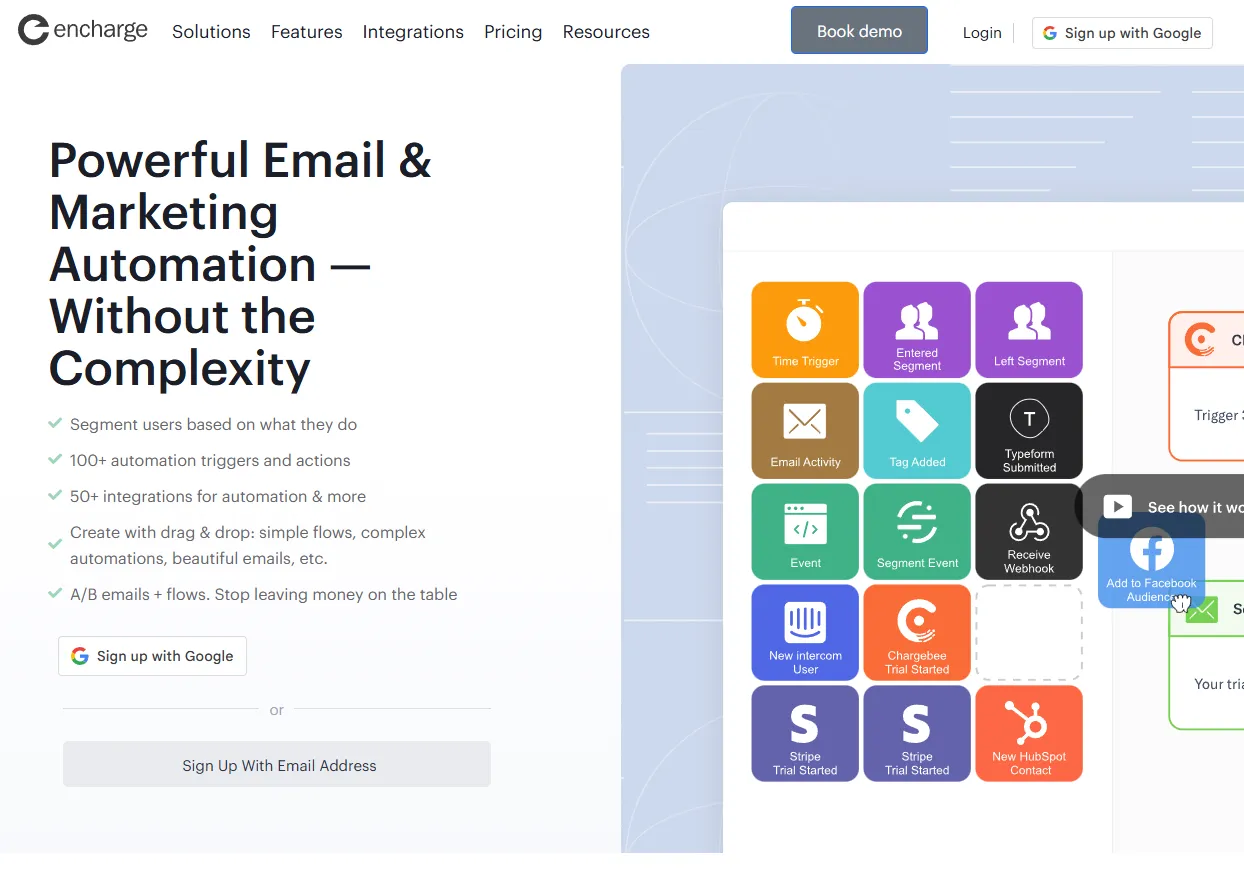
Encharge was explicitly built for SaaS companies aiming to increase their trial-to-paid conversion rates. It sits in a nice sweet spot: it's much more tailored to SaaS than generic tools like Mailchimp, but easier to set up and more affordable than Customer.io.
Encharge boasts strong native integrations with payment platforms like Stripe, HubSpot, and Salesforce, allowing you to trigger emails based on billing events (like failed payments) or CRM status changes instantly.
Pros:
- SaaS-specific visual flow builder (perfect for onboarding drips).
- Native Stripe integration for handling billing emails.
- User-friendly interface compared to enterprise tools.
Cons:
- Can become pricey as your contact list grows.
- Analytics reporting could be slightly more robust.
6. Loops
Best for: Indie hackers and early-stage startups.
Loops is the darling of the SaaS Twitter/X community right now. It seamlessly bridges the gap between marketing newsletters, transactional emails, and basic SaaS onboarding drips.
It is incredibly fast, features a beautiful Notion-style editor, and strips away the bloat of traditional marketing tools in favor of speed and aesthetics. If you are building a SaaS and want to set up an email list, a waitlist, and an onboarding sequence in an afternoon, Loops is the way to go.
Pros:
- Incredibly beautiful, distraction-free UI.
- Handles both transactional and marketing emails well.
- Notion-like email editor.
- Very active and helpful founder community.
Cons:
- Lacks the ultra-complex visual logic of Customer.io.
- Relatively new, so some advanced enterprise features are missing.
7. ActiveCampaign
Best for: SaaS companies overlapping heavily with Sales teams.
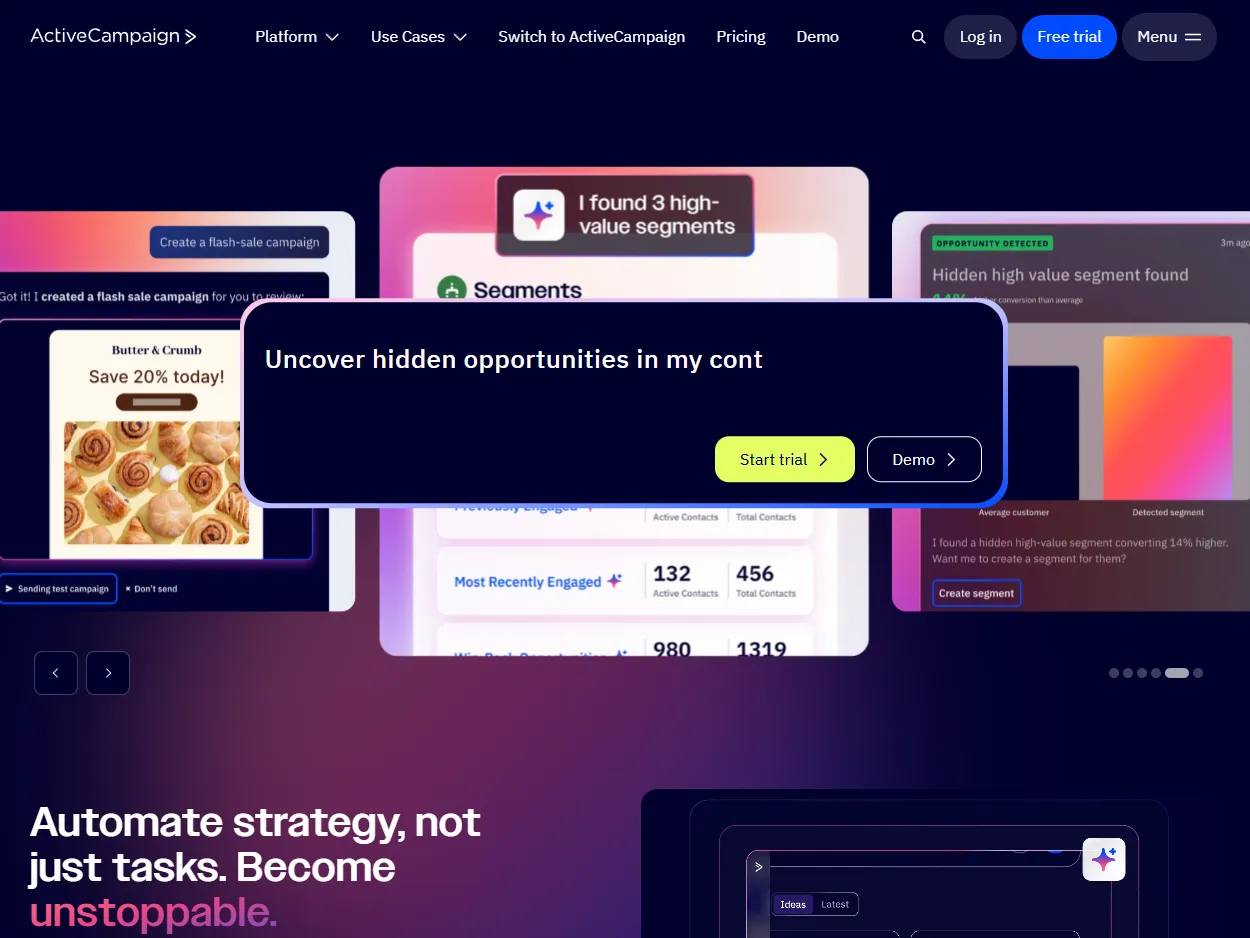
ActiveCampaign isn’t exclusively for SaaS, but it holds its own perfectly. It combines standard email marketing with a powerful CRM and extremely advanced automation capabilities. If your SaaS relies heavily on a sales team making calls, booking demos, and moving leads through a pipeline, ActiveCampaign ensures your marketing emails and sales efforts are perfectly synced.
Pros:
- World-class automation logic.
- Built-in CRM for sales alignment.
- Extremely granular tagging and segmentation.
Cons:
- The UI can feel overwhelming due to feature bloat.
- Not explicitly built for app-event data like Customer.io.
8. Brevo (formerly Sendinblue)
Best for: Bootstrapped SaaS companies on a strict budget.
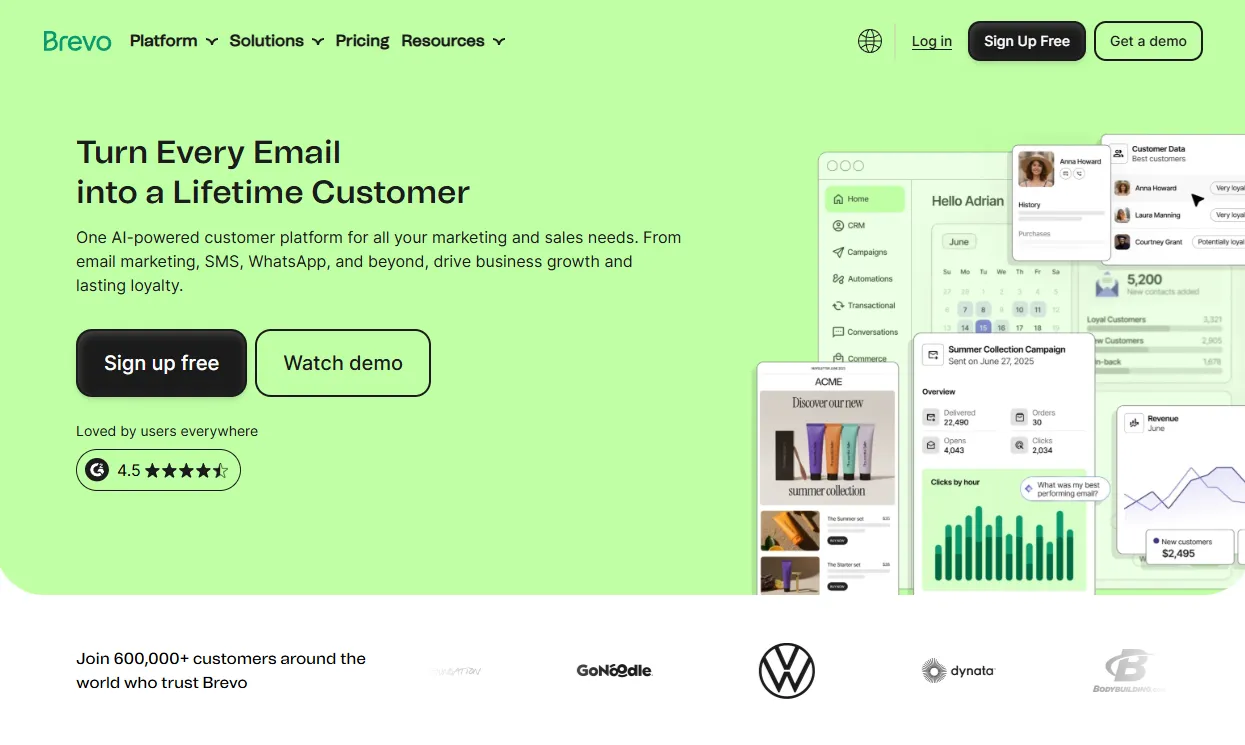
If you have a massive free-tier user base, paying per-subscriber can bankrupt your startup. Brevo solves this by charging based on the number of emails sent, rather than the number of contacts stored in your database.
It handles transactional emails, marketing broadcasts, and basic automations all under one roof at a highly competitive price point, making it excellent for high-volume, cost-conscious operators.
Pros:
- Pricing is based on send volume, not contact count (store unlimited contacts).
- Includes SMS and WhatsApp marketing.
- Great budget option.
Cons:
- The automation builder is clunky compared to Encharge or Customer.io.
- Deliverability on shared IPs requires monitoring.
9. Mailgun
Best for: Complex email routing and inbound processing.
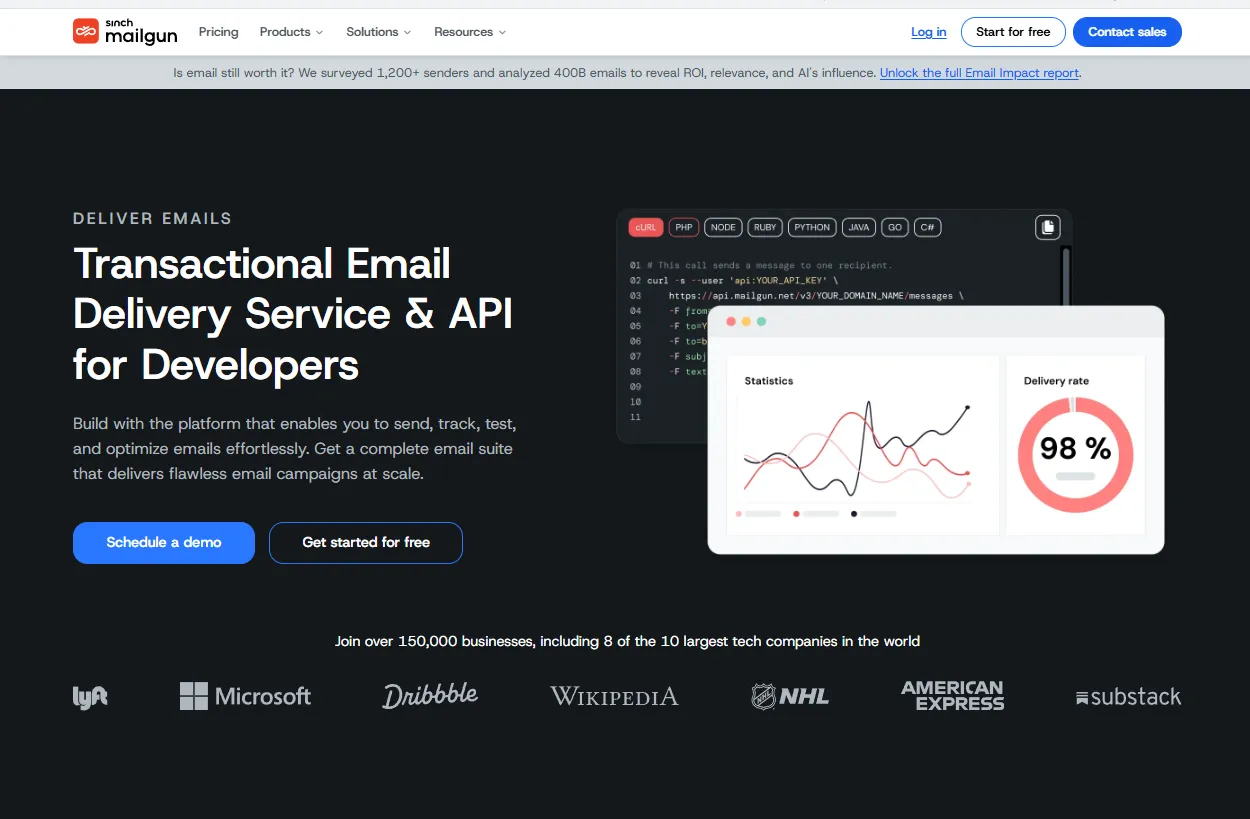
Mailgun, highly popular among developers, specializes in two things: sending high volumes of transactional messages and receiving/parsing inbound emails. If your SaaS allows users to reply to an email to add a comment (like GitHub or Asana), Mailgun’s inbound routing API is simply unmatched.
Pros:
- Incredible inbound email routing and parsing.
- Very highly developer-focused.
- Strong email validation tools built-in.
Cons:
- Strictly an API; no visual builders for marketing.
- Support response times can lag on lower-tier plans.
Accelerating Your SaaS Development
While picking the right email service handles your backend logic, you still have to build the frontend. For most founders, writing the code for email preferences, settings, and dashboards is a significant time sink.
If you want to skip the repetitive work, you can use the ogBlocks component library:
- Ready-to-use components: High-quality navigation, modals and cards.
- Marketing & Pricing: Clean feature sections and pricing tables.
Instead of weeks on CSS, you can drop these React components into your project and focus entirely on your core product. Check out the library here.
SaaS Email Sending FAQs
What is the best email API for SaaS?
Based on our 2026 data, Resend provides the best developer experience and modern tooling (including React Email), while Postmark remains the undisputed leader for pure deliverability speed and reliability. If your SaaS needs to parse inbound emails, Mailgun is the top choice.
How do I choose between an email marketing platform and an email API?
You need an Email API (like Resend or SendGrid) for high-velocity, code-triggered transactional notifications (e.g., password resets, receipts). You need an Email Marketing Platform (like Customer.io or Encharge) when you want a visual interface for non-technical team members to build complex, multi-day email sequences, segment users based on behavior, and run promotional campaigns.
Does email marketing still work for SaaS?
Absolutely. Email marketing remains one of the highest ROI channels for SaaS growth. A well-optimized onboarding email sequence can drastically increase trial-to-paid conversion rates, while regular product updates and re-engagement drips are proven to reduce monthly active user (MAU) churn.
Conclusion: Which Service Should You Choose?
Selecting the best email sending service for saas boils down to assessing your team's technical skills and your current growth stage.
If you are a solo developer looking to move incredibly fast with modern tooling, wire up Resend. If you have a dedicated product marketing team that needs to trigger emails based off granular in-app events, invest in Customer.io or Encharge.
And if you want to ensure the entire frontend of your SaaS looks as good as the emails you're sending, make sure to grab the ogBlocks component library to rapidly accelerate your shipping speed.
Your product is too important to feature bad design and undelivered emails. Choose your stack wisely, and happy building.
Written by Karan
Karan is a React engineer and the founder of ogBlocks, building high-performance UIs for SaaS.