Marketing for Solo Founders: The Secret Nobody Tells You
If you’re a solo founder, you undeniably know the central problem of the indie hacking journey: building the product is only 20% of the battle. In fact, neglecting distribution is one of the top mistakes of solo founders. The remaining 80% is figuring out how to get people to naturally discover and use it.
The struggle is pervasive, but the solutions found online rarely apply to bootstrappers. Traditional marketing advice is usually uniquely tailored for VC-funded startups equipped with massive, bottomless budgets and highly specialized, dedicated marketing teams.
Marketing for solo founders is entirely different. How do you do marketing as a solo founder without eventually burning out? The direct answer: you must aggressively prioritize high-leverage activities, rely heavily on automation and content batching, and critically build high-converting assets (like perfectly optimized landing pages) that do the selling for you while you sleep.
In this deep-dive guide, we will explore practical, proven ways to build an audience, routinely generate leads, and drive recurring revenue—without destroying your mental health or completely draining your bank account in the process. We'll show you exactly how to streamline your operations and how to ship 10x faster without sacrificing quality.
Table of Contents
- Why Traditional Marketing Advice Fails Solo Founders
- How to Prioritize Marketing Tasks as a Bootstrapped Solo Founder
- 6 High-Impact Marketing Strategies for Solo Founders
- Essential Marketing KPIs for Indie Hackers
- FAQs about Solo Founder Marketing
- Conclusion: Ship Faster, Market Better
Why Traditional Marketing Advice Fails Solo Founders

According to recent industry research, 23% entrepreneurs say, they feel burnouts, often. Solo founders and indie developers are especially vulnerable to this because they wear absolutely every hat: they are the core developer, the tier-one support rep, the head salesperson, and the marketing director.
When you sit down and read a generic blog post geared toward a 50-person startup, the marketing advice typically suggests:
- Publishing exactly 5 massive blog posts a week.
- Managing 4 entirely different social media channels with daily engagement.
- Running incredibly complex, retargeting paid advertising campaigns.
- Hosting weekly live webinars or podcast episodes.
As a bootstrapper, you naturally have a constrained budget and, exponentially more importantly, constrained time. Trying desperately to be absolutely everywhere at once directly leads to diluted, ineffective efforts and massive, profound exhaustion.
If you have entirely only 10 hours a week to dedicate to marketing, you simply cannot afford to waste them on experimental platforms that don’t immediately yield a high return on investment (ROI). You don't have the luxury of spending 3 months testing a high-cost acquisition strategy without guaranteed metrics. You need to focus strictly on what generates momentum today.
How to Prioritize Marketing Tasks as a Bootstrapped Solo Founder
The most successful solopreneurs are masters of ruthless prioritization. When you wake up, you might have a backlog of 50 different marketing ideas. How do you choose what to tackle in your limited 2 hours?
The most effective mental model for this is the ICE Framework, often evangelized by seasoned marketers across platforms like GrowthMentor:
- Impact (1-10): How much will this move the needle if it works perfectly?
- Confidence (1-10): How confident am I that I can properly execute this?
- Ease (1-10): How quickly and cheaply can I accomplish this task?
Score every single marketing idea you have out of 30. A massive SEO site restructuring might have an Impact of 9, but an Ease of 2. Writing a highly opinionated tweet thread about your niche might have an Impact of 6, but an Ease of 9. As a solo founder, you must violently skew toward high-ease, medium-impact tasks to build initial momentum.
6 High-Impact Marketing Strategies for Solo Founders
1. Optimize Your High-Converting Pages First
The highest leverage task any solo founder can do is completely fix their landing page conversion rates. If you spend 20 hours successfully driving 1,000 visitors to a page with an abysmal 0.5% conversion rate, you get exactly 5 signups.
If you spend 5 hours improving the overall UX, copywriting, and design to reach a slightly better 2.5% conversion rate, you get 25 signups from the incredibly exact same distribution effort. That is a 400% increase with zero extra marketing effort out in the wild.
You definitively need your website to look polished, completely trustworthy, and distinctly premium. If you're wondering how to make your website look premium while maintaining high performance (check out our guide on animated hero sections for React), remember that designing beautiful, responsive UI from scratch can burn incredibly over 50 hours of your highly valuable time.
2. Ruthless Channel Prioritization
You should absolutely only pick one or two marketing channels and passionately master them.
Which channel should you eventually choose? Look analytically at your target audience and your core skillset.
- If you genuinely love writing: Focus diligently on SEO and long-form thought content on platforms like Twitter or LinkedIn.
- If you intuitively love creating videos: Focus intensely on YouTube or vertical video on TikTok.
- If you are deeply technical: Focus entirely on creating free side-project tools, engineering-as-marketing, or directly answering questions on StackOverflow or Reddit.
Absolutely do not start a podcast, a weekly newsletter, a YouTube channel, and a high-frequency blog all at the exact same time. Pick exactly one primary acquisition channel and commit strictly to it for at least 6 focused months. The algorithms universally reward consistency over erratic experimentation.
3. Content Batching and Repurposing
If you decide strategically to go with content marketing or social media, the ultimate key to daily survival is aggressive batching.
Instead of waking up every terribly stressful day wondering what on earth you should post, schedule a disciplined 3-hour highly focused block on Sunday afternoon. During this protected block, enthusiastically write all your tweets, LinkedIn posts, or SEO blog outlines for the entire week. Use robust scheduling tools like Hypefury or Buffer to queue them up flawlessly.
By strategically separating the intense "creation" phase from the reactive "distribution" phase, you beautifully save your context-switching cognitive energy for strictly coding and vital product development during the actual work week. You become a one-person media machine on Sundays and a laser-focused engineer from Monday to Friday. Personally, I used to struggle with this daily—I'd spend 2 hours every morning just thinking about what to tweet, which completely killed my coding flow for the rest of the day. Batching changed everything.
4. Build in Public
For modern SaaS founders and bootstrapped indie hackers, building in public is almost essentially a rite of passage. It fundamentally solves the notorious cold-start problem by naturally bringing real people along for the deeply emotional ride.
Transparency builds incredibly massive trust. Share your monthly revenue numbers, but more importantly, vividly share your miserable failures, your complex architectural decisions, and your pricing dilemmas. This unprecedented transparency naturally acts as a built-in content engine. I remember when I shared my first $0 MRR month—I was terrified people would think I'm a fraud, but it actually became my most shared post and brought in my first 5 paying users. People connect with the struggle.
If you are currently struggling to find the best places to launch your product, starting directly with your own intensely cultivated Twitter or indie hacker audience is the structurally most reliable strategy available. People intrinsically love supporting a compelling underdog story, and you are the underdog.
5. Speak to Your Customers Directly
Many solo technical founders routinely hide behind their beautiful code editors, utterly terrified of actual phone calls.
But talking directly to your early customers is undeniably the most potent form of organic marketing research on the planet. Get on countless Zoom calls. Ask them directly:
- "How did you accurately describe this problem to a colleague before finding my product?"
- "What exactly almost absolutely stopped you from signing up today?"
Take the painfully exact phrasing they use on those incredibly vital calls and slap those exact words directly onto your landing page H1 headers. This guarantees you achieve total product-market fit in your copywriting. Instead of guessing horribly at what your audience cares about, let them literally write your absolute best marketing copy.
6. Leverage AI for Copywriting and SEO
You definitely do not honestly need to hire a full-time, extremely expensive copywriter when you can actively use advanced AI to multiply your total output exponentially. By integrating robust AI tools for SaaS, you can treat sophisticated LLMs as your tireless, junior marketing intern to rapidly:
- Autonomously generate deeply structured SEO outlines based on competitor gaps.
- Creatively brainstorm precisely 20 completely different subject lines for your upcoming newsletter.
- Effortlessly draft the initial, rough versions of your complex blog posts to confidently avoid the terrifying blank page syndrome.
- Analytically optimize your internal linking structure to perfectly distribute your hard-earned SEO juice.
By brilliantly treating AI as an immensely fast assistant, you can routinely produce high-quality content 10x faster. However, critically always remember to strongly inject your deeply unique founder perspective before proudly hitting publish. Absolutely nobody ever wants to read generic AI garbage; they distinctly want to hear your unique, heavily opinionated voice.
Essential Marketing KPIs for Indie Hackers
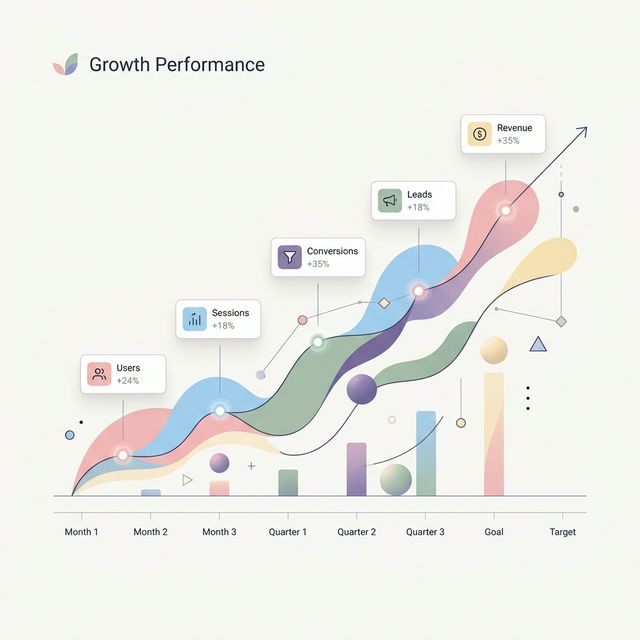
When your daily bandwidth is universally limited, you must routinely obsess over the precisely correct metrics. Deliberately ignore entirely useless vanity metrics like total impressions or random likes, and focus strictly on KPIs that actually, tangibly drive your precious business violently forward:
- Monthly Recurring Revenue (MRR): The ultimate, undeniable truth-teller of your overall business health. Always cross-reference this with the average SaaS churn rate.
- Email Subscribers: A deeply direct, secure line to your audience that you actually truly own. It is significantly safer than relying passively on actively shifting social media algorithms.
- Trial-to-Paid Conversion Rate: How incredibly well your absolute core product and initial onboarding seamlessly sell the total value.
- Customer Acquisition Cost (CAC): Since your personal time is literal money, rigorously factor in the countless hours you sadly spend acquiring a single customer.
If you are currently using deeply invasive analytics tools to track these numbers, desperately consider immediately evaluating Google Analytics alternatives that rightfully respect your loyal users' privacy while still decisively giving you the actionable insights you desperately need to successfully scale.
FAQs about Solo Founder Marketing
How much time should solo founders spend on marketing each day?
Solo founders should strictly aim to spend at least 1 to 2 highly focused hours per day entirely on marketing. If you tragically only focus on quietly building features, you will undoubtedly launch to utter crickets. A perfectly good baseline rule of thumb is the 50/50 rule: enthusiastically spend exactly 50% of your time meticulously building the product and 50% passionately talking to users and deliberately distributing it out into the world.
What is the most effective marketing channel for solo founders?
The definitively most effective channel depends entirely and utterly on where your specific target audience naturally hangs out, but meticulously optimized SEO and authentically Building in Public are historically the single highest ROI channels for solo indie hackers. Perfect SEO intelligently creates a compounding, profoundly evergreen source of highly qualified traffic, while Building in Public successfully leverages sheer authenticity for incredibly fast, immediate traction.
Should a solo founder learn to design for marketing?
While clearly having an innate eye for good design is undeniably helpful, solo founders should absolutely not waste irreplaceable time learning highly complex UI/UX design from scratch. It is monumentally much more wildly efficient to utilize vastly pre-built, precisely engineered component libraries to instantly give vital marketing pages a highly professional, trustworthy appearance without the nightmare of CSS debugging.
Conclusion: Ship Faster, Market Better
Effective marketing for solo founders fundamentally isn't about working agonizing 80-hour weeks; it is strictly about making incredibly smart, massively high-leverage bets with your minimal time. It’s exactly about focusing intensely on perfectly dominating one single acquisition channel, categorically ignoring the entirely toxic noise of traditional startup advice, and seamlessly automating or effectively delegating tasks wherever it genuinely makes optimal sense.
Your absolute, single most truly valuable asset is your profoundly limited time. Absolutely do not ever waste it repeatedly reinventing generic UI components that have honestly already been perfectly engineered by dedicated professionals.
If you actively want to immediately stop painfully dreading the frustrating design phase and boldly start fearlessly launching incredibly effective landing pages that actually successfully convert your hard-earned traffic into desperately paying, loyal customers, buy the strictly premium ogblocks component library today. You’ll happily save safely over 50 hours per individual project and finally intensely get back to joyfully doing what you uniquely do best: building a truly great, world-class product.
Written by Karan
Karan is a React engineer and the founder of ogBlocks, building high-performance UIs for SaaS.