
The Fake Door Secret: How to Validate Your AI Startup Idea in 48 Hours
You woke up with a massive vision. You know exactly what LLM orchestration you need, precisely how your vector database will be structured, and exactly how the backend will process requests. Stop right there. The biggest trap in the current tech landscape is building complex wrappers before understanding if the market actually cares.
If you are wondering how to validate your ai startup idea, here is the direct, unvarnished truth: Idea validation means proving someone will explicitly pay for the specific problem your AI solution solves before you write a single line of code. Everything else is just a hobby disguised as a business.
This step-by-step guide is built specifically for SaaS founders, indie hackers, developers, and aspiring entrepreneurs who are rushing to launch their products. We’ll show you exactly how to bypass the fluff, rigorously test your market demand, and deploy hyper-converting pages using proven methods.
TL;DR (Key Takeaways)
If you’re strapped for time, here is the executive summary on mastering idea validation:
- Validation over engineering: Don't build the "chat interface" without proving the underlying user pain point first. Market risk always outweighs technical risk.
- Focus on the "Problem Heatmap": Target severe, frequent pain points where current non-AI workflows are failing completely.
- Simulate the product: Sell the ultimate benefit using prototype screenshots and a highly effective landing page, not backend logic.
- Measure intent with real barriers: Collecting an email is nice; collecting a pre-order or small deposit is definitive proof of an idea validation phase succeeding.
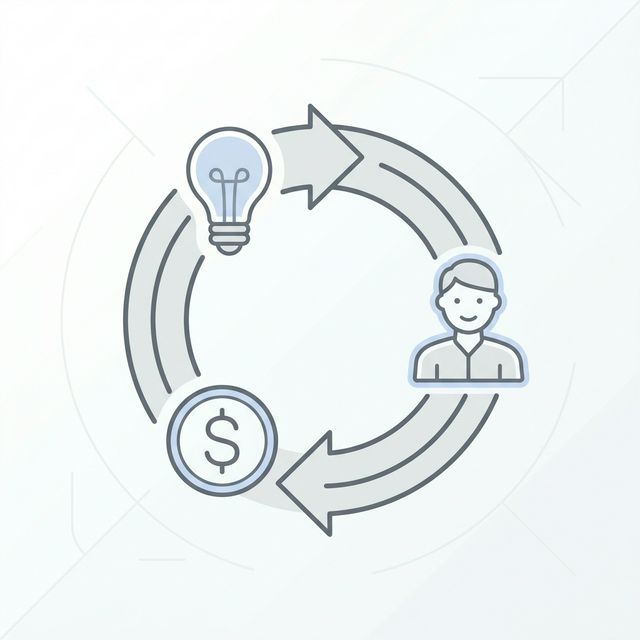
Table of Contents
- Why Validation for AI Startups is Fundamentally Different
- Step 1: Define the Problem Heatmap, Not the Prompt
- Step 2: Use Strategic Simulators and Market Data
- Step 3: Build an Irresistible "Fake-Door" Landing Page
- Step 4: Drive Targeted Traffic to Measure Real Intent
- Frequently Asked Questions (FAQ)
- Conclusion: The Validation Loop
Why Validation for AI Startups is Fundamentally Different
In 2026, launching a product is significantly different than it was a decade ago. The barrier to entry for building software has functionally dropped to zero. With advanced tools, anybody can deploy an AI wrapper in a weekend. However, this accessibility has created a massive blind spot: the "Idea-to-Action Gap."
Because it is so incredibly easy to build, founders skip the critical idea validation phase. According to industry analyses from renowned tech accelerations like Y Combinator and insights from data sources like ValidatorAI, approximately 74% of AI features fail entirely because developers focus on what the AI can do rather than the specific problem the user needs solved.
As Y Combinator co-founder Paul Graham notoriously advises: "Make something people want." If you start with a generic AI prompt instead of a severe user pain point, you will inevitably build something nobody wants to use.
If you're already looking for inspiration, checking out AI SaaS ideas for solo founders can help you find a niche with a built-in Problem Heatmap.
When you ask how to validate your AI startup idea, you have to acknowledge this inherent risk. If your primary differentiator is just "we use AI to make X faster," your moat is effectively non-existent. The only true competitive advantage is understanding a niche user problem better than the incumbents and securing distribution.
If you build an AI application that generates generic marketing copy out of the box, you are entering a blood ocean of competition. But if you validate a tool specifically for "plumbers operating in the Midwest to automatically generate localized SEO quotes," the specificity becomes your strength. Validation protects you from building the former when the market desperately needs the latter.
Step 1: Define the Problem Heatmap, Not the Prompt
The most common mistake new indie hackers make is bringing a generic solution to a market and begging customers to find a use for it. Your AI startup idea shouldn't start with a clever system prompt; it must start with a bleeding-neck problem.

Identifying the "Why Now?"
You must interrogate the necessity of your solution. Why couldn't this be solved 2 years ago? Why does it have to be solved today? Your concept must live inside a red-hot "Problem Heatmap."
Start by talking to users in your target demographic. This isn't scalable, but it is necessary. Reach out to 15-20 potential users and ask them about their daily workflows.
- What takes them the most time?
- Where do they lose money?
- What repetitive, mind-numbing task makes them hate their job?
- What existing software solutions are they constantly complaining about?
Instead of telling them about your AI startup idea, document their complaints. You want to see consistent repetition of the same problem. When you hear the exact same issue from 5 distinct people, you've found a robust signal.
Filtering Good Signals from Bad
A weak signal is a user saying, "Yeah, that AI feature sounds pretty cool. I might use it." A strong signal is a user saying, "If you can make an AI tool do that, I will pay you right now to be your first beta tester."
Validating your SaaS concept requires hunting relentlessly for strong signals. Your goal shouldn’t be a polite reception, it should be enthusiastic urgency.
Step 2: Use Strategic Simulators and Market Data
Before committing huge swaths of time and capital, utilize resources designed specifically intended for early-tier testing. You don't have to guess in a vacuum anymore.
AI Market Viability Analyzers
Various platforms have trained models explicitly on historically successful startup patterns. Tools that act as an "AI Customer Feedback Simulator" or a viability analyzer can instantly highlight the major weaknesses in your pitch. For instance, running your thesis through an analyzer might reveal that your target demographic traditionally exhibits high churn rates, which drastically shifts how you should plan your SaaS pricing structure.
While an AI-generated score won't substitute real user revenue, it acts as an incredible sanity check. It forces you to clarify your value proposition, define your target customer precisely, and crystallize exactly how you intend to reach them. If the simulators and analytical tools cannot understand the core value of your product, there is a very high chance your human prospects won't either.
Analyzing Search Intent and Backlinks
Another exceptional way to achieve comprehensive idea validation is assessing what folks are already looking for. If you have an AI startup idea, use SEO tools (like Semrush or Ahrefs) to check search volume for the pain point. For example, if you are building an AI cover letter generator, check the search volume for "how to write a cover letter fast."
- Are these queries experiencing year-over-year growth?
- Who is currently ranking on page one?
- What critical functionality are those page-one tools missing?
Data precision is crucial here: look for keywords that boast a search volume of at least 1,000 to 5,000 monthly searches with low-to-medium keyword difficulty. If nobody is searching for a solution, educating a completely unaware market is going to be incredibly expensive.
Step 3: Build an Irresistible "Fake-Door" Landing Page
This is the ultimate litmus test in our guide on how to validate your ai startup idea. You need to simulate the existence of your product to gauge real-world conversion. Welcome to the "Fake-Door" test.
A fake-door test involves building a landing page that pitches your product exactly as if it were fully functional and ready for purchase right now. The page should feature:
- A compelling headline promising to fix the core problem.
- A subheadline explaining exactly how the AI achieves this.
- Beautiful, high-fidelity mockups of your UI (generated in tools like Figma).
- A pricing section that looks completely legitimate.
- A CTA (Call to Action) button that says "Get Started" or "Buy Now."
When a user clicks that button, instead of a checkout page, they are presented with a pop-up saying: "We are currently in private beta and at maximum capacity. Submit your email to get early access and a 50% lifetime discount when we open." Alternatively, you can ask for a fully refundable $5 deposit.
Why This Method is Bulletproof
If 100 targeted users visit your site and 0 click the pricing button, your idea is immediately invalidated. You just saved yourself 3 months of grueling coding. If 100 targeted users visit and 15 people try to swipe their credit cards, you have effectively crossed the threshold of successful idea validation. You can now build with 100% confidence.
For those who want to skip the code entirely during the early test phase, check out our guide on how to build SaaS without coding to keep your overhead near zero.
The Catch: Design Creates Trust
Here is where most indie hackers fail miserably: if your fake-door landing page looks cheap, rushed, or amateurish, users will immediately bounce. People do not input their email addresses, let alone their credit cards, on sites that look like they were built in 2005. Your design is a proxy for the quality of your underlying AI technology.
If you're looking for specific inspiration on layouts that work, review SaaS landing page best practices before you start.
If you are a backend developer who hates CSS, styling a professional waitlist page can take weeks of tweaking padding and adjusting Tailwind classes. And spending three weeks to build a landing page completely defeats the purpose of rapid validation.
Step 4: Drive Targeted Traffic to Measure Real Intent
Building the landing page is merely the prerequisite. The true validation begins when you drive cold, targeted traffic to the site to see how the market reacts. Without eyeballs, your metrics are useless.
Where to Launch for Immediate Feedback
Reddit: Do not blindly spam your link. Find the specific niche subreddits (e.g., r/SaaS, r/Entrepreneur, or niche communities related to your product like r/Lawyers). Provide a massive amount of upfront value in a text post, explain the problem you are solving, and quietly link your waitlist at the bottom for those interested.
X / Twitter: Utilize the "build in public" framework. Share screenshots of your mockups, explain the thesis behind your idea, and tag prominent individuals in the indie hacker community.
Product Hunt & Hacker News: For SaaS and developer-focused products, posting a well-crafted launch announcing an upcoming beta can drive thousands of highly targeted visitors in a single 24-hour period.
Paid Ads: If you want hyper-fast, statistically significant data, spend $50 to $100 on Google Ads or targeted Facebook Ads. Bidding on a highly specific long-tail keyword (e.g., "AI schedule generator for clinics") will immediately tell you exactly how much your Cost Per Click (CPC) and Cost Per Acquisition (CPA) will be.
Defining Success Metrics
You need to establish your baseline for a successful test before launching. A common benchmark for idea validation on a well-designed landing page is a 5% to 10% conversion rate from targeted traffic to a waitlist. If you are collecting actual pre-orders or deposits, a 1% to 3% conversion rate is a phenomenal green light.
Review the analytics closely. Did they bounce off the pricing page? Did they read the features? If the metrics hit your predetermined goals, congratulations: it's time to open up your IDE and actually start coding.
Frequently Asked Questions (FAQ)
What is idea validation for AI startups?
Idea validation for AI startups is the process of testing your product concept with real users to prove there is a paying market for your solution, entirely before writing any backend infrastructure or model-integration code.
How do I know if my AI startup idea is good?
A good AI startup idea is validated when a significant target audience gives you real commitment, typically in the form of pre-orders, credit card deposits, or highly engaged waitlist sign-ups driven through a dedicated landing page.
How long should idea validation take?
Effective idea validation should typically take between 48 hours to one week. The faster you can launch a landing page, test your value proposition, and drive traffic, the quicker you avoid wasting time on products nobody wants.
Conclusion: The Rapid Validation Loop
Understanding exactly how to validate your ai startup idea is the single most important meta-skill a SaaS founder can possess. The days of locking yourself in a dark room for six months to build the "perfect" application are over. Start with a visceral pain point, define the problem strictly, simulate the existence of your solution via an incredible landing page, and observe how the market actually votes with their time and money.
If they bounce, pivot quickly. If they click, you've struck gold. Your primary objective right now is to shrink the time it takes to get that feedback to zero.
Stop wasting weeks tweaking margins and coding UI elements from scratch while your competitors are already testing the market. Get the ogBlocks component library today to instantly implement premium landing page components and ship 10x faster.
Why use ogBlocks for idea validation?
- Launch in 45 Minutes: Pre-built hero sections, pricing toggles, and waitlist forms ready out of the box.
- Instant Trust: Enterprise-grade design quality that convinces users your product is fully functional.
- Conversion Optimized: Rigorously tested layouts, hover effects, and typography to maximize waitlist signups.
Written by Karan
Karan is a React engineer and the founder of ogBlocks, building high-performance UIs for SaaS.