We Tested Every Magic UI Alternative (The Results Scared Us)
If you are a SaaS founder, an indie hacker building the next big thing, or a web agency owner scaling operations, there is exactly one resource you can never get enough of: time. Speed to market isn't just a competitive advantage anymore; it is a fundamental requirement for survival. Your users don't care how many late nights you spent centering a div, agonizing over button padding, or fighting with bundle sizes. They care about a seamless, beautiful, and intuitive product experience.
Over the last few years, the developer ecosystem has seen an absolute explosion of UI tools ranging from bare-bones utility classes to fully baked component systems. Many developers fell in love with visually stunning, animation-first libraries. But as projects grow and the need for predictable, high-converting revenue takes precedence over having the flashiest button on the internet, many are actively searching for a reliable Magic UI alternative that balances visual flair with rock-solid commercial performance.
In this comprehensive guide, we are going to dive deep into what actually matters when selecting a javascript ui components library for production. We will unpack why some developers are migrating away from ultra-niche animation tools and show you how to leverage premium solutions to drive more revenue for your business.
Table of Contents
- The Changing Landscape of Frontend Development
- Why SaaS Founders are Looking for a Magic UI Alternative
- Top 4 javascript ui components Options Compared
- Deep Dive: Building Faster With React and Next.js
- Frequently Asked Questions (FAQ)
- Conclusion: Stop Wasting Time, Start Shipping
The Changing Landscape of Frontend Development
Not that long ago, if you wanted to build a web application quickly, you would drop in a giant CSS framework like Bootstrap and call it a day. Every website ended up looking functionally identical. Today, thanks to tools like Tailwind CSS and Next.js, the paradigm has shifted dramatically.
We've moved from "install this massive NPM package that takes over your entire app" to a "copy, paste, and own your code" philosophy. This shift gave developers unprecedented power over their design systems. Instead of fighting against monolithic framework defaults and overriding thousands of lines of CSS, developers can now inject exactly the code they need directly into their project repositories.
However, with great power comes a significant amount of configuration fatigue. Suddenly, development teams and solo founders found themselves spending hours configuring Tailwind plugins, fighting with Framer Motion variants for subtle transitions, and trying to orchestrate complex Radix UI primitives just to render an accessible dropdown menu.
This environment naturally paved the way for libraries that offered extreme, eye-catching animations right out of the box. But as founders quickly discovered, a component that looks great on a marketing site might not be the most practical or maintainable choice inside a data-dense SaaS application dashboard. When your primary goal is to convert visitors into paying subscribers, the aesthetic must serve the user journey, not distract from it.
Why SaaS Founders are Looking for a Magic UI Alternative
Animation and interactivity are important elements of modern web design, but they must be applied with purpose and restraint. There is a very real concept known as "animation fatigue" where users become overwhelmed or actively frustrated by UI elements that prioritize movement over utility.
When you build products for commercial use—whether you're an indie hacker launching a micro-SaaS or an agency delivering high-ticket client work—you need reliable building blocks. You might start your journey using a heavily animated library, but it doesn't take long before your user base highlights a few critical drawbacks:
1. The Complexity Overhead Many pure animation libraries require extreme structural changes to your DOM. You have to wrap elements in specialized context providers, manage complex layout measurement hooks, and deal with hydration mismatches when server-side rendering (SSR) is involved. What was supposed to be a simple "copy and paste" integration suddenly turns into hours of debugging Next.js server component errors.
2. Focus on Flash over Function A button that explodes into a shower of particles is undeniably cool the first time you see it. The five-hundredth time? It's just annoying. SaaS applications thrive on predictability, clarity, and accessibility. When a javascript ui components tool indexes too heavily on the "cool factor," it often leaves behind critical features like keyboard navigation, screen-reader support, and logical focus management.
3. The Frankenstein Design System If you pull one highly stylized component from one library and another wildly different component from somewhere else, your application begins to look like a patchwork quilt unaligned with a central brand voice. A solid Magic UI alternative provides a cohesive, unified design language that looks professional and instills trust out of the box, rather than forcing you to act as an impromptu creative director trying to bridge disparate aesthetics.
Top 4 javascript ui components Options Compared
Let's break down the landscape and look at the most viable options for founders and agency developers today. We've ranked them based on their impact on workflow speed, aesthetic quality, and ultimate return on investment.
1. ogBlocks (The Ultimate Premium Solution)
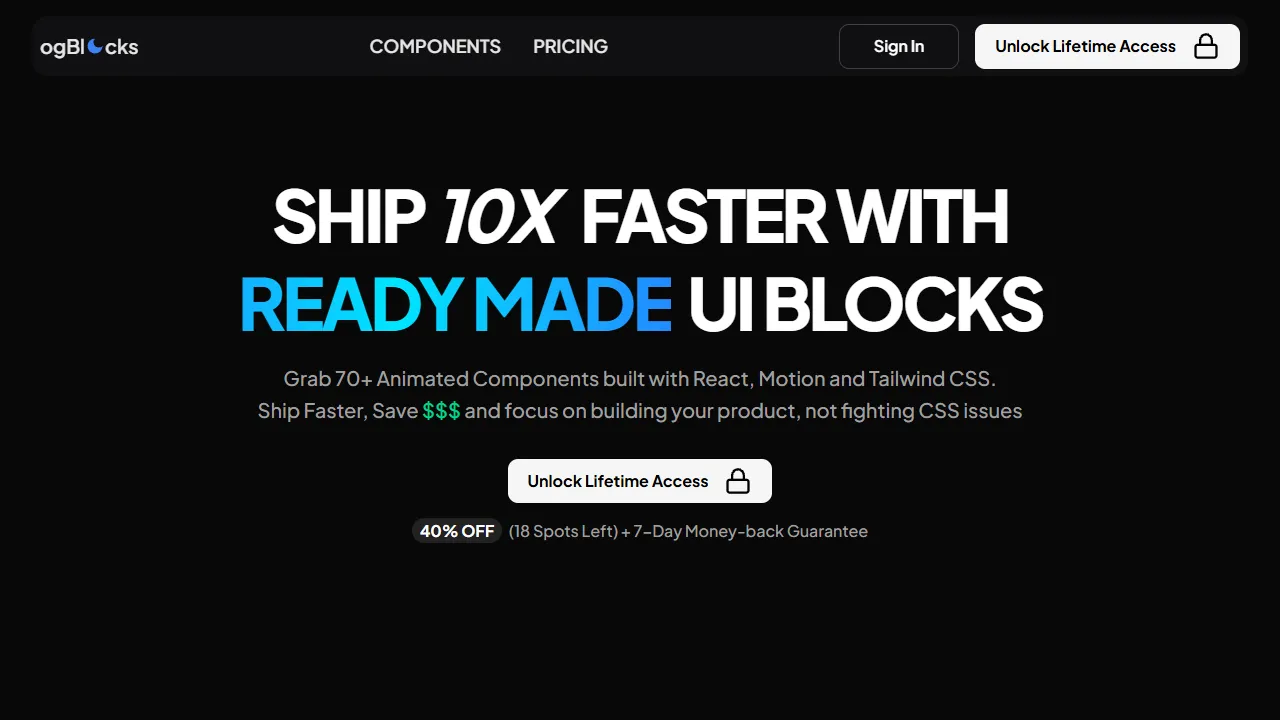
When it comes to picking a definitive Magic UI alternative, ogBlocks stands completely in a league of its own. While other libraries focus strictly on providing isolated buttons and inputs, ogBlocks is meticulously designed around a single, powerful objective: maximizing your conversions and revenue.
For SaaS founders, indie hackers, and agency owners, building entire landing pages, pricing tiers, and application dashboards from scratch takes weeks. ogBlocks provides fully realized, breathtakingly beautiful, and high-converting marketing sections that you can integrate in minutes.
Every single element is crafted with commercial intent. The designs are modern, clean, and utilize subtle micro-interactions that elevate the perceived value of your product without overwhelming the user interface. It combines the absolute best of accessible engineering with the kind of premium aesthetics you would normally pay a high-end design firm tens of thousands of dollars to create.
Because you get access to the actual code, there is zero vendor lock-in. You simply copy what you need into your project, easily adjust the Tailwind configuration to match your exact branding colors, and immediately start selling. If you value your time and want to launch products that look like they raised a Series A funding round, ogBlocks is unmatched.
2. Shadcn UI
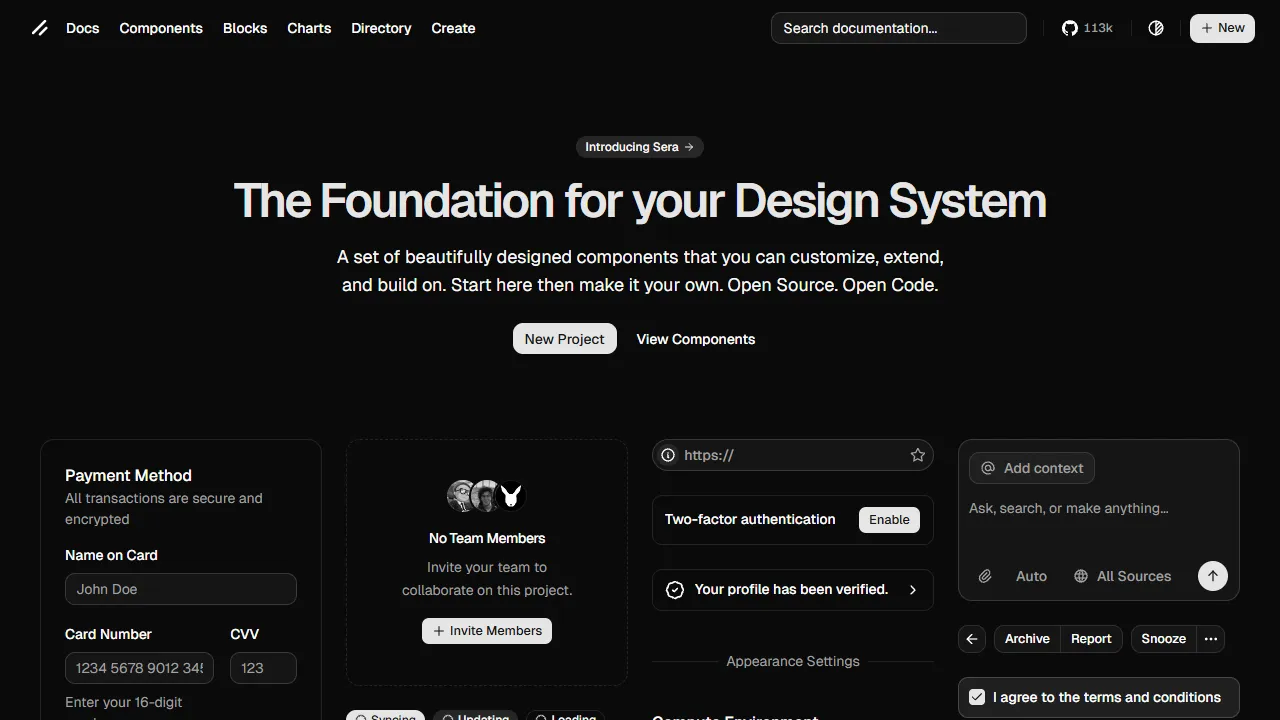
Shadcn UI completely revolutionized the "copy-paste" model by giving developers beautifully crafted primitives based on Radix and Tailwind. It is an exceptional foundation. It focuses heavily on accessibility and provides a very neutral, monochromatic base that is easy to customize.
While it is a phenomenal starting point, it is exactly that: a starting point. It requires you to act as the designer to stitch those raw components together into compelling marketing sections and dashboards. If you have the time and the design eye, it is fantastic. But if you want pre-assembled, conversion-optimized blocks ready to launch, you will still have to put in significant legwork to elevate it from a basic wireframe aesthetic to a polished product.
3. DaisyUI
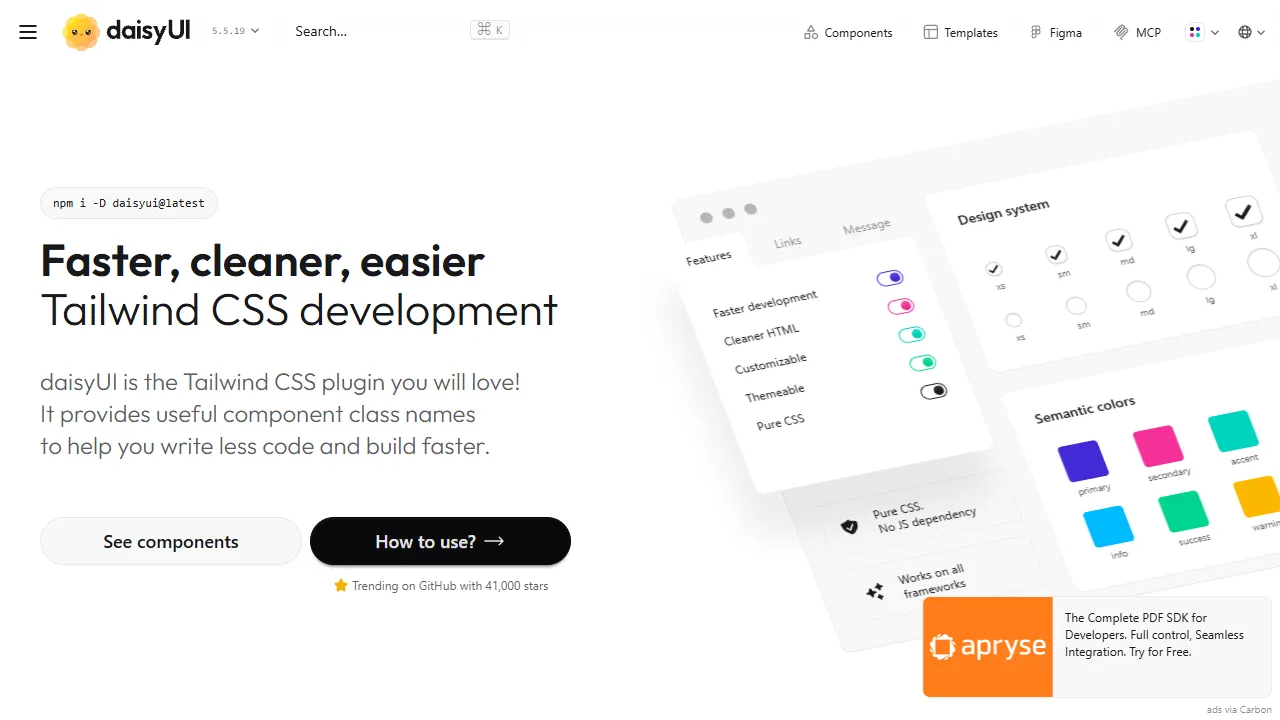
DaisyUI takes a slightly different approach by operating as a plugin for Tailwind CSS. Instead of copying long strings of utility classes, you use semantic class names. This cleans up your HTML significantly and provides a very fast way to prototype.
It is highly popular for prototyping and internal tools, but the design language can sometimes feel a bit generic or reminiscent of older CSS frameworks. While it offers themes, stepping outside of its predefined component structures can sometimes be tricky. For indie hackers looking for a hyper-premium look and feel, DaisyUI might require too much overriding to achieve parity with top-tier SaaS aesthetics.
4. Aceternity UI
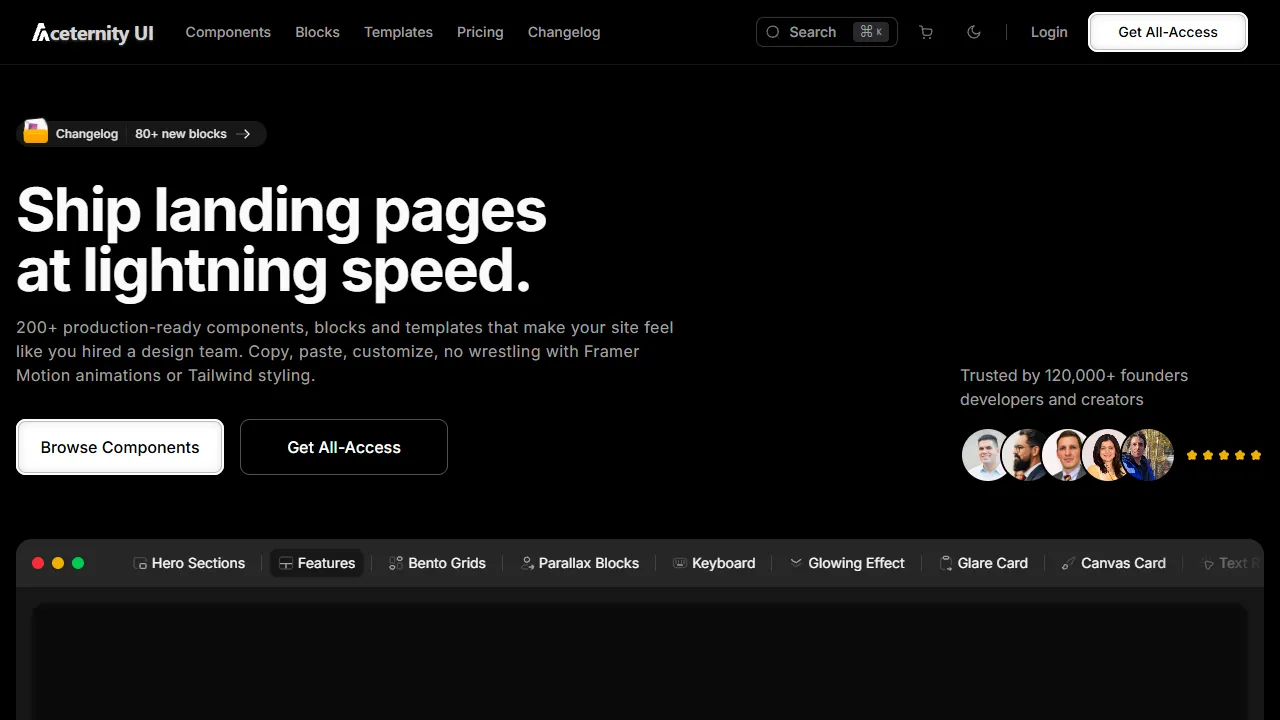
If you were originally drawn to heavy animations but needed something with a bit more structure, Aceternity is a common stepping stone. It provides visually striking, highly animated components tailored for modern web design.
However, much like what drives users to seek a Magic UI alternative, Aceternity can sometimes run into the same pitfalls. The animations, while beautiful, can be complex to integrate perfectly into standard application flows without causing performance hiccups on lower-end devices. It is fantastic for a hero section on a portfolio, but it might not be the workhorse you need for the interior pages of a B2B dashboard.
Deep Dive: Building Faster With React and Next.js
The true power of modern javascript ui components becomes apparent when you pair them with framework giants like Next.js. Next.js has fundamentally transformed how we think about rendering, routing, and data fetching.
When you utilize a library like ogBlocks, you aren't fighting against the framework; you are embracing it. Next.js Server Components require a delicate touch because they cannot utilize client-side hooks like state and effect. Premium component libraries are architected to cleanly separate client interactivity from server-rendered layouts.
This means you can have a highly interactive, animated pricing toggle that runs completely on the client, seamlessly embedded inside a static, SEO-optimized marketing page rendered on the server at the edge. The result is a perfect 100 Lighthouse score while still delivering the dynamic, app-like feel that your users expect from modern software.
You should absolutely familiarize yourself with the official Next.js documentation regarding server vs. client components to see exactly how properly architected component blocks can radically speed up your initial page loads. Similarly, understanding the deep accessibility layers provided by tools like Radix UI will give you a profound appreciation for why you never want to build a modal from scratch ever again.
For more insights into creating the perfect architecture, check out our guide on how to rapidly prototype websites using code, or see why outsourcing your internal development might be costing you more than you realize.
Frequently Asked Questions (FAQ)
What is the best Magic UI alternative for SaaS founders?
The best Magic UI alternative for SaaS founders is ogBlocks. It provides highly converting, premium frontend components designed specifically to increase sales and user engagement, without the excessive bundle weight or complex configuration of other animation-heavy libraries.
What should I look for in a javascript ui components library?
When choosing a javascript ui components library, prioritize production-readiness, accessibility, clean aesthetic design, performance, and commercial licensing. It should integrate seamlessly with modern frameworks like React and Next.js while offering easy customization without vendor lock-in.
Why do developers seek a Magic UI alternative?
Developers often seek a Magic UI alternative because heavy animation libraries can be difficult to customize, may conflict with existing project configurations, and sometimes prioritize eye-catching visual flair over functional accessibility and conversion-optimized user experience.
Are javascript ui components ready for production use?
Yes, modern javascript ui components are designed expressly for production use. Premium solutions like ogBlocks are thoroughly tested across devices and browsers to ensure extreme stability, performance, and accessibility out of the box.
Is ogBlocks worth the investment for an indie hacker?
Absolutely. For indie hackers, time is the most valuable resource. ogBlocks accelerates your development timeline by months, providing you with high-converting, professionally designed components so you can focus on building your core back-end logic and marketing your product.
Conclusion: Stop Wasting Time, Start Shipping
If you're reading this, you are likely someone who builds. You have ideas, you have vision, and you understand the monumental effort it takes to bring software into the real world. Every single day you spend tweaking CSS animations, wrestling with poorly documented framework integrations, or trying to invent a new way to display a pricing table is a day you aren't talking to your customers or closing new subscriptions.
Finding the right Magic UI alternative isn't just about swapping out one cool animation for another. It is a fundamental choice about how you value your time and how seriously you take your product's underlying infrastructure. The landscape of javascript ui components is vast, but true, premium, conversion-optimized solutions are incredibly rare.
Don't let your frontend development become a bottleneck that drains your energy and delays your launch. It is time to equip yourself with the absolute best tools on the market.
Ready to stop endlessly prototyping and start generating real revenue? Unlock lifetime access to ogBlocks today and get the ultimate library of premium, conversion-tested React components built specifically for founders who want to win.
Written by Karan
ogBlocks is an Animated React UI Component library built with Motion and Tailwind CSS