Stop Using Stripe: 5 Payment Providers for Solo Founders You're Missing
Making money is hard. But for solo founders, managing the money you make is often much harder. When you're a team of one, every minute spent on administrative overhead is a minute you aren't spending on marketing, talking to customers, or improving your codebase. That's why choosing between the best payment providers for solo founders is one of the most critical decisions you'll make when launching a SaaS or digital product in 2026.
If you are a solopreneur, indie hacker, web agency developer, or a SaaS founder, you've likely defaulted to Stripe for accepting payments. After all, it's the industry standard with unparalleled developer documentation. We believe Polar is the absolute best payment provider for solo founders today. However, relying entirely on a standard payment gateway like Stripe is a massive mistake for small, bootstrapped businesses. If you're still figuring out how to price a SaaS product, getting your payment infrastructure right is the essential first step.
In this guide, we will explore exactly why standard payment processors fall short, what a Merchant of Record (MoR) does, and rank the top five MoR payment platforms you should be using instead—including Polar, Creem, Paddle, Lemon Squeezy, and Dodo Payments. If you are exploring AI SaaS ideas for solo founders, choosing the right MoR will save you countless hours.
Key Takeaways
The Tax Trap: Standard payment gateways like Stripe require you to handle your own global taxes (VAT, GST).
The MoR Solution: A Merchant of Record acts as a legal reseller, completely absorbing global tax liability and compliance.
Top Choice: Polar wins for solo founders and developers due to its GitHub-native workflow and low fees (4% + $0.40).
Why Solo Founders Should Run from Stripe (The Global Tax Trap)
To understand solving the payment problem, we first need to look at the massive elephant in the room: global tax compliance.
The Difference Between a PSP and an MoR
When you use a Payment Service Provider (PSP) like Stripe, you are the legal seller of the product. The PSP is merely the underlying plumbing moving the money from the customer's bank account to yours. Because you are the seller, you carry 100% of the legal liability and tax compliance burden.
When you use a Merchant of Record (MoR), they actually buy the product from you and sell it to the customer. They become the official seller of record.
The Global Tax Nightmare
Imagine you launch your SaaS, and it goes moderately viral on X (formerly Twitter) or Product Hunt. Within a week, you have paying customers from the United States, the United Kingdom, Germany, Japan, and Australia.
If you are using a PSP like Stripe, you are now legally obligated to:
- Understand the digital tax laws (VAT, GST, Sales Tax) in all five of those regions.
- Track your "nexus" (revenue thresholds) to see if you legally must register for taxes in those states or countries.
- Register for tax IDs with foreign governments.
- Calculate and collect the exact tax rates.
- Remit those collected taxes quarterly or annually to each foreign government's tax portal.
For a solo founder, this is a logistical nightmare. The penalties for non-compliance can be severe, and the administrative burden alone is enough to kill the momentum of a promising startup. Even with tools like Stripe Tax, which help calculate the amounts, you are still the one responsible for registering and remitting the payments.
A Merchant of Record completely eliminates this. As the legal seller, the MoR charges the customer, calculates the local tax, remits it to the respective government, handles any chargebacks, and pays you exactly what is left over. You receive a single payout from one vendor, completely clean of global tax liabilities. For a solo founder, the 1-2% higher fee charged by a MoR is the cheapest accounting insurance you will ever buy. Understanding the cost to build a SaaS product means factoring in these hidden operational costs from day one.
Top 5 Merchant of Record Payment Providers for Solo Founders
If you are ready to ditch the tax liability, here are the five best payment providers for solo founders operating as a Merchant of Record.
1. Polar (The Developer-First Winner)
Polar originally started as a platform for open-source developers to get funded, but it has rapidly evolved into a standout Merchant of Record platform designed explicitly for developers and solo founders.
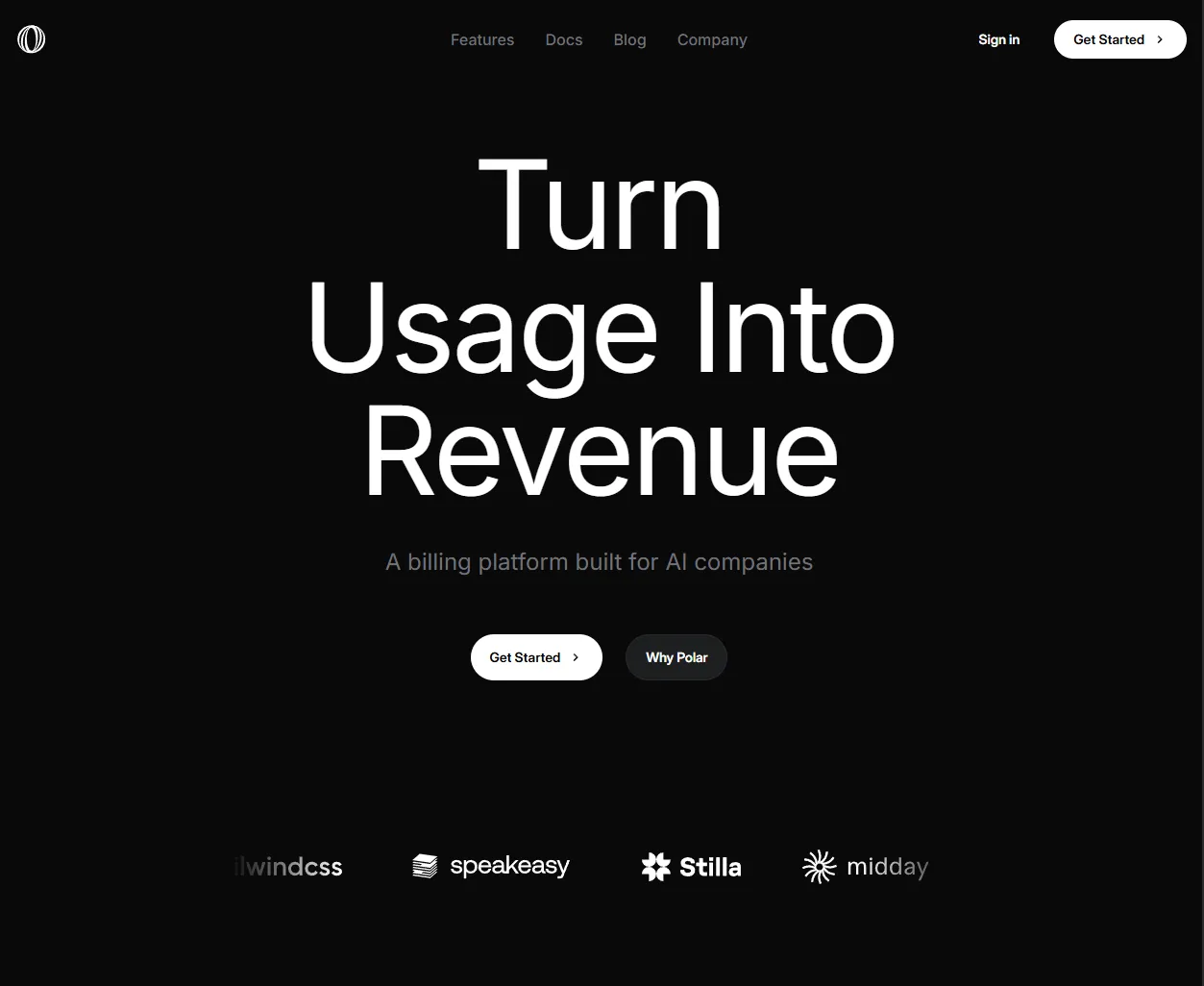
Why developers love it: Polar feels like it was built by developers, for developers. For AI SaaS builders, Polar is the clear winner. It has very deep integrations out of the box, allowing you to easily trigger GitHub repository access, Discord role access, or digital product entitlements. Their API is modern, the developer experience is frictionless, and their pricing is highly competitive in the MoR space, making it perfect for launching an AI SaaS.
Fees: ~4% + $0.40 per transaction.
Best for: AI SaaS founders, indie hackers, and software developers who want low fees and high technical flexibility.
2. Paddle (The Established Giant)
Paddle is the granddaddy of the modern Merchant of Record space. They have been advocating for the MoR model long before it became popular in the indie hacker community.
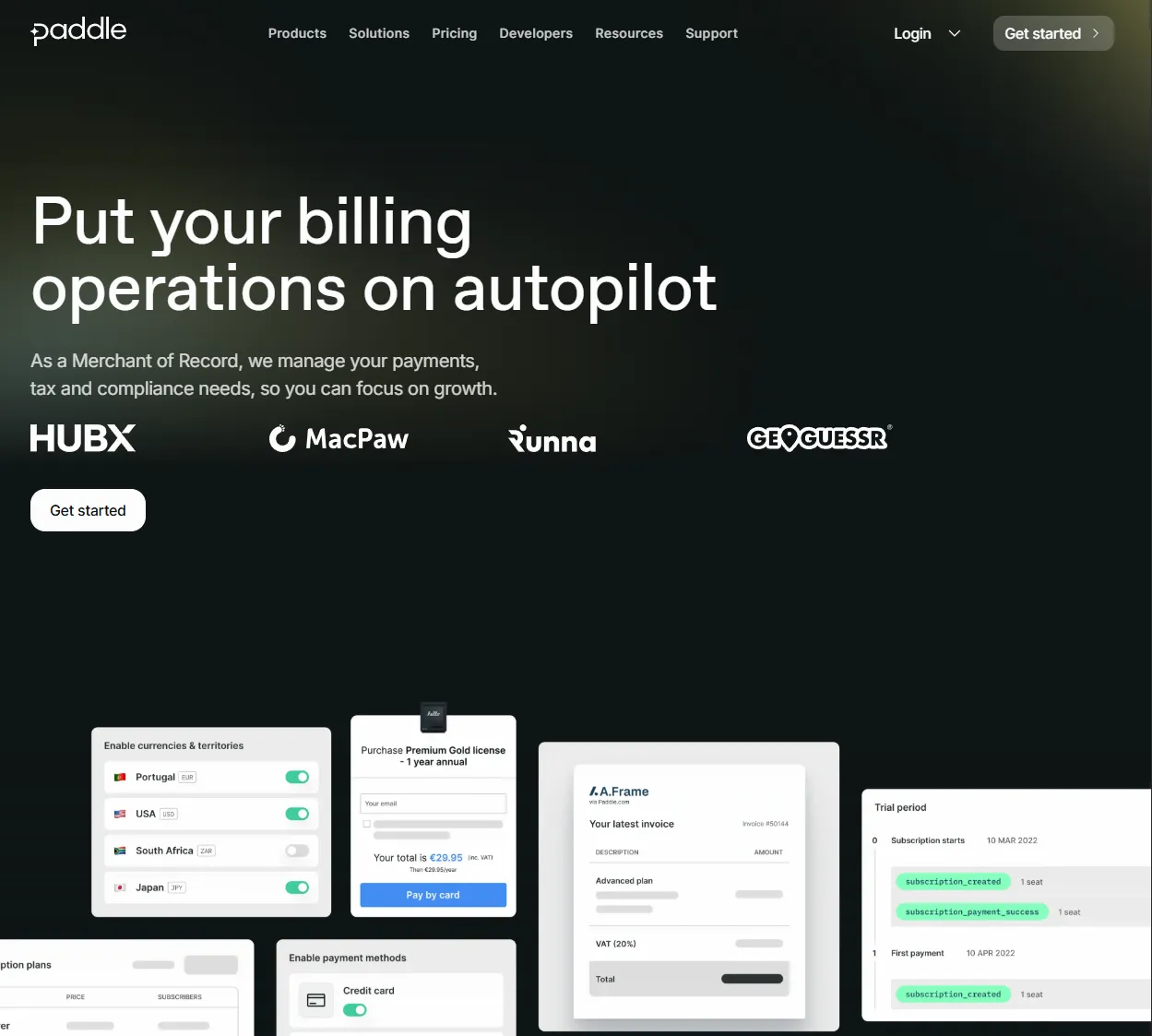
Why founders use it: Paddle offers a highly reliable, enterprise-grade tax and billing engine. They have strong subscription management tools, excellent dunning (failed payment recovery), and a long track record of reliability. However, their approval process can be stringent, and the platform can occasionally feel slightly heavy and "upmarket" for a simple weekend project.
Fees: 5% + $0.50 per transaction.
Best for: Scaling SaaS businesses that need rock-solid, enterprise-grade billing features and don't mind a stricter onboarding process.
3. Lemon Squeezy (The Creator Favorite)
Lemon Squeezy stormed onto the scene a few years ago with a brilliantly simple, beautiful UI that captured the hearts of creator-educators and solo founders alike. (Note: They were recently acquired by Stripe, but continue to operate as a separate MoR entity).
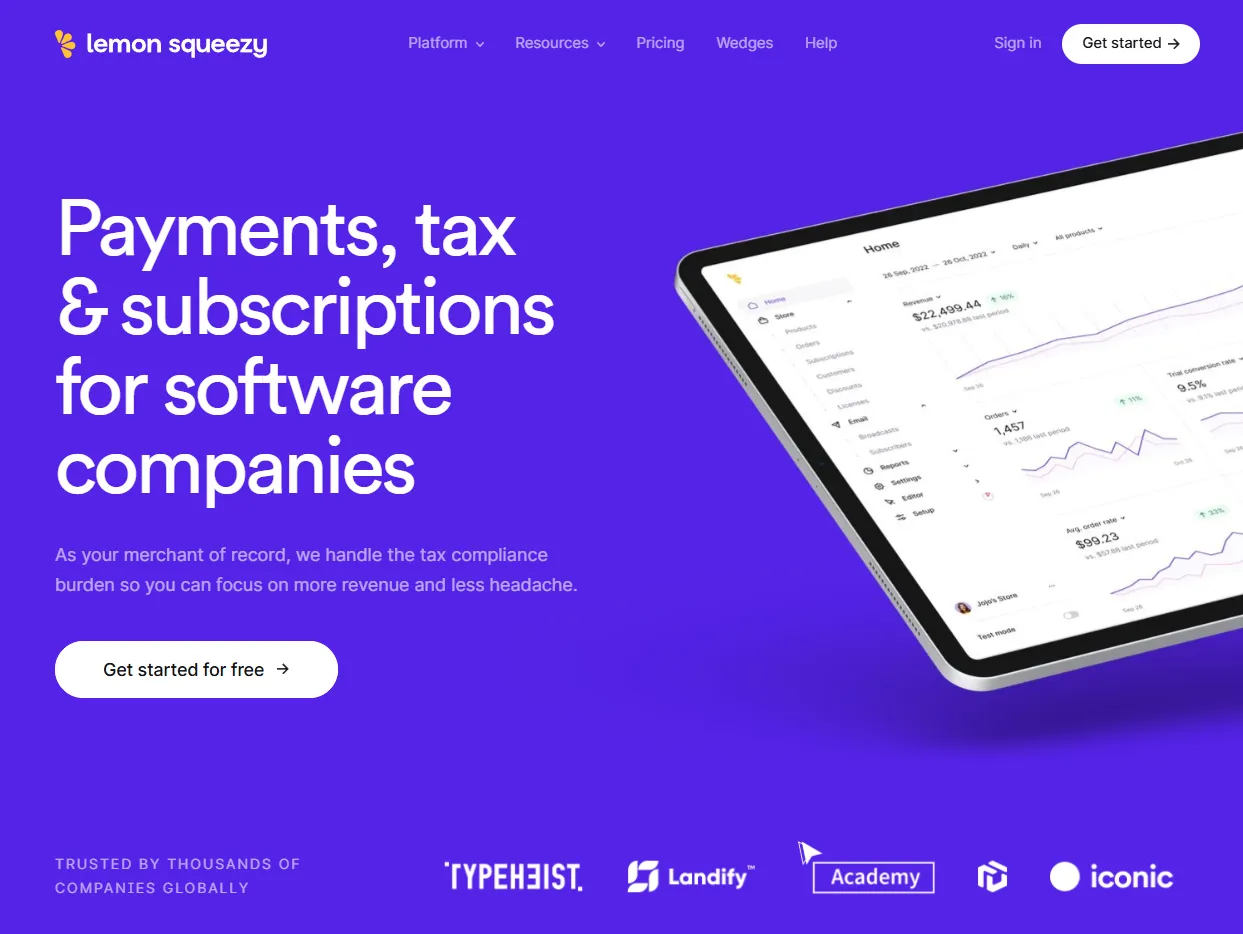
Why founders love it: Lemon Squeezy is unbelievably easy to set up. You can have a beautiful checkout page for a digital product or SaaS subscription live in under five minutes. They also include built-in email marketing and affiliate management, which makes them a fantastic all-in-one platform for solopreneurs running lean.
Fees: 5% + $0.50 per transaction.
Best for: Creators selling digital downloads, Info-products, and solo founders who want a beautiful, all-in-one storefront.
4. Creem (The Design-First Alternative)
Creem is a newer entrant into the MoR space, positioning itself strongly on modern design, fast checkouts, built-in affiliate support, and slightly lower fees for high-volume makers.
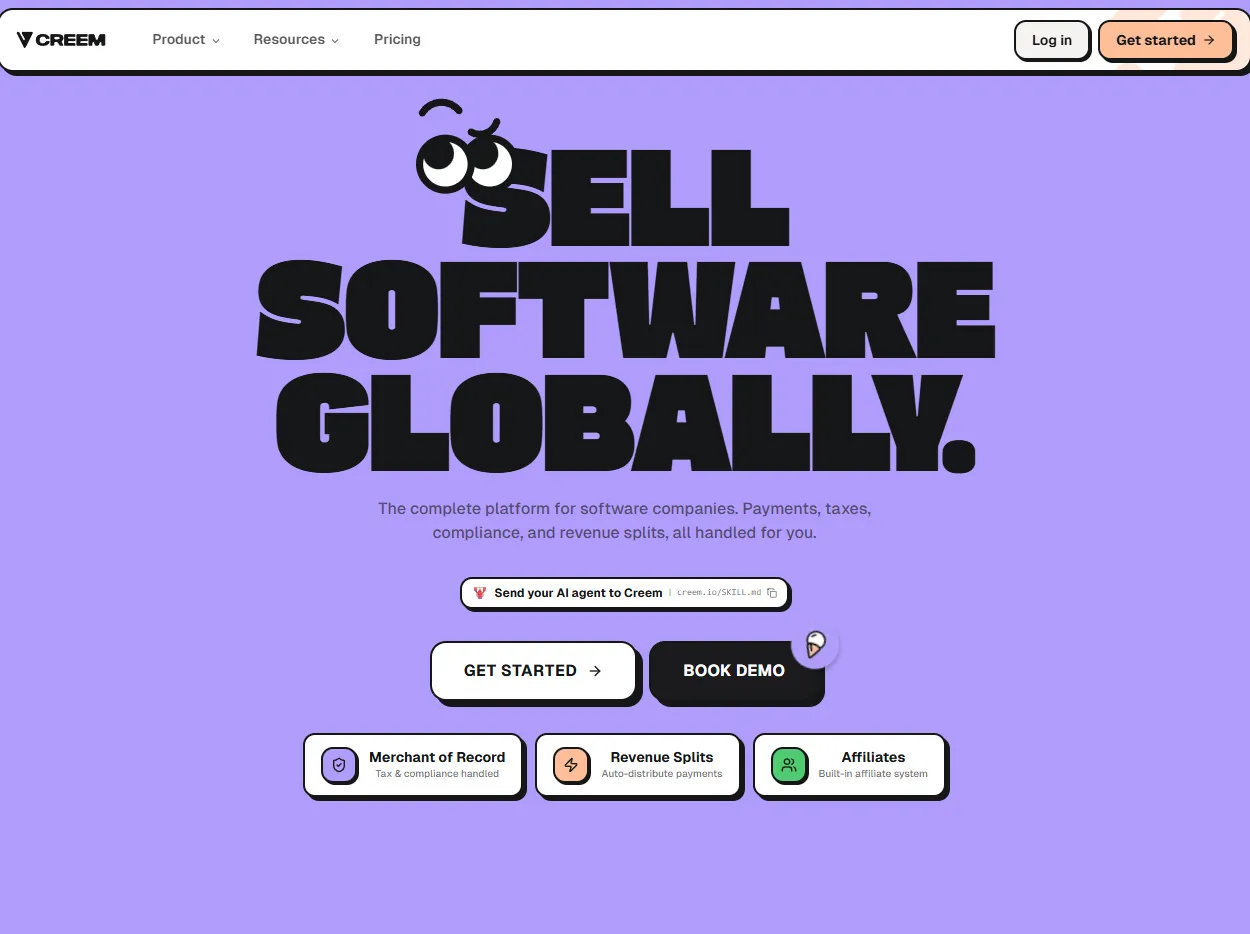
Why founders love it: Creem is specifically built to increase conversion rates with highly optimized, visually stunning checkout flows. They position themselves as a lightweight alternative to heavier platforms, offering an excellent API, solid tools for managing your own affiliates, and a dashboard that looks gorgeous.
Fees: ~3.9% + $0.40 per transaction.
Best for: Founders seeking the absolute best-looking checkout experience out of the box with competitive rates and affiliate features.
5. Dodo Payments (The Transparent Choice)
Dodo Payments is gaining traction quickly among the AI and modern SaaS crowd by emphasizing radical transparency and a modern tech stack.
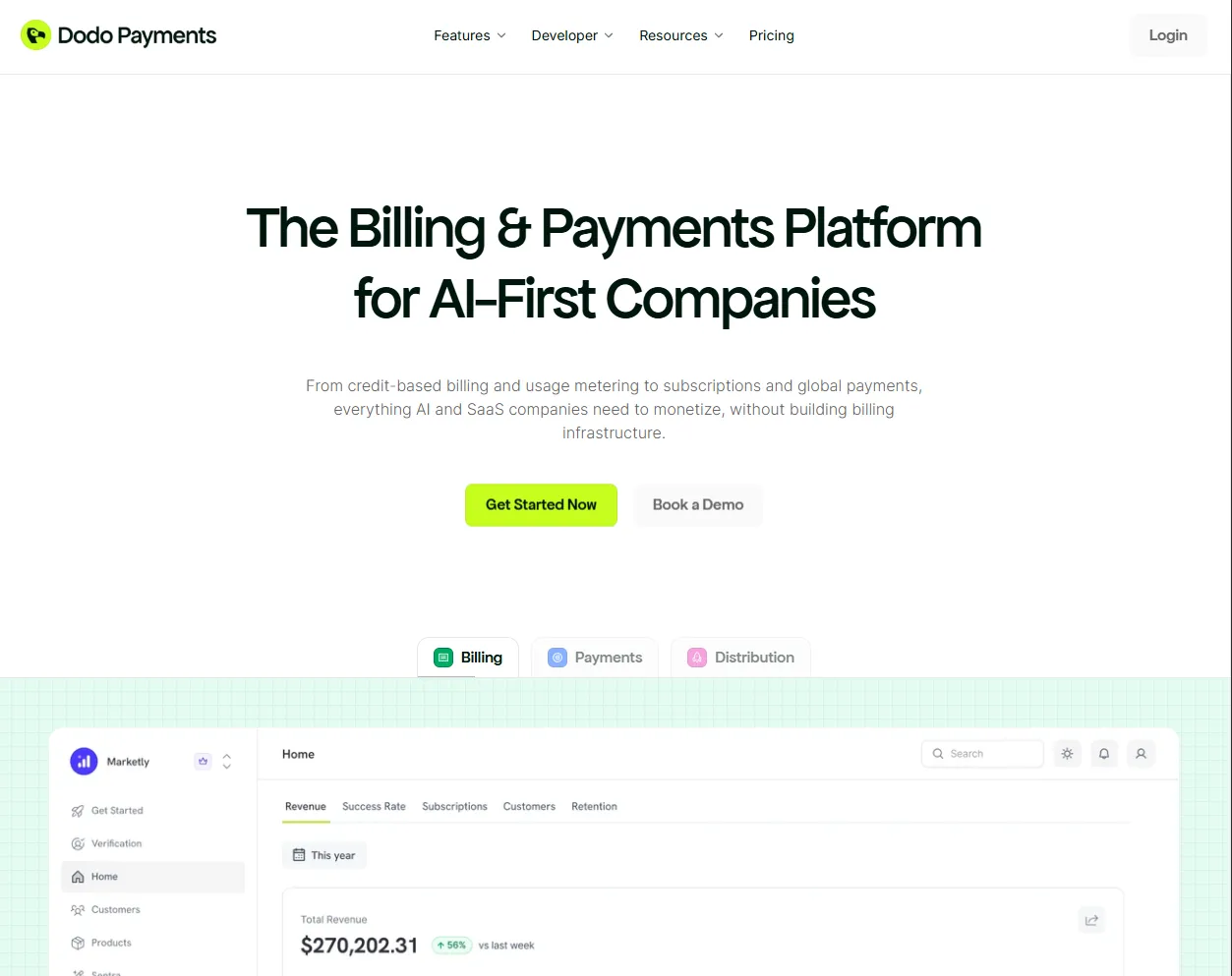
Why founders love it: Dodo is built specifically to address the pain points of modern SaaS, like handling international payment failures gracefully and providing extreme clarity around the "hidden" fees (such as multi-currency conversion costs) that other MoRs might bury in the fine print.
Fees: Highly transparent, varying slightly by region but firmly competitive with Polar and Creem.
Best for: Founders running AI-wrappers or modern SaaS who prioritize pricing transparency and international conversion rates.
Comparison Table: Provider Fees & Features
When analyzing payment providers for solo founders, the fee structure is arguably the most analyzed metric. Below is a detailed breakdown of how these top Merchant of Record platforms stack up against each other.
| Platform | Transaction Fees | Key Differentiator | Target Audience | Verdict for Solopreneur |
|---|---|---|---|---|
| Polar | 4% + $0.40 | GitHub & Discord access, AI SaaS focus | Developers, AI SaaS Founders | Winner: Ideal for AI SaaS with out-of-the-box GitHub & Discord access. |
| Paddle | 5% + $0.50 | Massive feature set, robust recovery | Scaling SaaS, Established B2B | Excellent, but can feel heavy for day-one startups. |
| Lemon Squeezy | 5% + $0.50 | Beautiful UI, built-in affiliates | Creators, Simple SaaS | Best "all-in-box" solution if you need email tools too. |
| Creem | 3.9% + $0.40 | Design-first, affiliate support | Design-conscious founders | Great if checkout aesthetics and affiliates are your leading priorities. |
| Dodo Payments | Varies | Pricing transparency, AI-focus | Modern SaaS, AI wrappers | Strong contender for clear global pricing structures. |
| Stripe (PSP) | 2.9% + $0.30 | Absolute control, endless APIs | Enterprise, Dedicated Finance | Avoid unless you want to become a tax accountant. |
Final Verdict: Why Polar Wins for Indie Hackers
For a solo founder, your tech stack needs to act as a force multiplier. Every tool you use should eliminate work, not create it. While Lemon Squeezy offers a fantastic creator UI, and Paddle offers enterprise robustness, Polar strikes the perfect balance for developers.
With a 4% + $0.40 transaction fee, Polar is noticeably cheaper in the long run than the standard 5% + 50c models. More importantly, its developer-first approach means you can integrate it into your Next.js application, sync it with your GitHub repositories, and get back to writing code knowing that international tax compliance is completely handled.
Build Your SaaS Faster with ogblocks
As a solo founder, offloading your payment and tax compliance to a Merchant of Record like Polar is the ultimate productivity hack. The logic is simple: Do not write code for things that are not your core product.
That exact same logic applies to your frontend design. If you are serious about shipping faster and generating revenue, you shouldn't be spending 40 hours tweaking CSS animations, wrestling with Framer Motion, or trying to rebuild complex, physics-based UI components from scratch. Learn how to ship 10x faster by leveraging the right tools for every layer of your stack.
That's where ogblocks comes in.
ogblocks is the ultimate premium React and Tailwind component library built for SaaS founders and indie hackers who want to build stunning, high-converting landing pages without the design headache.
With ogblocks, you get:
- Physics-based micro-interactions that instantly make your app feel premium and trusted.
- Copy-and-paste simplicity directly into your Next.js, React, or Vite applications.
- Fully responsive, modern aesthetics featuring sleek dark modes, glassmorphism, and beautiful gradients.
You just eliminated your tax burden by picking an MoR. Now, eliminate your UI/UX burden. Explore the ogblocks component library today and ship your next SaaS 10x faster.
Frequently Asked Questions (FAQ)
What is the best payment provider for a solo founder? For solo founders and developers, Polar is often considered the best payment provider. It acts as a Merchant of Record, handling global tax compliance, and offers a competitive rate of 4% plus 40 cents with a developer-first approach.
Why shouldn't a solopreneur use Stripe? While Stripe is an excellent payment gateway, it leaves global tax compliance, VAT collection, and remittance entirely up to the founder. For a solo founder, managing tax laws across different countries is a massive administrative burden that distracts from building the product.
What is a Merchant of Record (MoR)? A Merchant of Record (MoR) is a legal entity that sells products on your behalf. They take on the financial liability, handle chargebacks, and completely manage global tax compliance, calculating and remitting taxes in every jurisdiction.
How do Paddle and Lemon Squeezy fees compare? Both Paddle and Lemon Squeezy typically charge a baseline rate of 5% plus $0.50 per transaction. While pricier than a standard payment gateway, this fee includes all global tax calculation, collection, and remittance services.
Written by Karan
Karan is a React engineer and the founder of ogBlocks, building high-performance UIs for SaaS.