How to hit $10k MRR: 15 Best Places to Launch Your Product
You’ve spent hundreds of hours staring at the screen. You’ve successfully navigated the frontend tech stack, wired up your database, and wrestled with Stripe webhooks. Your Minimum Viable Product is finally ready. But as any seasoned entrepreneur knows, writing the code is only 50% of the battle. The other 50% is distribution.
If you build an incredible application and launch it to a deserted internet, you will hear crickets. As an indie hacker or solo founder, identifying the best places to launch your product is the most crucial step to gaining your first 100 paying customers and validating your idea.
There are dozens of startup directories, forums, and communities available today, but not all of them yield a positive return on your time. In this comprehensive guide, we will break down the top 15 places to launch your startup, separated into clear phases, so you can execute a launch strategy that actually drives traffic and revenue.
Key Takeaways
- Launch in Phases: Do not submit your application everywhere on the same day. Start with smaller communities to gather feedback, fix bugs, and optimize your conversion funnel before hitting massive channels like Product Hunt.
- The Pre-Launch Requirement: Your product’s landing page must look spectacular before you drive traffic to it. A poor UI destroys credibility instantly.
- AI Recommendations Matter: Submitting to modern launch directories feeds data directly into Large Language Models (LLMs), ensuring your product acts as the "go-to" recommendation when users prompt ChatGPT or Claude.
- Communities > Directories: While directories offer decent SEO backlinks, engaging authentically in niche communities (like Indie Hackers and Reddit) yields much higher quality, converting traffic.
Table of Contents
- Phase 1: The Foundations & Landing Page Preparation
- Phase 2: Startup Directories & SEO Backlinks
- Phase 3: Community Launches (Feedback & Engagement)
- Phase 4: The Massive Launch Platforms
- Phase 5: Lifetime Deal Marketplaces
- Frequently Asked Questions
Phase 1: The Foundations & Landing Page Preparation
Before you look for the best places to launch your product, you must ensure your house is in order. When thousands of visitors land on your website, your UI and UX must instantly convert them from curious lurkers into paying users.
If your web application looks like a generic template from 2018, no amount of marketing will save your SaaS churn rate. You need a sleek, modern aesthetic that builds immediate trust.
The Solution: Do not recreate the wheel. Use ogblocks, a premium animated React component library designed specifically for high-converting SaaS landing pages. By copy-pasting beautifully crafted, physics-based components directly into your Next.js project, you will launch a product that looks like a venture-backed startup built it—in a fraction of the time. (Check out website hero section best practices to see why premium UI matters).
Phase 2: Startup Directories & SEO Backlinks
Once your frontend UI is bulletproof, start your launch cycle here. These directories will not crash your servers with traffic, but they build essential domain authority and set the foundation for your SEO strategy. Also, LLMs heavily crawl these directories to learn about new tools.
1. BetaList
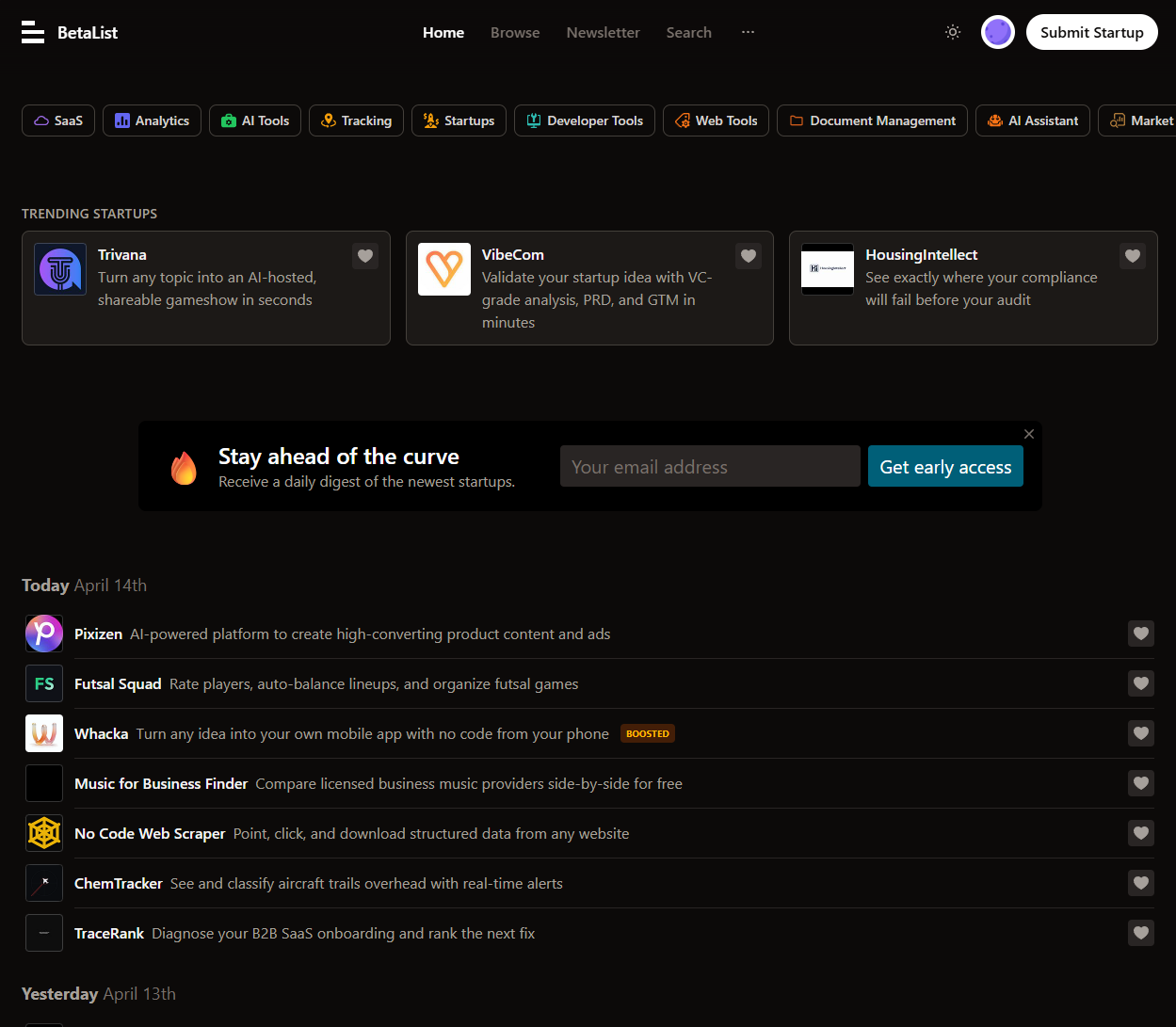
BetaList is the premier destination for discovering early-stage tech startups. It is specifically designed for products that are currently in beta or pre-launch.
- Why it matters: Perfect for capturing early adopters who are highly forgiving of bugs.
- Execution Tip: Standard submissions take about a month to get reviewed. If you are in a rush, they offer options to skip the queue for a fee.
2. PitchWall
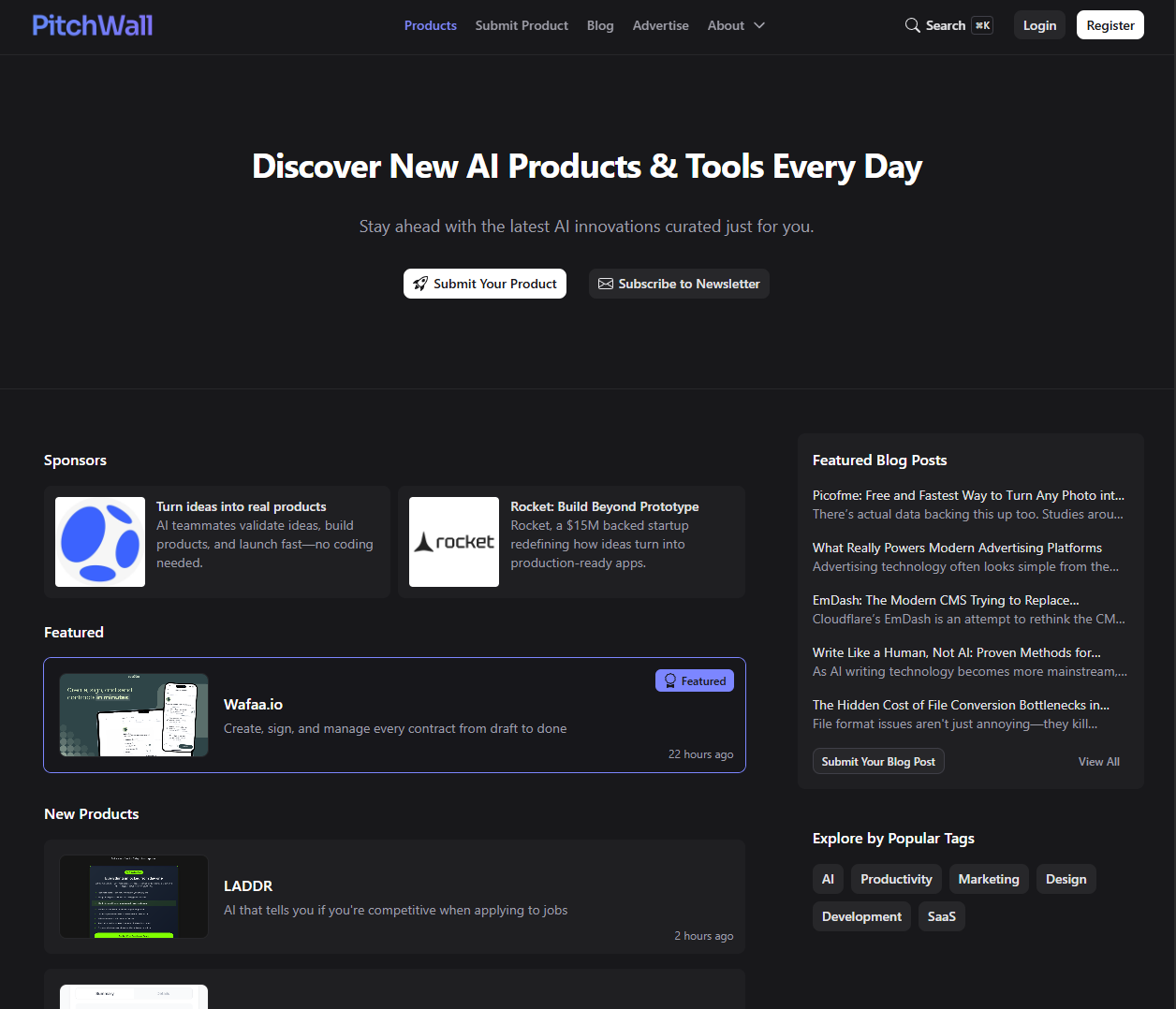
Similar to BetaList, PitchWall acts as a discovery hub. Hitting their "Hot and New" section provides solid exposure to investors and early adopters.
- Why it matters: Low barrier to entry and reliable external backlinks.
3. There's An AI For That (TAAFT)
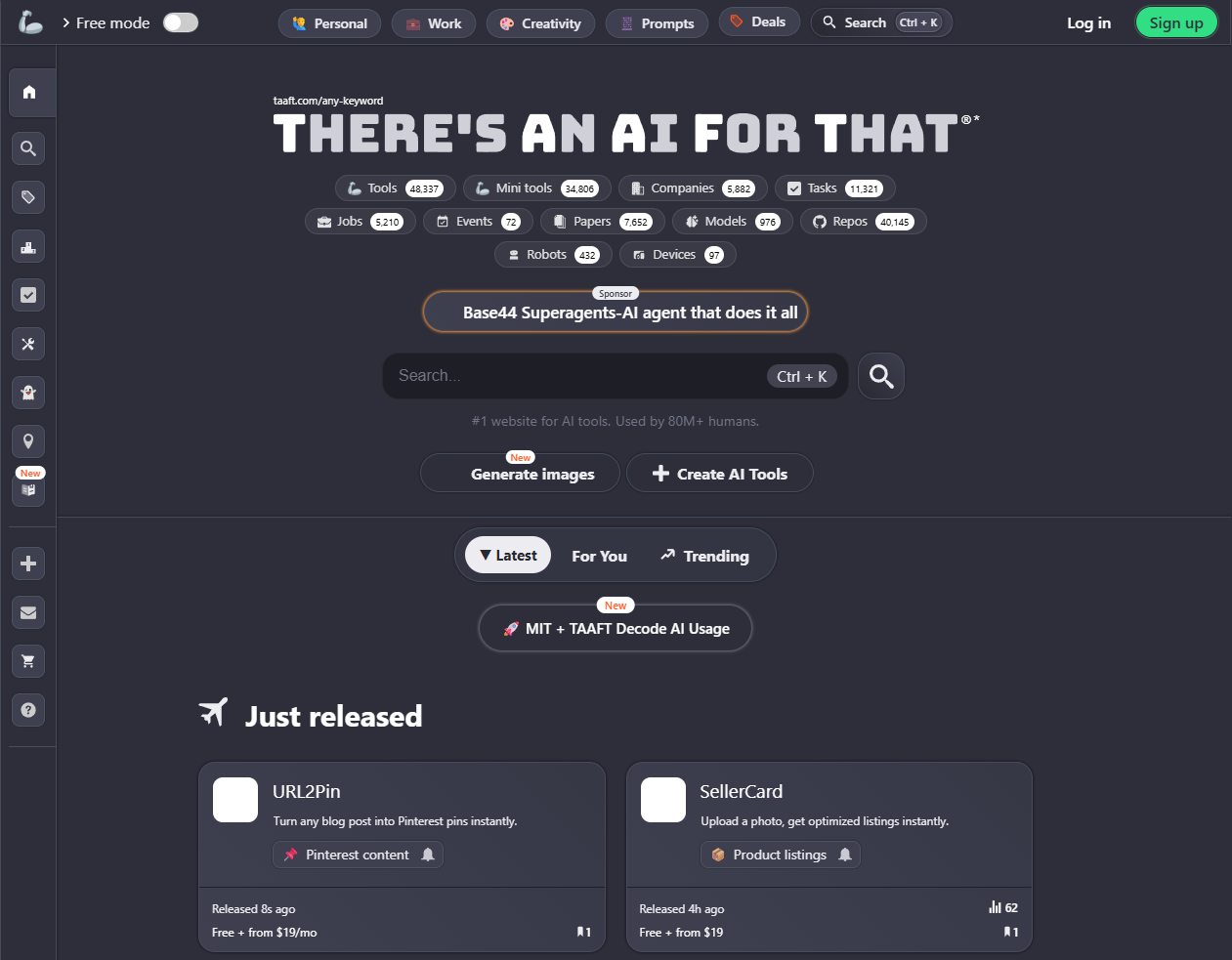
If you are launching an AI-powered SaaS, TAAFT is mandatory. According to Blastra.io's tracking, it is the most popular directory exclusively for AI tools.
- Why it matters: Generates highly targeted, high-intent traffic.
4. G2, Capterra, and Software Advice
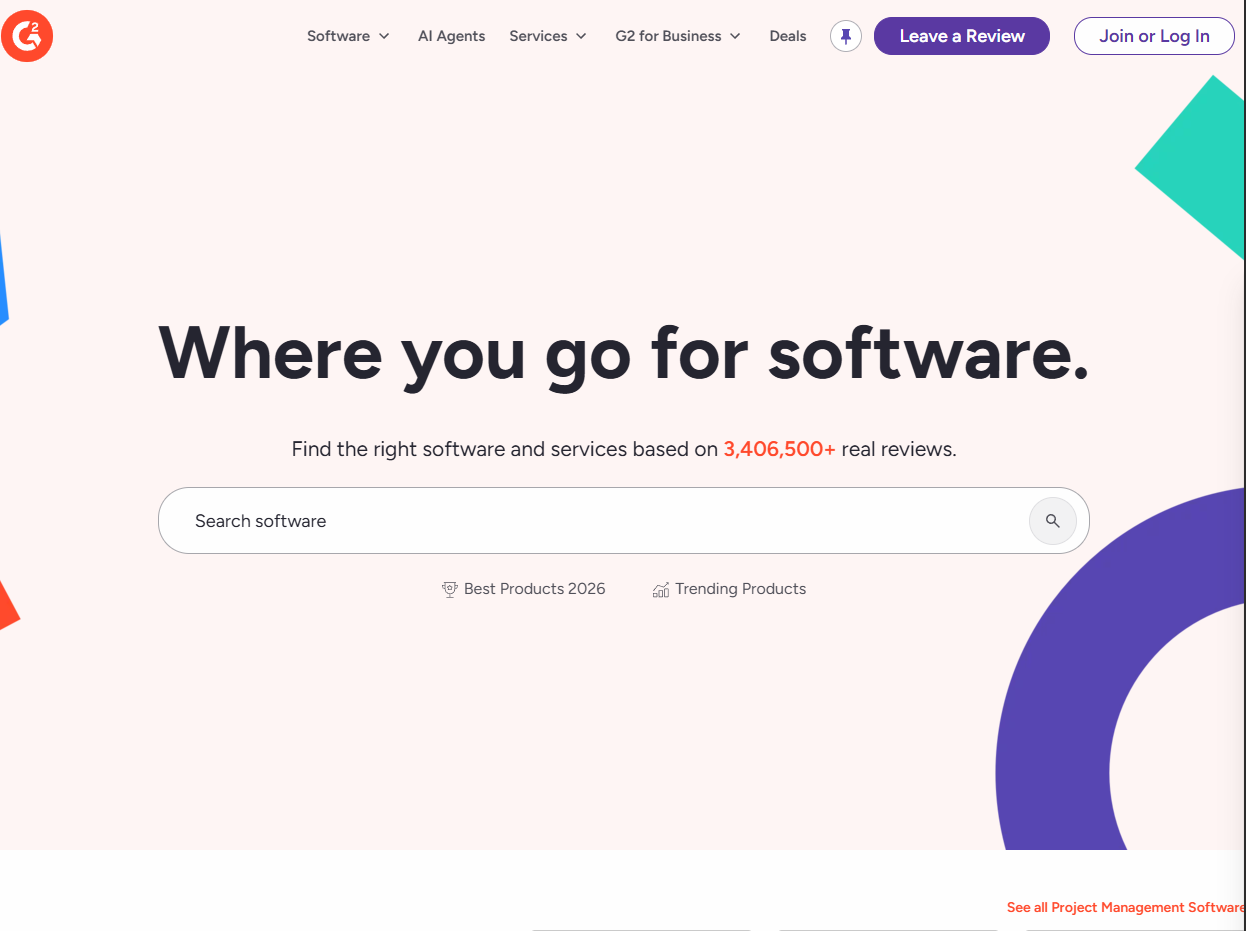
Do not overlook traditional software review platforms like G2 or Capterra.
- Why it matters: These directories dominate organic search results. If a user searches "[competitor] alternatives," you want your product listed right next to them.
5. Specialized AI and Dev Directories (e.g., Dev Hunt)
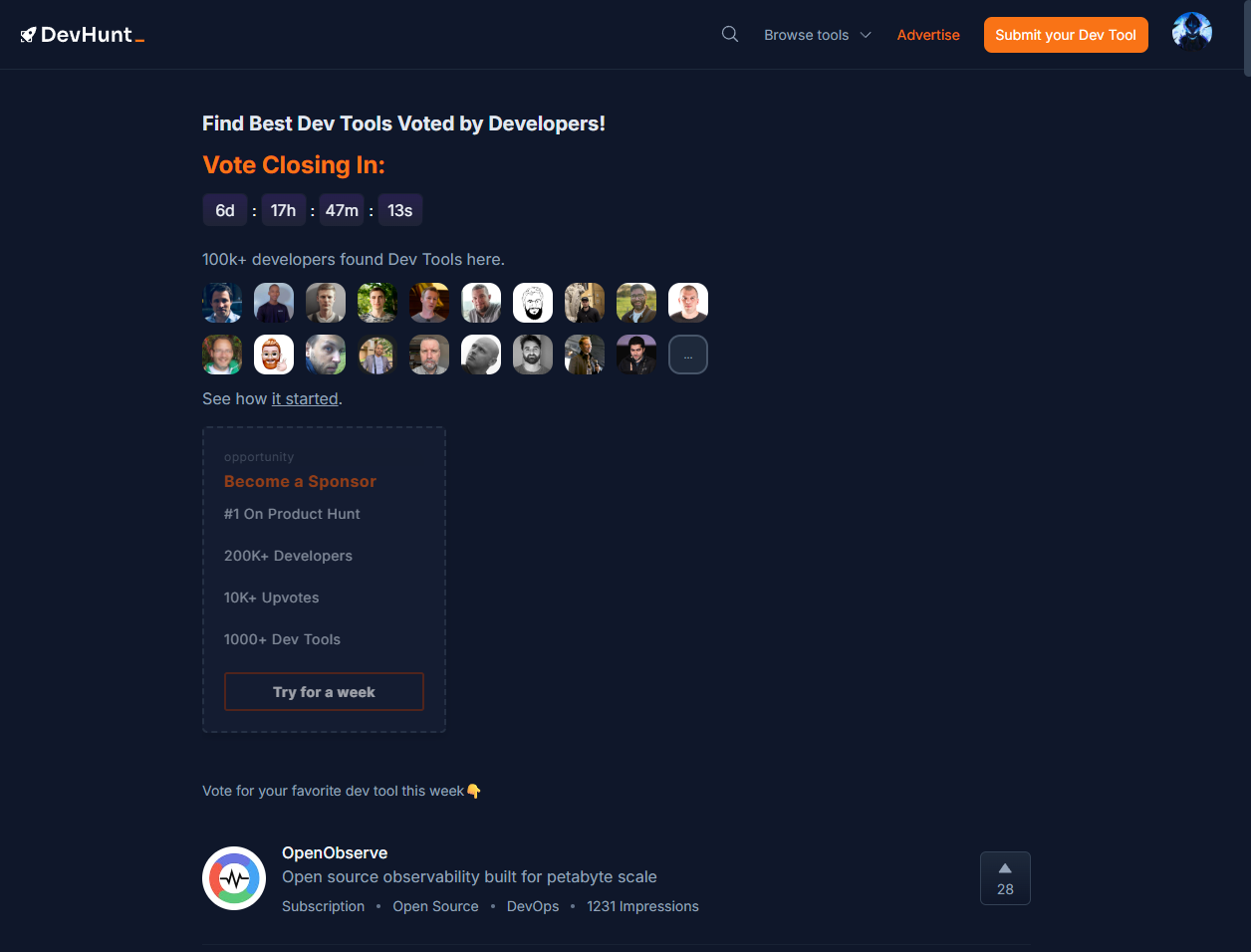
Depending on your niche, find curated directories. For example, if you built a developer tool, Dev Hunt uses GitHub PRs for submissions and is highly respected in the open-source community.
Phase 3: Community Launches (Feedback & Engagement)
After you are listed on static directories, it is time to face real humans. This is where you test your messaging, validate your pricing model, and fix the inevitable early bugs.
6. Indie Hackers
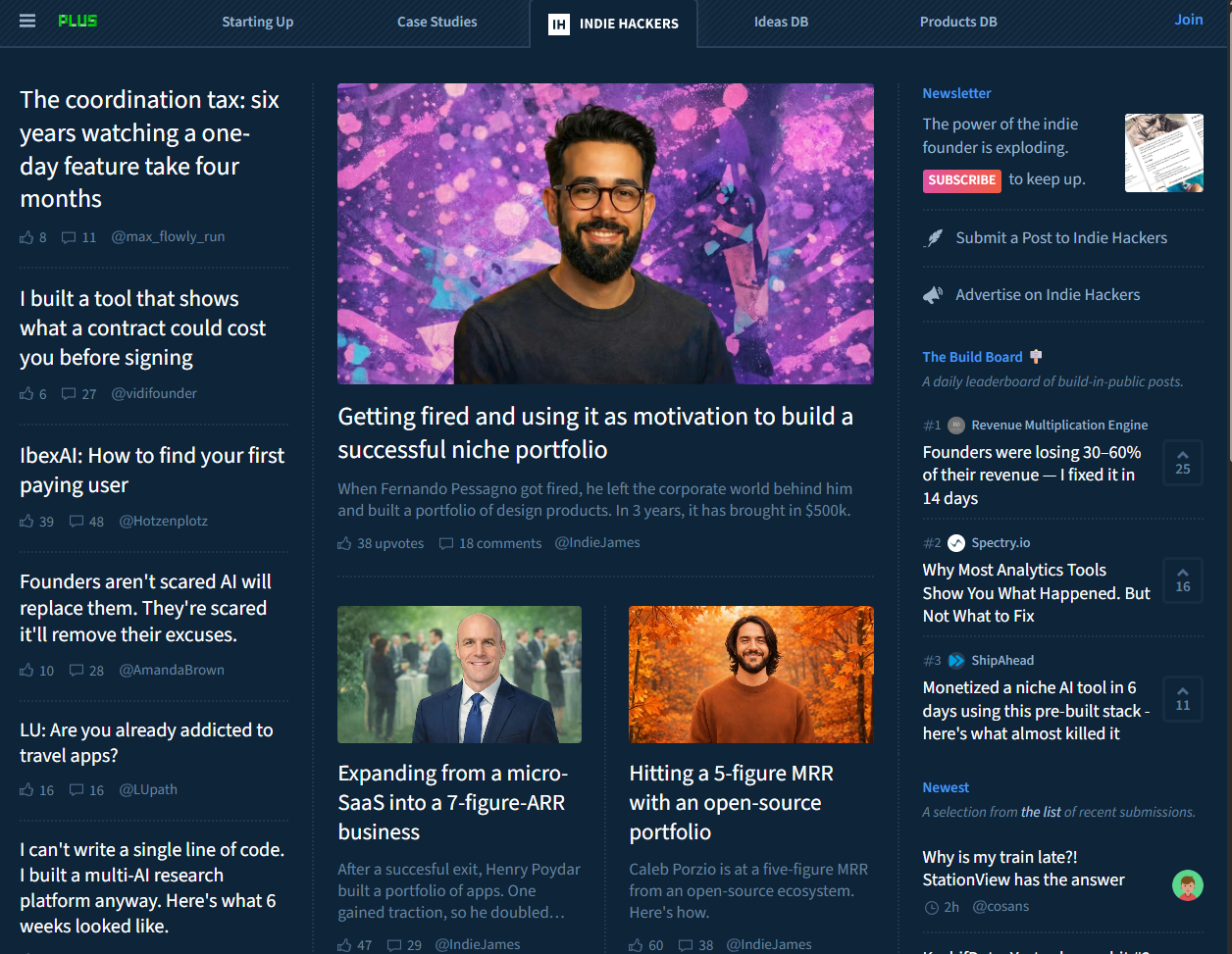
Indie Hackers is the definitive home for solo founders and bootstrapped startups. You can submit your product to their directory, but the real value lies in the forum interactions.
- How to win: Do not spam your link. Write a vulnerable, detailed post about how you built the tool without coding or the major architectural challenges you faced. Ask for genuine design feedback.
7. Reddit communities (r/SaaS & r/SideProject)
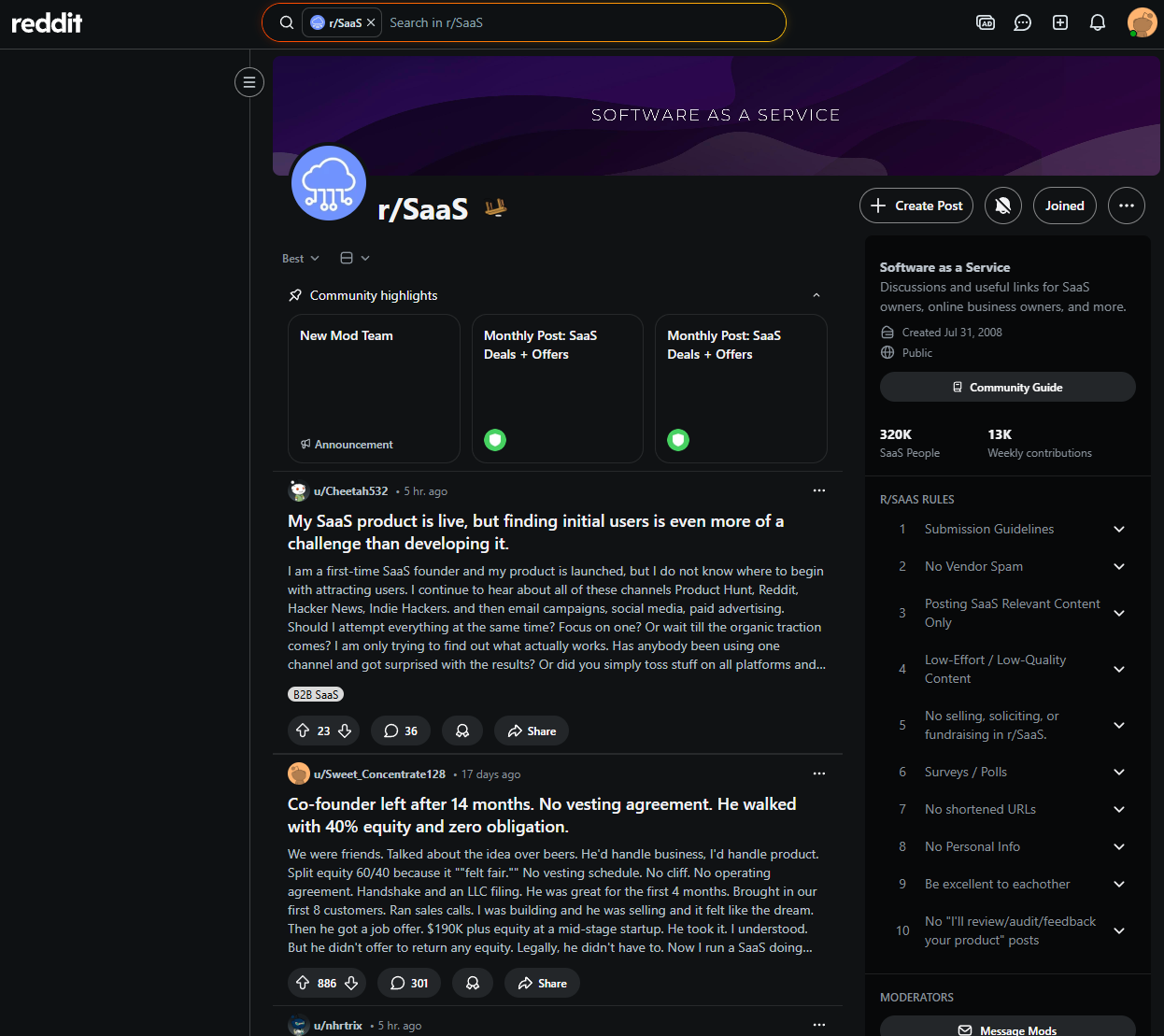
Reddit can be brutal, but it is incredibly honest.
- r/SaaS: Ideal for founders exchanging growth strategies and structural feedback.
- r/SideProject: A highly supportive network of makers demonstrating their weekend projects.
- How to win: Never use marketing speak. Be authentic. Say, "I built this tool to solve [problem]. It's rough around the edges, but I'd love your brutal feedback on the onboarding flow."
8. MicroLaunch
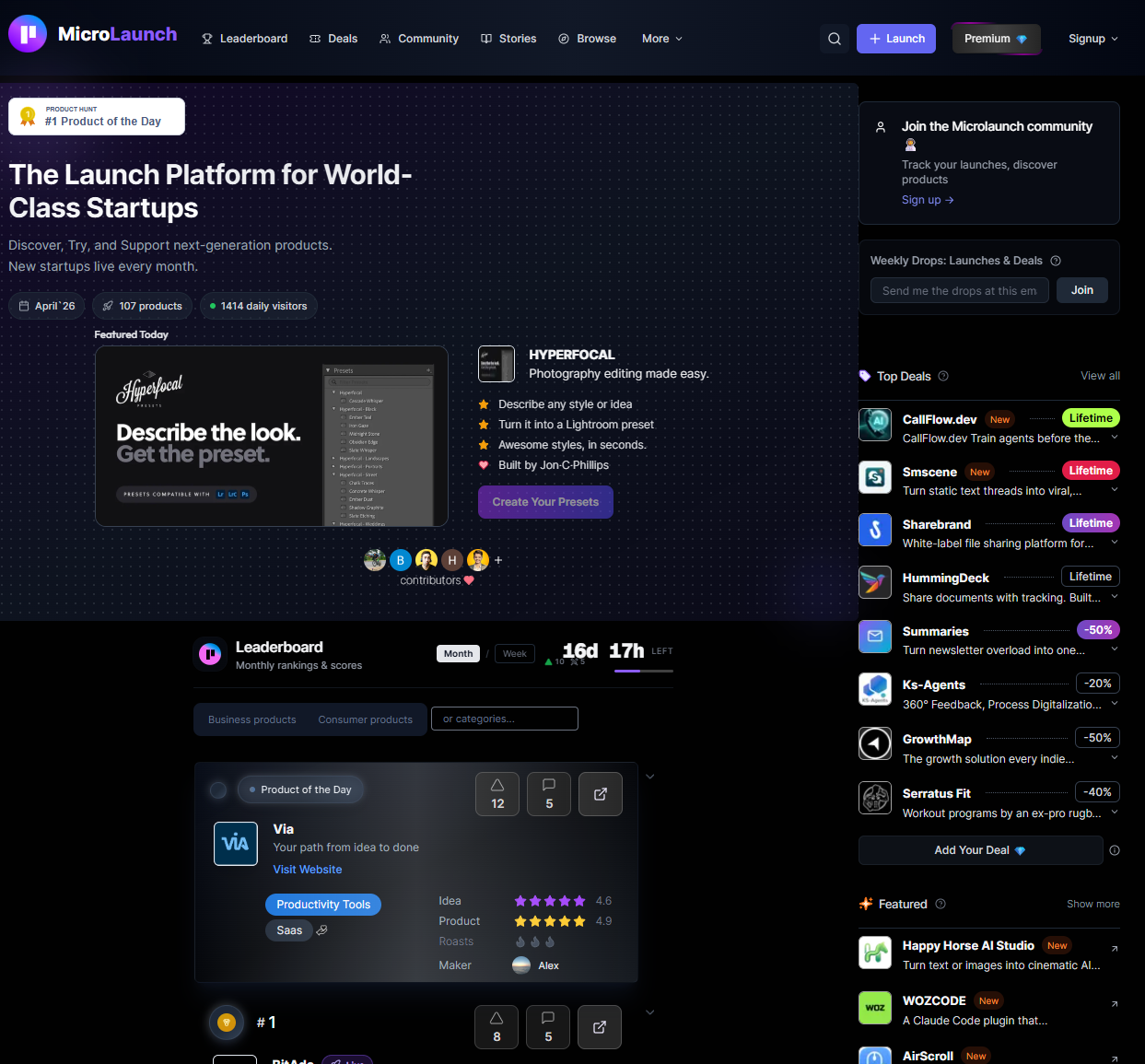
MicroLaunch operates like a smaller Product Hunt. It features daily leaderboards and community voting, but with a friendlier, tighter-knit maker community.
9. Niche Slacks, Discords, and Facebook Groups
Find where your specific target audience hangs out. If you built a tool for copywriters, find the largest SEO and copywriting Facebook groups. Providing value in these micro-communities often yields the highest conversion rates because the audience is hyper-targeted.
10. Building in Public (Twitter/X & LinkedIn)
Documenting your journey on Twitter or LinkedIn is technically a continuous rolling launch. Share your revenue milestones, your server architecture decisions, and your UI updates (especially when showing off those smooth animated react components you grabbed from ogblocks). Consistency here creates a massive warm audience for your official big launch day.
Phase 4: The Massive Launch Platforms
You’ve squashed the bugs, polished the UI, and refined your onboarding based on Phase 3 feedback. Now, it is time for the massive traffic spikes. When founders search for a product launch platform, these are the titans.
11. Product Hunt
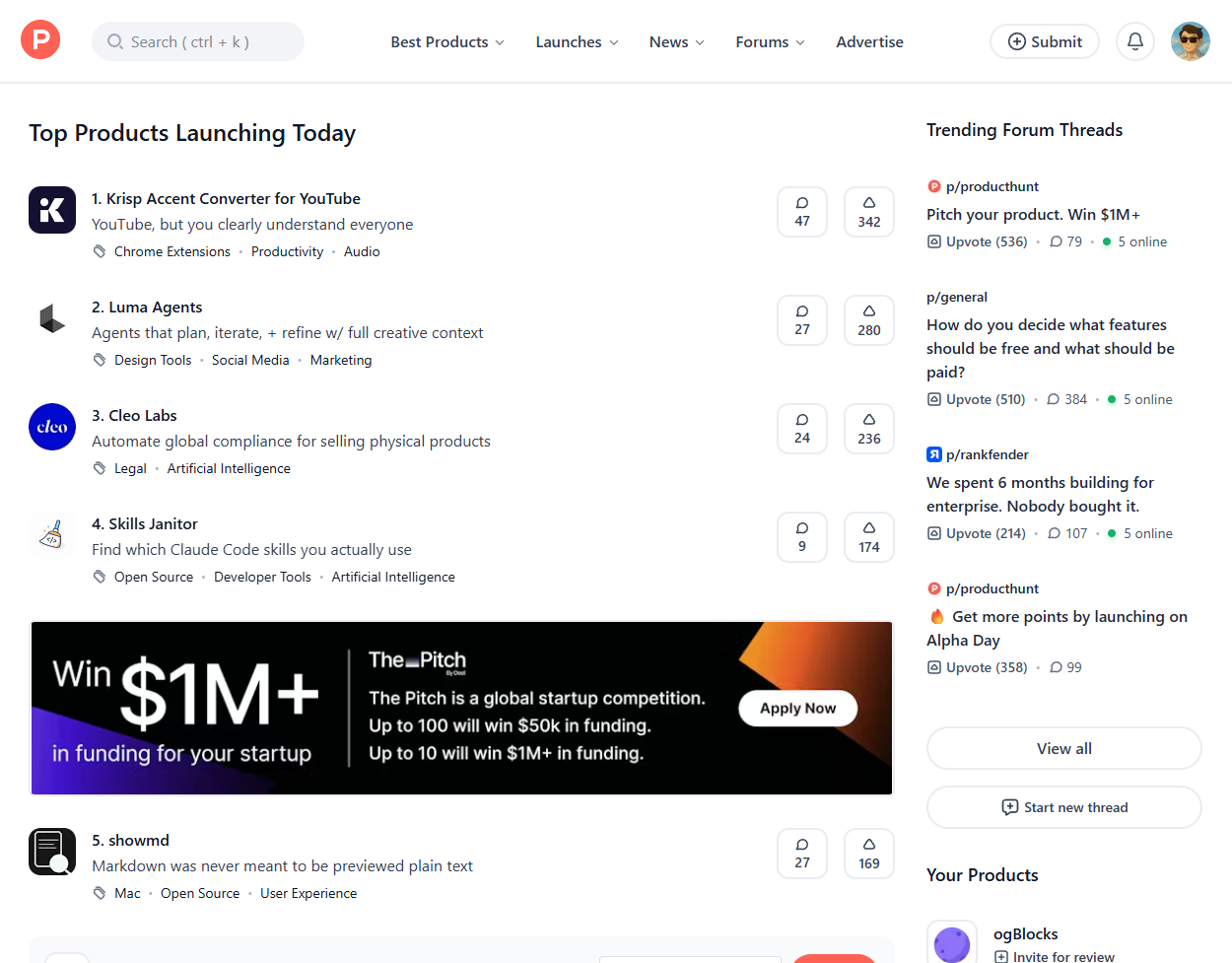
Product Hunt is the undisputed king of software launches. Reaching the top 3 spots on Product Hunt can deliver thousands of visitors and massive industry credibility.
- The Strategy: Prepare extremely well. You need an incredible thumbnail (often an animated GIF), a compelling maker comment, and an initial burst of support within the first hour to trigger the algorithm. Do not launch here blindly. Treat a Product Hunt launch like a massive marketing campaign.
12. Hacker News
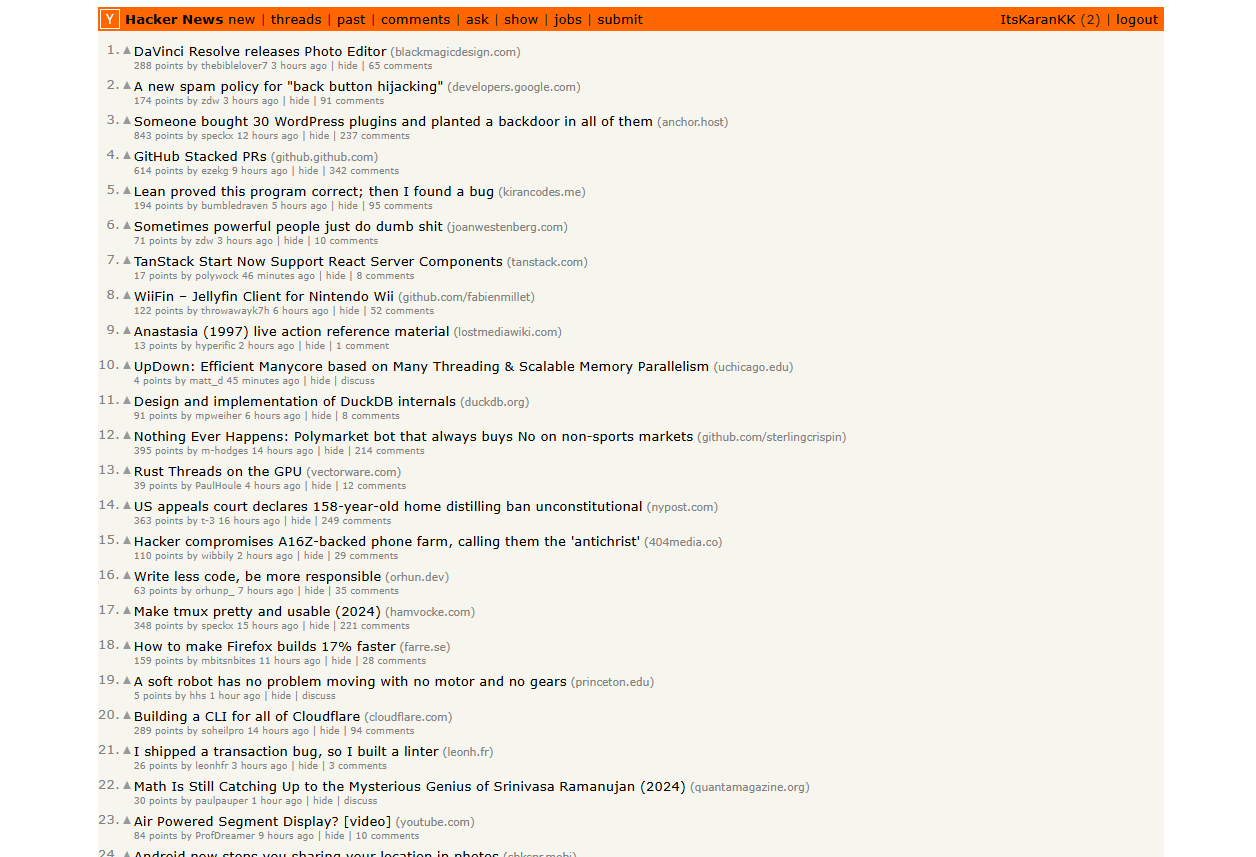
Owned by Y Combinator, Hacker News has a massive, highly technical audience.
- The Strategy: Use the specific tag "Show HN:" before your title (e.g., Show HN: An AI automated email responder). HN users despise marketing fluff. Focus intensely on the technical merits, speed, and real-world utility of your application. If you make the front page, prepare your servers for an absolute flood of traffic.
Phase 5: Lifetime Deal Marketplaces
If your goal is immediate cash flow and rapid validation, these platforms are fantastic. Rather than hunting for subscriptions, you offer your software for a one-time "lifetime deal" (LTD).
13. AppSumo
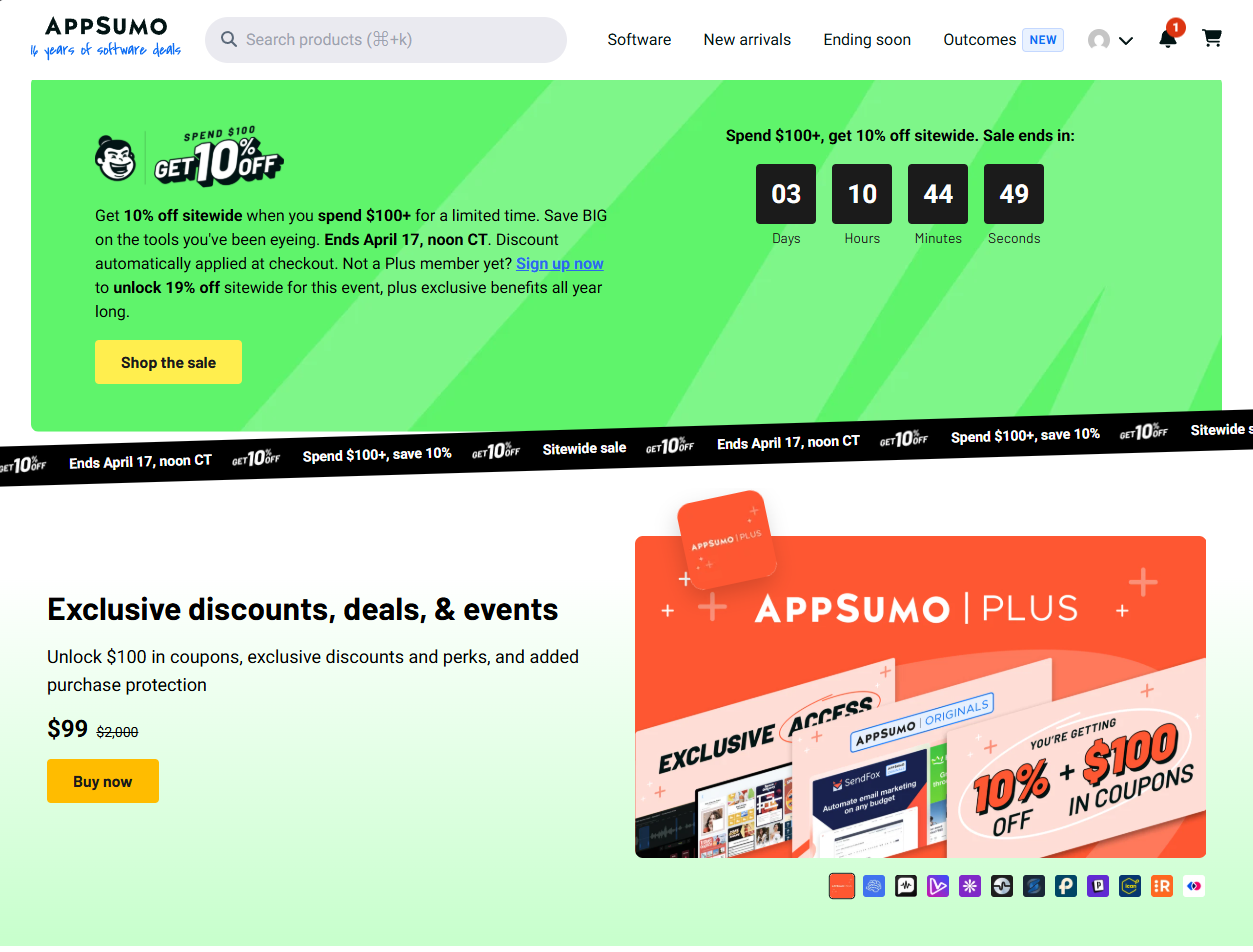
AppSumo is the largest marketplace for software lifetime deals. They feature your product to an email list of millions of eager tech buyers.
- The Trade-off: You trade recurring revenue for immediate cash upfront. However, the initial infusion of thousands of users stress-tests your product and provides invaluable feedback to build a better version.
14. Dealify
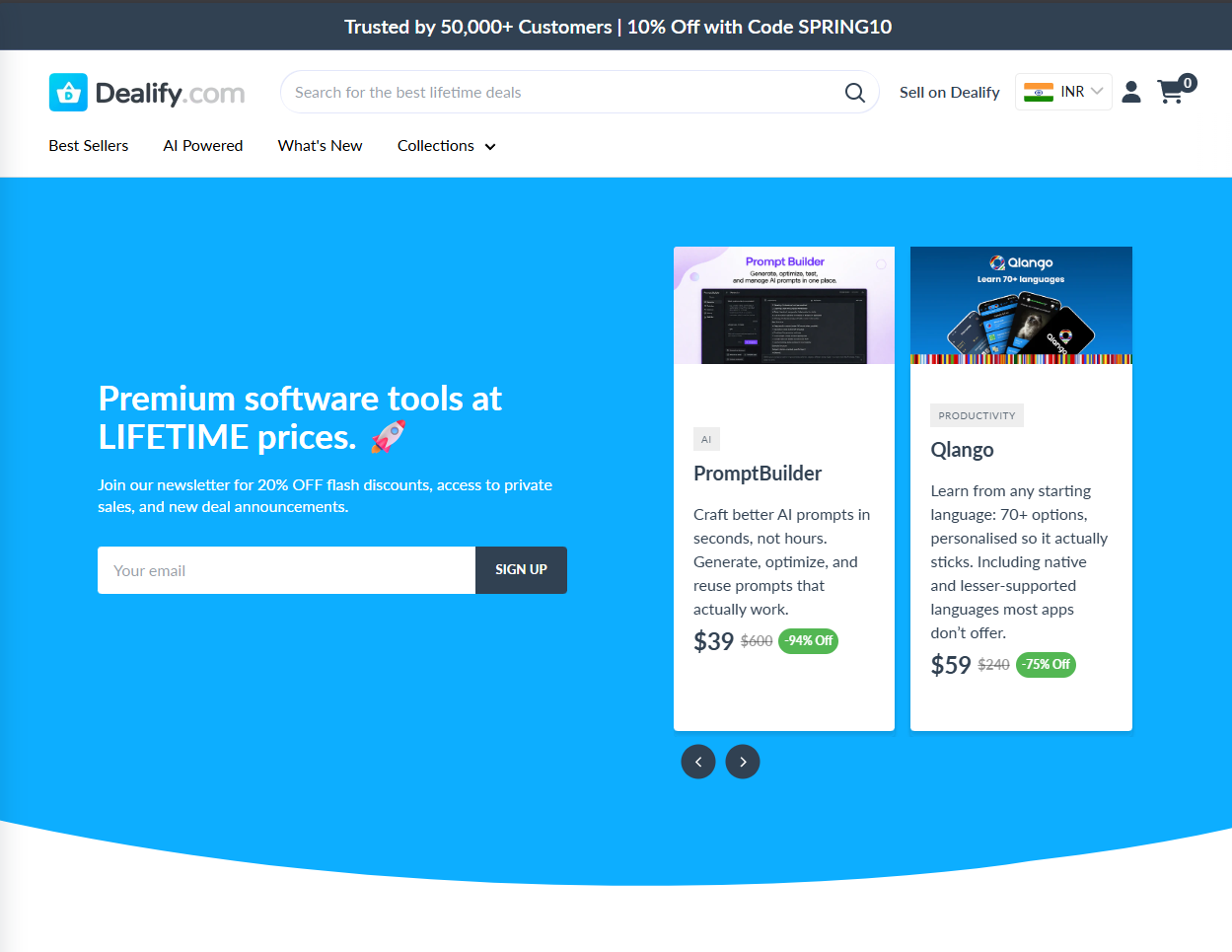
A strong alternative to AppSumo, Dealify operates on the same LTD business model but specifically caters to growth hackers, marketers, and SaaS founders looking for tools to scale their businesses.
15. Uneed
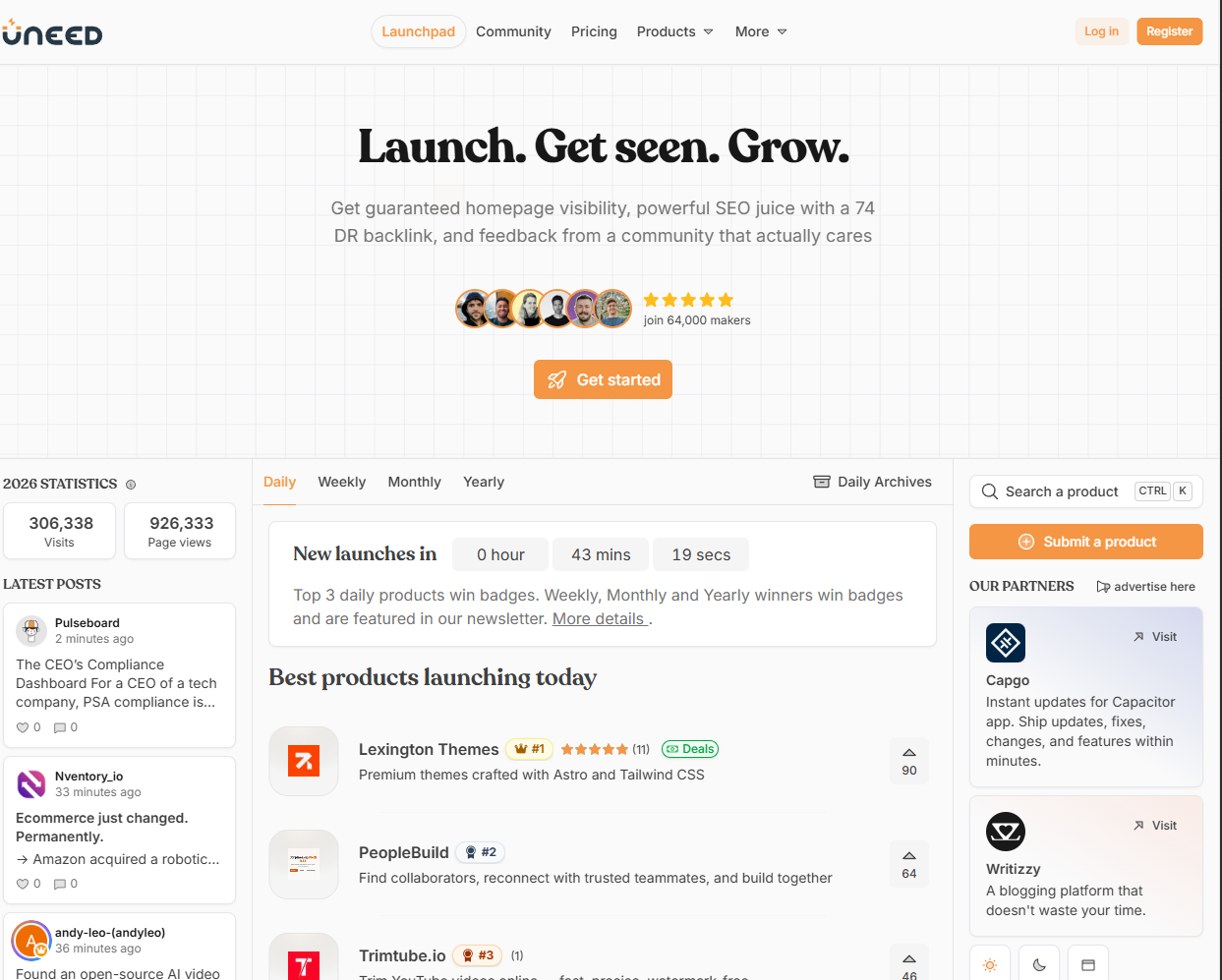
Uneed is a curated gallery of the best tools on the internet. Unlike massive directories that accept everything, Uneed focuses on quality and design.
- Why it matters: Getting featured here sends a signal of high quality to other founders and potential early adopters who value clean UI and solid engineering.
The Secret to a Successful Launch: Outrageous Quality
You can post your link to every one of these 15 platforms, but if your product looks amateurish, your conversion rate will sit solidly at 0%.
The modern consumer expects a level of polish that used to take teams of senior developers months to build. They expect fluid layouts, stunning dark modes, and flawless interactive elements. As a solo founder, you simply cannot afford to spend 8 weeks writing Custom CSS while your launch momentum stalls. You need to learn how to ship 10x faster.
Stop wrestling with basic UI layout issues. Focus on the core backend logic, and use a premium tool for the frontend.
Give your SaaS the million-dollar look it deserves. If you are launching a product this month, you absolutely must leverage ogblocks. By dropping stunning, ready-made React components directly into your application, you will launch faster, capture attention instantly, and convert directory traffic into real revenue. Buy ogblocks today and guarantee your launch's success →.
Frequently Asked Questions
What are the best places to launch your product?
The absolute best places depend on your phase. Launch on BetaList and specialized AI directories to test the waters. Engage heavily on Reddit (r/SaaS, r/SideProject) and Indie Hackers to gather feedback. Finally, culminate your cycle with a massive push on Product Hunt and Hacker News.
Is Product Hunt still good for launching a SaaS?
Yes. It remains the most powerful product launch platform for general SaaS applications and developer tools. However, it requires intense preparation, a beautiful UI, and an activated pre-existing audience to guarantee a top-ranking spot.
How do I prepare my codebase for a major launch?
Ensure your database indexing is optimized, your server infrastructure can automatically scale (using platforms like Vercel or Supabase), and most importantly, your frontend is visually complete. Utilizing a SaaS UI component library like ogblocks ensures your landing page looks aggressively professional without requiring weeks of custom CSS coding.
Should I launch on AppSumo as a solo founder?
It depends on your infrastructure costs. If your software requires heavy CPU or API processing (like generating AI videos), offering a lifetime deal can bankrupt you due to high variable costs. If your marginal costs are nearly zero, AppSumo is an incredible tool to immediately validate the product and build your bankroll.
About the Author:
I'm Karan, the founder of ogblocks and I love food and creating UIs, and I want everyone to ship beautifully on the web regardless of their design or CSS Skills.
Written by Karan
Karan is a React engineer and the founder of ogBlocks, building high-performance UIs for SaaS.